EN
EN
 AR
AR
 BG
BG
 HR
HR
 CS
CS
 DA
DA
 NL
NL
 FI
FI
 FR
FR
 DE
DE
 EL
EL
 IT
IT
 JA
JA
 KO
KO
 NO
NO
 PL
PL
 PT
PT
 RO
RO
 RU
RU
 ES
ES
 SV
SV
 TL
TL
 ID
ID
 LT
LT
 SR
SR
 SK
SK
 SL
SL
 VI
VI
 HU
HU
 TH
TH
 TR
TR
 FA
FA
 MS
MS
 BE
BE
 IS
IS
 AZ
AZ
 BN
BN
 EO
EO
 LA
LA
 MN
MN


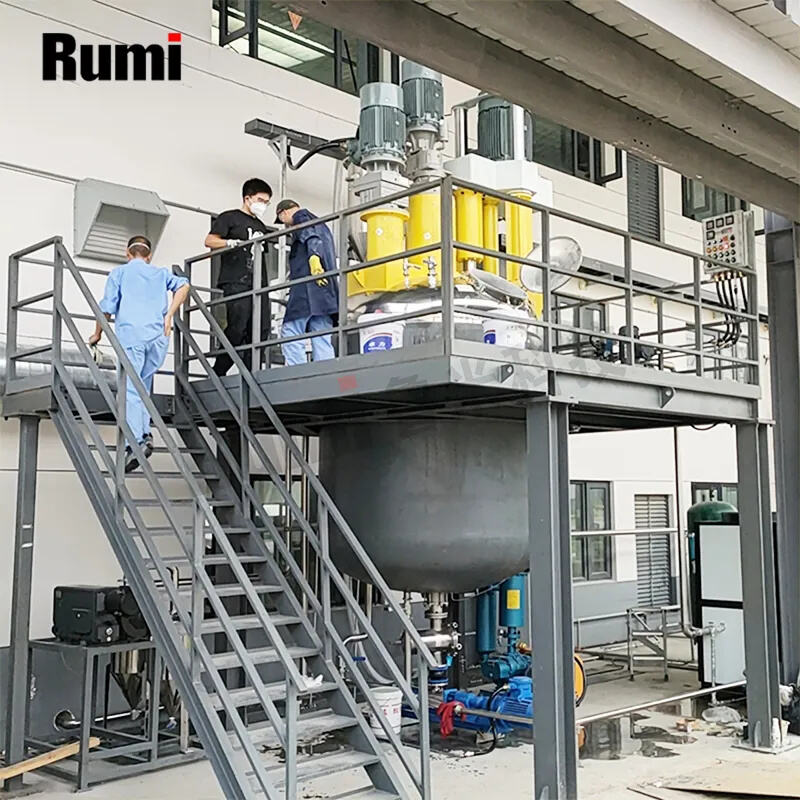
In most manufacturing processes involving industries the materials used are highly viscous and thus they pose great mixing problems. Adhesives, sealants, and coatings, resins, pastes, and some chemical compounds are products that usually demand special equipment that can cope with thick and dense formulations. High viscosity mixers are meant to overcome these problems by ensuring that it has a high mixing power, good circulation of materials and consistency in the processing environment. Knowing their advantages can enable the producers enhance the efficiency of production and uniformity of their products.
What Is a High Viscosity Mixer?
A high viscosity mixer is a kind of industrial mixer that is designed to work with medium-to- extremely thick materials. These mixers differ with the conventional mixers which only work best with low-viscosity liquids, since they employ uniquely designed mixing structures and high-power driving systems to transfer dense materials.
More common components of high viscosity mixers are anchor agitators, planetary mixing systems, sigma blades, or multi-shaft mixing structures. These designs enable the equipment to produce adequate torque and mixing force and yet have materials circulate all over the mixing vessel.
Processes requiring heavy pastes, fillers, polymers and high-solid formulations are usually performed in such mixers on industrial application. Our mixing solutions will help these taxing processes by offering different solutions that are specifically used in the coatings, chemical materials, adhesives, and high-technology composite sectors.
Improved Mixing Efficiency for Thick Materials
The high viscosity mixers have one of the greatest benefits in that they enhance mixing efficiency in the processing of dense materials. Products that have high viscosity are resistant to flow thus the normal mixing tools cannot evenly circulate materials. In the absence of adequate mixing force, the materials could end up being distributed unevenly or existing in dead zones within the tank. High viscosity mixers address this problem with geometries of optimum mixing and greater torque drive systems. As an illustration, anchor agitators are able to remove the walls of the vessel and keep pushing the contents to the centre, and planetary mixers integrate rotation and revolution to cover the mixing vessel completely.
This enhances the movement of materials and lowers the mixing period and the ingredients like powders, resins and additives are more evenly spread throughout the batch.
Better Product Consistency and Quality
The consistency is an important variable in the coatings, sealants, inks, and specialty chemicals industries. Poor dispersion of fillers, inconsistent viscosity, or unstable product performance are some of the problems that may arise as a result of uneven mixing. High viscosity mixers also enable constant and consistent mixing environments, which serve to enhance the quality of the product. Since these machines can accommodate thick materials better, they contribute to the fact that solid particles are to be incorporated correctly and that formulations also remain homogenous. In the case of manufacturers that are involved in high-performance materials, such consistency is critical in terms of quality and product performance reliability.
Adaptability to Different Industrial Processes
The next significant advantage of high viscosity mixers is that it is flexible in various processing environments. In order to industrialize production, more features like heating, cooling, vacuum mixing or connection with the dispersion equipment are frequently needed. Various high viscosity mixing systems may be designed with a temperature control jackets, a deaeration system active by a vacuum, or with other high-speed dispersers to deal with complicated formulations. This flexibility enables the equipment to be accommodating in relation to diverse industrial applications and processing demands. Rumi designs mixing systems that can be incorporated into bigger manufacturing lines to be used in conjunction with dispersers, mills, reactors and the storage system which is utilized in chemical production.
Supporting Efficient Industrial Production
Due to the increasing sophistication of industrial materials and the use of more sophisticated formulations, the requirement of high viscosity mixing equipment that is reliable keeps on rising. Well-engineered mixers would assist a manufacturer to work with difficult materials and allow production to be stable and effective.
High viscosity mixers are valuable in the current production process by offering good mixing capacity, enhanced circulation as well as flexible configurations. In the case of industries involving thick formulations, appropriate mixing technology would greatly enhance the efficiency of production as well as product uniformity.
Viscometers should also be regarded as a key component of most industrial mixing systems; their usage is necessary to enable manufacturers to address the requirements of the current chemical and material production.