EN
EN
 AR
AR
 BG
BG
 HR
HR
 CS
CS
 DA
DA
 NL
NL
 FI
FI
 FR
FR
 DE
DE
 EL
EL
 IT
IT
 JA
JA
 KO
KO
 NO
NO
 PL
PL
 PT
PT
 RO
RO
 RU
RU
 ES
ES
 SV
SV
 TL
TL
 ID
ID
 LT
LT
 SR
SR
 SK
SK
 SL
SL
 VI
VI
 HU
HU
 TH
TH
 TR
TR
 FA
FA
 MS
MS
 BE
BE
 IS
IS
 AZ
AZ
 BN
BN
 EO
EO
 LA
LA
 MN
MN


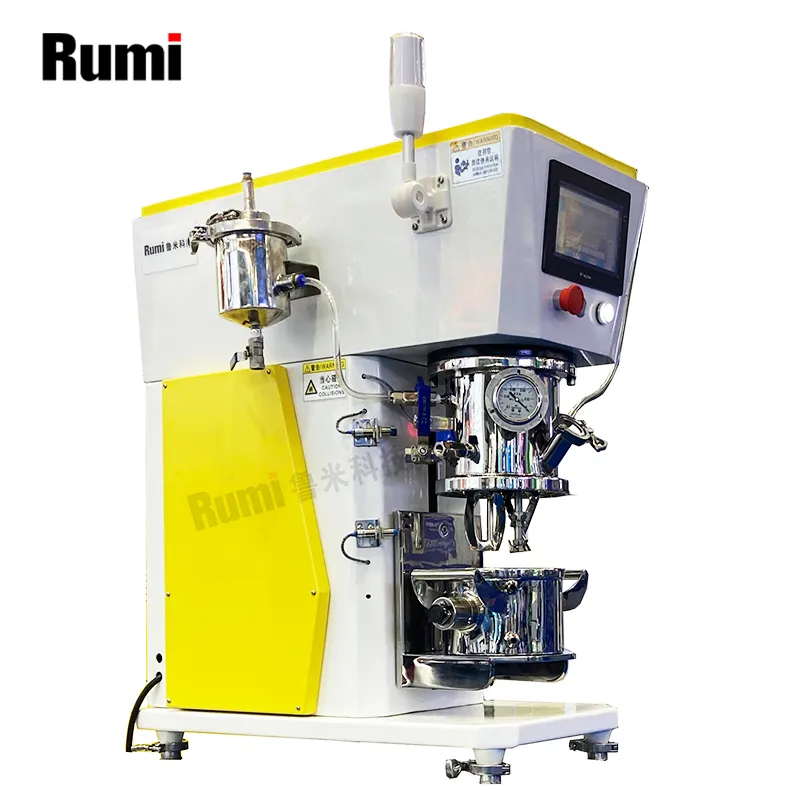
It is a typical yet difficult task in most industrial industries to process high-viscosity materials. Adhesives, sealants, resins, coatings, and specialty chemical pastes are products that need powerful mixing systems, which can work with dense and resistant products. Since the manufacturing requirements keep on changing, the high viscosity mixers are also getting designed and functional in order to assist the firms to enhance their efficiency and ensure uniform quality of their products.
Knowledge of the recent trends in high viscosity mixing technology can be used to ensure that manufacturers select equipment more compatible with the modern production needs.
Increasing need of effective homogenization of thick substances
Formulations in the industry are getting complicated. Most products have increased solid contents, various additives and specialized functional materials. The effects of these changes are increased viscosity at the mixing stage.
Conventional mixing machines might not mix heavy formulations due to the inability of compact substances to pass. This has the potential of causing unequal mixing of ingredients, higher mixing times, and more energy. Therefore, the manufacturers are after mixing solutions that are specially made into high-viscosity processing. The mixers of high viscosity of Rumi are designed to offer increased torque, enhanced circulation of the materials and enhanced contact between the mixing tools and material mass. These enhancements aid in minimizing processing time and still offer the same mixing performance.
Multi-Shaft Mixing Systems to enhance better movement of materials
Multi-shaft mixing systems are becoming a tendency in high viscosity mixing technology. These systems are made up of various mixing tools of varied speeds as opposed to using a single agitator. As an example, a mixer can consist of a slow-speed anchor agitator to circulate heavy matter throughout the vessel and a high-speed dispersing shaft to give shear force to the dispersion of the particles. This mixture can be used to make sure that the materials are constantly recycled and processed equally. Multi-shaft mixers are particularly applicable in industries like coatings, adhesives and chemical materials where dispersion and bulk mixing are needed in the formulation. To facilitate these kinds of production processes, Rumi offer mixing systems that are aimed at combining various mixing mechanisms.
Better Equipment Design to be more energy efficient
In the design of industrial equipment, energy efficiency has gained a major area of concern. The large viscosity mixing also needs high levels of mechanical power and therefore optimization of the performance of equipment with regard to energy consumption is a continuous concern.
Other modern trends in mixer design are better blade geometry, improved motor systems and more efficient transmission structures. Such modifications assist in providing the required mixing force with the reduction of unneeded energy loss.
It is also possible to enhance flow of materials and minimal resistance in mixing by designing vessels better. As the flows of materials are more efficient within the tank, the mixer is able to work more efficiently and get batches ready within shorter periods.
Combination with Temperature and Process Control
The other tendency in high viscosity mixing systems is the introduction of temperature control and process monitoring capabilities. Certain materials need to be heated or chilled during mixing to be kept at appropriate viscosity or assist chemical reactions.
To fulfill these requirements, mixing vessels can be fitted with jacketed designs whereby the heating or cooling can be controlled. Temperature regulation assists in the stable conditions of processing that can enhance the efficiency of mixing, as well as consistency of the products.
There is also an increased process integration. High viscosity mixers can be used in conjunction with other machinery e.g. dispersers, mills, reactors, and storage tanks to create complete production. This combined solution contributes to the minimization of material handling operations, as well as workflow efficiency.
Elasticity to Various industrial purposes
The manufacturers of industries are in more need of equipment that will be able to adjust to various products and levels of production. Mixers that have high viscosity are hence being developed with increased flexibility and customizability. Depending on the nature of material properties and production needs, mixing systems can be set with various types of agitators, depending on vessel size and process characteristics. This flexibility enables the manufacturer to make the same equipment platform to use various formulations.
Our specialization is to supply mixing and processing equipment in the industries such as coatings, adhesives, fine chemicals and material processing. Equipment can be modified to fit various production settings because it provides customizable solutions.
Furthering Greater Productivity in Contemporary Production
As efficiency in production gains relevance in the competitive industrial markets, mixing equipment should be able to ensure quick processing without change in product quality. High viscosity mixers are critical towards the realization of these objectives.
The modern high viscosity mixers can be used to facilitate the handling of the demanding materials because of the advanced mixing structure, multi-shaft design, energy management, and built-in process control. These innovations enable production lines to be more reliable and have similar results within batches. In case of an industry that involves thick formulations, investment in most well-designed high viscosity mixing systems will play a significant role in enhancing productivity and long-term manufacturing performance.
Table of Contents
- Increasing need of effective homogenization of thick substances
- Multi-Shaft Mixing Systems to enhance better movement of materials
- Better Equipment Design to be more energy efficient
- Combination with Temperature and Process Control
- Elasticity to Various industrial purposes
- Furthering Greater Productivity in Contemporary Production