EN
EN
 AR
AR
 BG
BG
 HR
HR
 CS
CS
 DA
DA
 NL
NL
 FI
FI
 FR
FR
 DE
DE
 EL
EL
 IT
IT
 JA
JA
 KO
KO
 NO
NO
 PL
PL
 PT
PT
 RO
RO
 RU
RU
 ES
ES
 SV
SV
 TL
TL
 ID
ID
 LT
LT
 SR
SR
 SK
SK
 SL
SL
 VI
VI
 HU
HU
 TH
TH
 TR
TR
 FA
FA
 MS
MS
 BE
BE
 IS
IS
 AZ
AZ
 BN
BN
 EO
EO
 LA
LA
 MN
MN


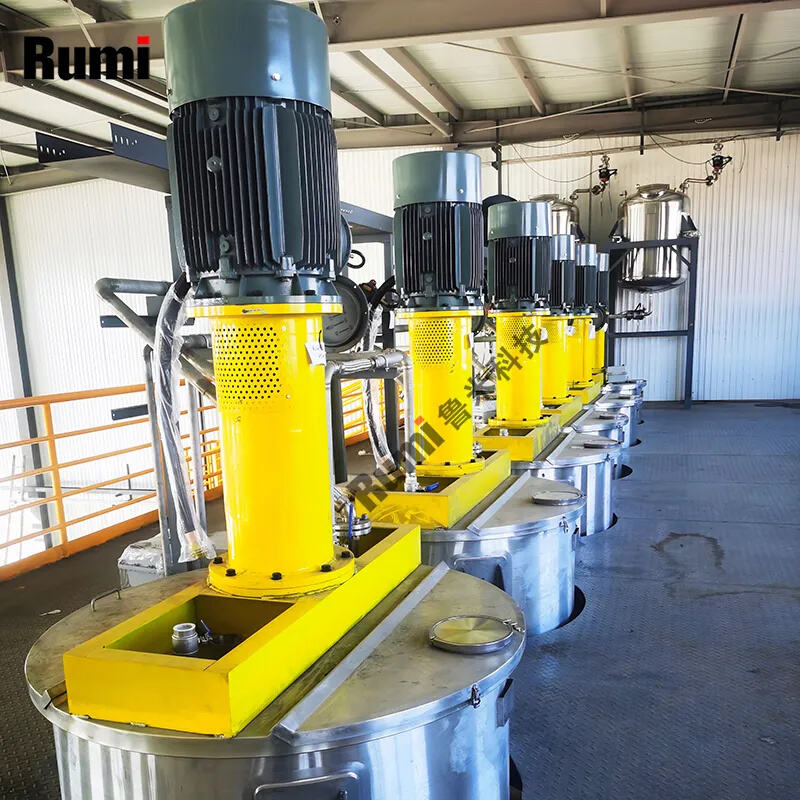
Tanks and vessels in most production processes in industrial activity are essential in the mixing of materials as well as storage. Reliable tanks can be used in the chemical manufacturing sector, as well as in the production of coating, adhesive, and specialty materials to guarantee that raw materials and finished products are handled safely and efficiently. Although they might seem straight forward containers, there are characteristics of modern industrial tanks and vessels that facilitate the mixing performance, material stability, and process control.
Knowing the reasons why tanks and vessels are appropriate in mixing and storage can enable manufacturers to be able to come up with more efficient production mechanisms.
The Dual Role of Tanks and Vessels in Industrial Production
In industrial processes, tanks and vessels have been extensively applied since they can be used in various processes within a production line. Raw material blending: In most instances, it is possible to use the same vessel in processing intermediate products and final products.
When performing mixing operations tanks offer the working space where agitators or dispersing equipment may circulate materials and mix them uniformly. They preserve the products stability until they are packed or shipped to the market or processed.
Chemical materials, inks and adhesives in the coatings industry, as well as tanks, are often used in conjunction with other equipment such as dispersers, mixers, mills, and reactors. This integration will enable the manufacturing companies to simplify the production and minimize unneeded material movements.
Structural Design That Supports Efficient Mixing
The mixing efficiency is significant to the structural design of industrial tanks. A properly drafted vessel assists materials to flow well during the mixing process and the chances of dead zones where ingredients could accumulate is eliminated.
The major design factors usually are the streamlined geometry of the tanks, reinforced structures and suitable mounting systems of mixing equipment. The vessel geometry (cylindrical bodies with dished and conical bottoms) may affect the flow of the materials during agitation. Moreover, mixing tanks are often also designed to accommodate various kinds of agitators, such as a high-speed disperser, or anchor mixer, or multi-shaft mixing system. These designs enable the vessel to be used in a large variety of mixing processes depending on the viscosity of the material to be used and the formulation needs.
Material Selection for Durability and Product Safety
The tanks of industries should be constructed using durable materials that are compatible with the products that are processed. Most of the tanks employed in the manufacturing of chemicals and other materials are fashioned out of carbon steel or stainless steel, based on the operations involved.
When cleanliness, corrosion resistance or purity of product are at stake, stainless steel tanks are often used. When applications that require strong structural performance are required and the chemical compatibility of carbon steel is made, it can be used as the tank. There is the appropriate choice of materials useful in prolonging the equipment life without jeopardizing the quality of products. It also makes sure that the tanks are durable to prolonged contact with the chemicals and changes in temperature and constant use in industries.
Temperature Control and Process Integration
In certain production processes tanks are needed to assist heating cooling or insulation to enable the process conditions to be stable. As an illustration, some types of resins, coatings or chemical formula should be subjected to controlled temperatures so that they are properly mixed and reacting. To satisfy these needs, tanks could have jacket structures which enable heat exchange through circulatory thermal substances. Temperatures in storage or processing can be kept constant with the help of insulation layers. Such properties enable tanks and vessels to operate within a bigger processing system as opposed to being storage containers.
Supporting Reliable Material Handling
A safe and efficient material handling of the material is another significant benefit of well-designed tanks and ships. Access ports, discharge valves, level indicators, and cleaning systems are some of the features that can be incorporated in tanks that are well engineered. These design features enhance efficiency of operations by enabling easier monitoring of processes by operators, transfer of materials and equipment maintenance. Stable tank systems are used in manufacturing settings that require processing of large quantities of materials in a day and also ease the operations in the plant.
Conclusion
Many industrial production systems comprise tanks and vessels of many factories. Their capability to mix as well as store are useful in the chemical, coating, adhesives, and specialty material industries.
In the event of proper structural design, robust construction materials, and capacity to be mixed with other equipment, tanks and vessels contribute towards production stability and uniform quality of products. In the quest by manufacturers to streamline their processes, proper choice of tank systems is one of the key steps of establishing effective and dependable processing line.