EN
EN
 AR
AR
 BG
BG
 HR
HR
 CS
CS
 DA
DA
 NL
NL
 FI
FI
 FR
FR
 DE
DE
 EL
EL
 IT
IT
 JA
JA
 KO
KO
 NO
NO
 PL
PL
 PT
PT
 RO
RO
 RU
RU
 ES
ES
 SV
SV
 TL
TL
 ID
ID
 LT
LT
 SR
SR
 SK
SK
 SL
SL
 VI
VI
 HU
HU
 TH
TH
 TR
TR
 FA
FA
 MS
MS
 BE
BE
 IS
IS
 AZ
AZ
 BN
BN
 EO
EO
 LA
LA
 MN
MN


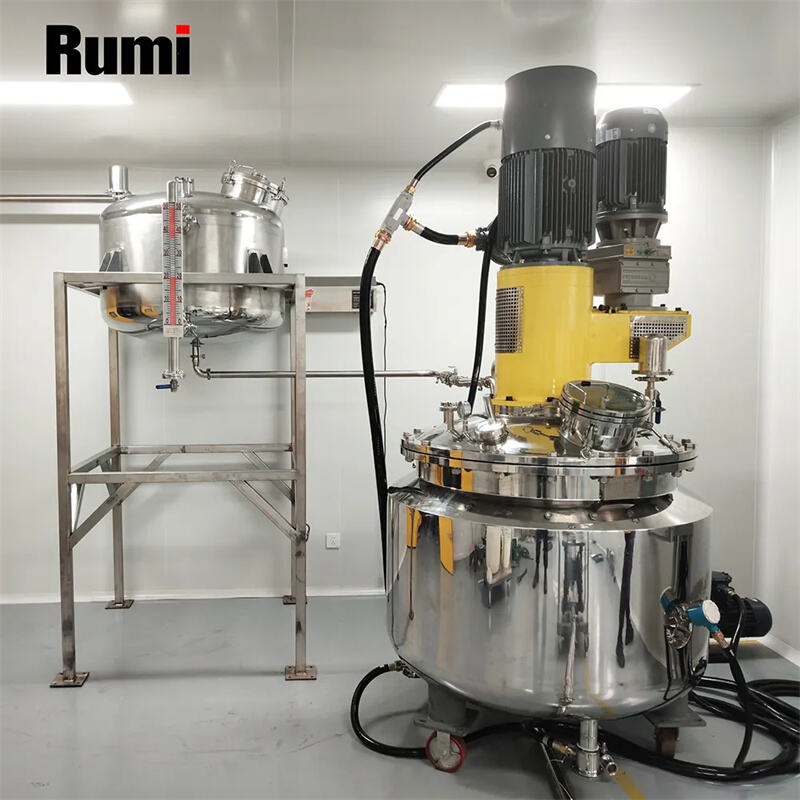
With the fine chemical production processes, the effective mixing and dispersion of a product is very vital in ensuring uniform quality of a product. The industries like coatings, adhesives, inks, and chemical materials tend to use these types of equipment that can work with medium to high viscosity materials and at the same time, dispersing the pigments, powder and additives uniformly. A double shaft dispersing mixer is created with the goal in mind to perform these functions. Knowledge about the functionality of this equipment and its areas of good applications can assist manufacturers in selecting the appropriate solution in mixing their production lines.
What Is a Double Shaft Dispersing Mixer?
A double shaft dispersing mixer is a form of multi-purpose mixing equipment, which is used in the process of dispersion and low-speed mixing. The system is typically made of two shafts whereby one shaft has high-speed dispersing disc, and the other has a low-speed mixing impeller. These shafts work in parallel so that the materials circulate in the vessel and at the same time they experience intense shear and dispersion.
This design allows the mixer to handle materials where it is necessary to have an efficient particle dispersion and bulk mixing. In a real-life production, it assists in sorting solid powders into liquids and fragmenting agglomerates and is critical in paints, coatings, sealants, and chemical slurries industries.
How Double Shaft Dispersing Mixers Work
The principle of work of a double shaft dispersing mixer is the coordinative movement of two various mixing tools.
The dispersing shaft is a high speed shaft, which creates a high shear force. This is more useful when it comes to dispensing powders, pigments and fillers into liquids. The dispersing disc leads to turbulence, which assists in dispersing the clusters of particles and enhances uniform dispersion. Concurrently, the low-speed mixing shaft will move the material around the mixing vessel. It does this to maintain its general circulation to prevent dead zones and evenly mix the contents of the top, middle, and bottom of the tank.
Since both shafts work concurrently, mixer may obtain greater dispersion and uniform results than when using single shafts mixing systems. This is because circulation and shear enhances the overall mixing efficiency and contributes to the maintenance of the product consistency.
Typical Applications in the Chemical Industry
The double shaft dispersing mixers are very common in the industries that need to undergo mixing and dispersion operations. Conventional uses are:
· Paints and coatings manufacturing.
· Inks and color pastes used in printing.
· Adhesives and sealants
· 3-R Chemical Slurries and Resins.
· IP Pigment and filler dispersion.
Raw materials in such industries are usually liquids, powders, and additives of varying viscosities and densities. The dual-shaft formulation also enables the equipment to deal with these complex formulations better compared to the conventional mixing equipment. Moreover, most production lines have dispersing mixers combined with other processing machinery like grinding mills, reactors or storage tanks to create a complete production system.
Key Factors When Selecting a Double Shaft Dispersing Mixer
When one is selecting the appropriate mixer, there are some factors to be considered in either the material or the process itself.
To begin with, material viscosity is relevant in equipment choice. Viscous products of higher viscosity can need greater mixing torque or more scraping structures to sustain normal circulation.
Second, the production scale should be matched with the batch capacity. Industrial mixers are most commonly offered in a large variety of volumes of the vessel to accommodate laboratory testing, pilot production or full scale production.
Third, process needs like heating, cooling, vacuum mixing or explosion-proof design can also affect the equipment design. Certain kinds of applications demand temperature regulation or closed mix settings to maintain the stability of products.
Why Process-Focused Equipment Matters
In the contemporary chemical production, the choice of equipment is highly connected with the optimalization of the process. The quality of dispersion can be enhanced, the length of the mixing cycles may be reduced, and the consistency of the batches may be ensured with a properly designed double shaft dispersing mixer. Rumi specialize in the supply of mixing machinery and in-sourcing systems of fine chemicals, coatings and materials processing industries. They have equipment lines such as dispersing machines, emulsifiers, mills, reactors, and other equipment utilized in production lines.
Conclusion
The role of the double shaft dispersing mixers is significant in most industrial mixing and dispersion processes. The equipment has the flexibility to mix complex material systems with high-speed shear dispersion and low-speed circulation mixing to increase uniformity of a product.
In the case of manufacturers who have to deal with coatings, adhesives, inks, and so on, the knowledge of the construction and principle of operation of this mixer can assist in the choice of appropriate equipment and the maximization of production efficiency. With the ever changing production needs, flexible and customizable mixing options will be on the list of ensuring constant and effective production lines.