 en
en  vi
vi  it
it  es
es  tr
tr  ja
ja  pt
pt  nl
nl  ru
ru  fr
fr  de
de  pl
pl  ar
ar News
Latest news and events.

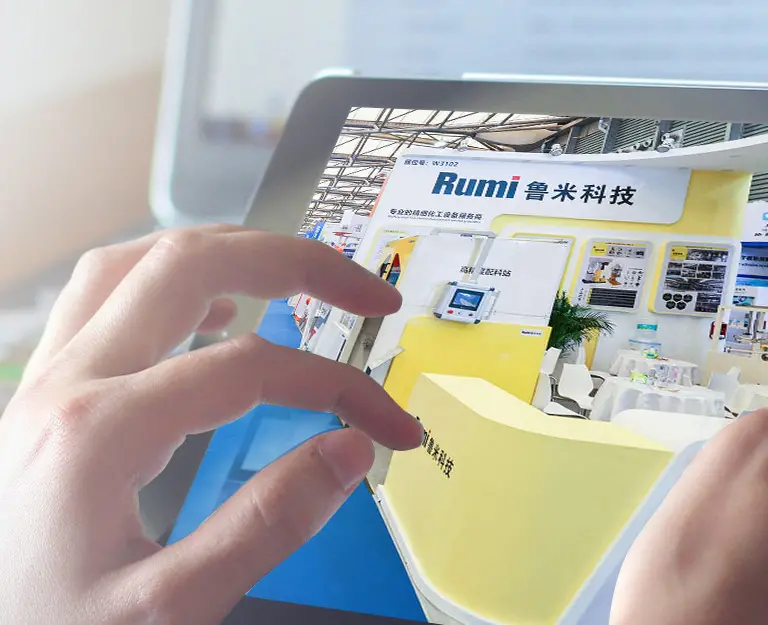


In many industrial production facilities, powder handling remains one of the most difficult processes to control. Traditional manual weighing and feeding methods often lead to inconsistent material ratios, operator-related errors, and unstable batch quality. For industries such as chemicals, coatings, food additives, pharmaceuticals, composites, and new materials, even small dosing deviations can influence product performance, production efficiency, and quality consistency.
Powder materials also create additional challenges during processing. Fine powders may generate dust during manual transfer, while materials with poor flowability can experience bridging, blockage, or irregular discharge inside feeding equipment. When multiple formulations are produced on the same production line, frequent material changes and manual adjustment further increase production management complexity.
An automated Powder Dosing System provides a more controlled approach by combining precision weighing technology, automatic feeding mechanisms, and intelligent process management. By accurately measuring and delivering powder materials according to predefined formulas, modern dosing systems help manufacturers reduce human errors, improve formulation consistency, and achieve more stable continuous production.
The performance of a powder dosing system depends largely on how effectively it can control material flow under different production conditions. Unlike simple volumetric feeding methods, advanced dosing solutions focus on actual weight measurement, real-time feedback, and automatic adjustment to maintain consistent output.
A high-precision weighing module is one of the key components of a reliable dosing system. During operation, the system continuously monitors the weight of discharged material and compares actual feeding data with the preset target value. If variations occur due to powder density changes, material characteristics, or environmental conditions, the control system automatically compensates by adjusting feeding parameters.
This closed-loop control method is particularly important for applications requiring strict formulation accuracy. For example, in coating production, pigment and additive ratios directly affect color consistency and product performance. In chemical manufacturing, inaccurate powder addition may influence reaction results and final material properties.
The feeding mechanism also plays an important role in maintaining stable dosing performance. Industrial powder dosing equipment often uses precision screw feeding structures designed according to specific powder characteristics. By controlling screw rotation speed, feeding pressure, and discharge rate, the system can achieve accurate material delivery even when handling powders with different particle sizes and flow behaviors.
For materials with poor flowability, anti-blocking design becomes essential. Powder accumulation, material bridging, and uneven discharge can interrupt production and create quality fluctuations. A properly designed dosing system may integrate hopper agitation, vibration assistance, optimized screw geometry, and controlled feeding processes to maintain continuous powder movement.
Automation software further improves production reliability. Through PLC-based control systems, operators can manage dosing parameters, store multiple recipes, monitor operating conditions, and record production data. These functions allow manufacturers to maintain consistent formulas across different production batches while reducing dependence on manual adjustments.
As a professional supplier focused on chemical equipment and solutions, RUMI serves global customers with reliable products, strict quality control, and efficient service, building long-term partnerships worldwide.
Since launching its first self-developed high-precision dosing system and high-efficiency mixing equipment in 2018, RUMI Technology has remained committed to its vision of becoming a “professional fine chemical equipment service provider.” Today, RUMI Technology has developed into a global expert in fine chemical equipment solutions, supporting industries that require accurate dosing and efficient material processing.
High-efficiency, low-energy mixing equipment has always been a major objective for companies worldwide, while delivering intelligent and systematic high-precision dosing solutions remains a challenge in equipment manufacturing. Through hundreds of research and development iterations, the RUMI Technology team has developed proprietary technologies and obtained multiple invention patents, creating a strong foundation for customized equipment solutions.
RUMI focuses on providing application-specific systems for different industries, including improving dosing accuracy for paint and ink manufacturers, supplying efficient mixing equipment for resin and new material companies, and delivering integrated solutions for new energy and composite material applications.
To ensure product reliability, RUMI has established a quality assurance system based on 72-hour factory testing and 24-hour after-sales response. With ISO9001 and CE certifications, RUMI continues to provide stable equipment performance and professional technical support for customers worldwide.
An Industrial Powder Dosing System is widely used in production environments where precise material addition directly affects product quality. Different industries require different dosing strategies depending on powder properties, production capacity, and formulation requirements.
In the chemical industry, powder dosing accuracy is essential for handling additives, catalysts, pigments, fillers, and functional materials. Automated dosing systems help maintain stable ingredient ratios and reduce fluctuations caused by manual measurement.
For food manufacturers, powder ingredients such as additives, nutritional components, and functional powders require consistent dosing to maintain recipe accuracy. Automated weighing and feeding systems help ensure repeatable formulations while supporting strict production management.
In pharmaceutical applications, dosing accuracy and traceability are critical. Active ingredients and auxiliary powders often require precise measurement within controlled production environments. A powder dosing system with data recording capabilities allows manufacturers to monitor material usage and improve batch management.
The coatings and composite industries also benefit from automated powder feeding technology. Materials such as pigments, mineral fillers, reinforcing powders, and additives need accurate proportions to achieve expected physical properties. Stable dosing helps reduce quality variation and improves final product consistency.
When selecting a powder dosing solution, manufacturers should evaluate several technical factors:
Powder characteristics, including particle size, density, moisture sensitivity, and flowability;
Required dosing accuracy and measurement range;
Production speed and continuous operation requirements;
Material compatibility with feeding components;
Integration with existing production control systems.
A suitable system should be designed around actual production conditions rather than relying on standard configurations. Different powders may require different feeding structures, control strategies, and anti-blocking solutions.
For industrial users, equipment reliability is a key factor when evaluating a Powder Dosing System. A dosing system must maintain stable performance through long production cycles while minimizing maintenance requirements and production interruptions.
Mechanical durability directly influences long-term operation. Components such as feeding screws, motors, sensors, and contact parts need to withstand continuous material handling conditions. Proper engineering design ensures that the system can maintain dosing accuracy even after extended operation.
Cleaning and maintenance requirements are also important considerations, especially for industries processing multiple powder materials. A well-designed system should support efficient inspection and cleaning procedures to reduce contamination risks and maintain production quality.
Data management has become increasingly important in modern manufacturing. Automated dosing systems with traceability functions allow companies to review production records, analyze material usage, and identify process deviations. This capability helps manufacturers improve quality control and optimize production procedures.
The Powder Dosing System Price depends on various technical configurations rather than a single specification. Key factors include:
Dosing capacity and accuracy requirements;
Feeding method and equipment structure;
Number of dosing units;
Automation and control system configuration;
Recipe management and data tracking functions;
Customized designs based on powder characteristics and industry standards.
A professional supplier should provide more than standard equipment. The ability to analyze powder behavior, optimize system design, and provide technical support throughout the equipment lifecycle is essential for achieving reliable production results.
A modern Industrial Powder Dosing System provides manufacturers with a practical solution for improving dosing accuracy, reducing material waste, and maintaining consistent product quality. Through precision weighing technology, intelligent control systems, stable powder conveying structures, and data management capabilities, automated dosing equipment helps companies achieve more reliable production performance.
For industries including chemicals, food processing, pharmaceuticals, coatings, plastics, and composite materials, selecting the right dosing solution requires careful consideration of material characteristics, production requirements, and long-term operating goals. With professional engineering experience and customized system capabilities, RUMI helps global manufacturers build more accurate and stable powder processing operations.