 en
en  vi
vi  it
it  es
es  tr
tr  ja
ja  pt
pt  nl
nl  ru
ru  fr
fr  de
de  pl
pl  ar
ar News
Latest news and events.




Industrial powder processing is fundamentally constrained by one critical variable: repeatable dosing accuracy under heterogeneous material behavior. Unlike liquids, powder materials exhibit non-linear flow characteristics, including arching, bridging, density fluctuation, humidity sensitivity, and particle segregation during feeding.
This makes batching accuracy not a mechanical issue alone, but a system-level control engineering problem involving real-time weighing feedback, multi-stage feeding coordination, and compensation algorithms for material variability.
In this context, both the Automatic powder batching system and Small powder batching system represent two distinct engineering responses to the same challenge: maintaining high-precision multi-component dosing under continuous industrial operation.
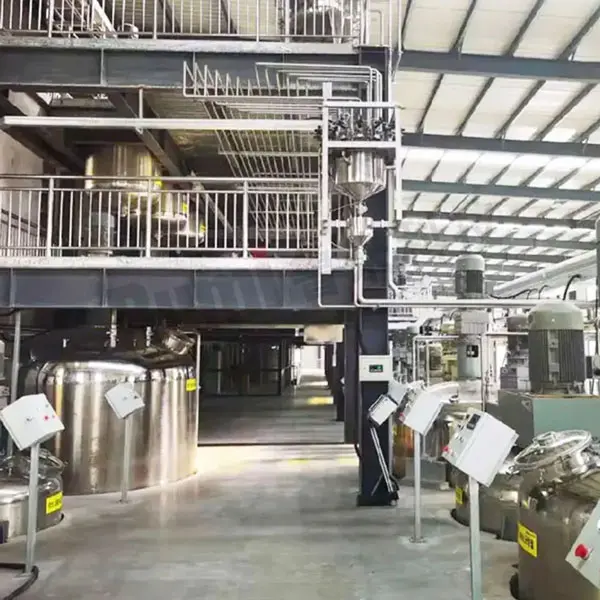
Traditional batching approaches often assume powder behaves predictably during feeding. In reality, powder flow introduces continuous disturbance into the system.
Three primary instability mechanisms define industrial batching errors:
Flow inconsistency caused by particle size variation and bulk density fluctuation, which leads to non-linear discharge rates during gravity feeding and creates deviation between target and actual dosing values in multi-material formulations.
Hysteresis in weighing response, where delayed signal stabilization in load cells causes overshoot or undershoot in cut-off timing, resulting in cumulative dosing error across repeated batch cycles in continuous production environments.
Environmental drift effects, including vibration interference, temperature-induced sensor deviation, and long-term mechanical fatigue in weighing structures, which gradually reduce system repeatability under 24/7 industrial operation conditions.
The Automatic powder batching system is designed as a closed-loop control architecture combining mechanical feeding stages with real-time digital correction.
Instead of relying on fixed-time or volume-based feeding, the system continuously adjusts material input based on live weight feedback.
High-resolution load cell modules operate as the core measurement foundation, enabling real-time detection of incremental weight changes during feeding cycles. This allows the system to dynamically correct overshoot conditions before final discharge completion, significantly improving batch-to-batch consistency.
Multi-point weighing structure distributes load evenly across the hopper base, minimizing eccentric force interference and ensuring stable signal acquisition even under high-frequency vibration conditions common in industrial production lines.
Coarse feeding stage enables rapid material delivery at high flow rates to approach target weight efficiently, reducing overall batching cycle time in high-volume production environments such as chemical processing or construction material manufacturing.
Fine feeding stage transitions automatically when the system approaches target weight thresholds, reducing flow rate to controlled micro-dosing levels that prevent overshoot and improve final accuracy to within tight tolerance ranges.
Material cutoff logic is governed by predictive compensation algorithms that account for residual falling material inertia, ensuring that final dosing weight aligns with set parameters even under variable powder flow conditions.
Adaptive control algorithms continuously adjust feeding speed based on historical deviation patterns and real-time material behavior, allowing the system to compensate for density variation, humidity effects, and particle flow irregularities during extended production runs.
Closed-loop correction logic reduces cumulative error drift by recalibrating feeding thresholds after each batch cycle, ensuring long-term stability in continuous industrial operation scenarios where manual recalibration is not feasible.
The Small powder batching system is engineered for applications where production scale is limited, but formulation accuracy requirements remain strict.
Typical use cases include pilot production, laboratory-scale chemical formulation, specialty coatings, food ingredient blending, and customized material development.
Unlike large-scale systems, compact batching systems prioritize flexibility and rapid recipe switching.
Compact structural integration reduces footprint requirements while maintaining high weighing resolution, enabling deployment in constrained production environments such as R&D labs or small-scale manufacturing workshops without sacrificing dosing accuracy.
Rapid formula switching capability allows operators to transition between multiple material recipes with minimal system downtime, improving production flexibility in environments where batch variation is frequent and product customization is required.
Stabilized micro-dosing control ensures that even low-volume ingredient additions maintain proportional accuracy, which is critical in high-value formulations where small deviations can significantly affect final product performance.
One of the most complex challenges in powder batching is managing materials with inconsistent flow characteristics.
Different powders behave differently under gravity and vibration conditions.
Cohesive powders with high moisture sensitivity tend to form bridging structures inside hoppers, requiring mechanical agitation or vibration-assisted flow correction to ensure consistent discharge during batching cycles.
Free-flowing granular powders exhibit rapid discharge behavior, which requires precise control of gate opening speed to prevent overshooting target weights during coarse feeding stages.
Mixed-density formulations introduce segregation risk during feeding, requiring synchronized multi-material control strategies to maintain homogeneous composition throughout the batching process.
Industrial batching systems are often required to operate continuously for extended production cycles.
This introduces cumulative stability challenges that cannot be solved through initial calibration alone.
Long-term load cell stability ensures that measurement drift remains within controlled thresholds, preventing gradual deviation in dosing accuracy across extended production shifts without frequent recalibration interruptions.
Mechanical fatigue resistance in feeding components ensures consistent gate movement and discharge performance, reducing variability introduced by wear in high-cycle industrial environments.
Algorithmic self-correction compensates for slow system drift by continuously recalibrating baseline weight references based on real production data rather than static calibration values.
Ensures precise multi-component formulation in paint, ink, resin, and specialty chemical production where even minor ratio deviations can significantly affect viscosity, reaction behavior, and final product performance consistency.
Maintains stable cement, additive, and mineral powder proportions in large-scale building material production, improving structural consistency and reducing batch rejection rates in high-volume manufacturing environments.
Provides hygienic and accurate dosing of powder ingredients such as flour blends, seasoning mixes, and nutritional additives, ensuring product consistency across large-scale food production lines.
Enables high-precision lithium battery material batching, where strict compositional control directly influences electrochemical performance, energy density, and cycle stability of final battery products.
Choosing between system types depends on production scale, accuracy requirements, and operational flexibility.
Best suited for high-throughput continuous production environments where large batch volumes, multi-component formulations, and long operational cycles require maximum automation and minimal human intervention.
Optimized for flexible production scenarios, R&D environments, and specialty manufacturing where frequent formula adjustments and smaller batch sizes require rapid switching capability and compact system design.
RUMI is a professional supplier focused on chemical equipment and intelligent dosing solutions, serving global industries with high-precision mixing and batching systems.
Since developing its first high-precision dosing system in 2018, RUMI Technology has evolved into a global provider of intelligent batching and mixing equipment for fine chemical industries, new materials, and energy sectors.
Through multiple iterations of R&D and patented innovations, RUMI has established advanced technological capabilities in high-accuracy dosing control and intelligent batching system design.
The Automatic powder batching system and Small powder batching system are developed under this engineering framework, integrating high-precision weighing modules, adaptive control algorithms, and multi-stage feeding structures to achieve stable and repeatable powder dosing performance under complex industrial conditions.
With ISO9001 and CE certification, along with 72-hour factory testing standards and 24-hour response service systems, RUMI ensures that each batching system maintains consistent performance reliability across global industrial applications.
The core engineering value of an Automatic powder batching system is not simply automation, but controlled accuracy under continuous material variability. Similarly, the Small powder batching system is not a reduced version of large systems, but a precision-optimized architecture for flexible production environments.
Through dynamic weighing feedback, multi-stage feeding control, and adaptive compensation algorithms, modern powder batching systems transform unstable powder behavior into predictable, controllable dosing performance.
In industrial production environments where formulation accuracy directly determines product quality, system-level control engineering becomes the defining factor between operational stability and process variability.