 en
en  vi
vi  it
it  es
es  tr
tr  ja
ja  pt
pt  nl
nl  ru
ru  fr
fr  de
de  pl
pl  ar
ar News
Latest news and events.



Industrial mixing is no longer a simple mechanical blending process. In modern chemical, coating, food, pharmaceutical, and advanced materials production, mixing is defined by flow field control, shear distribution, energy transfer efficiency, and phase interaction stability.
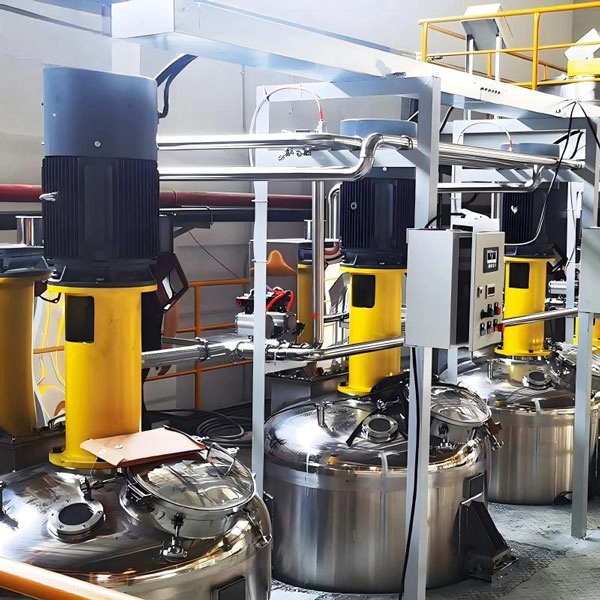
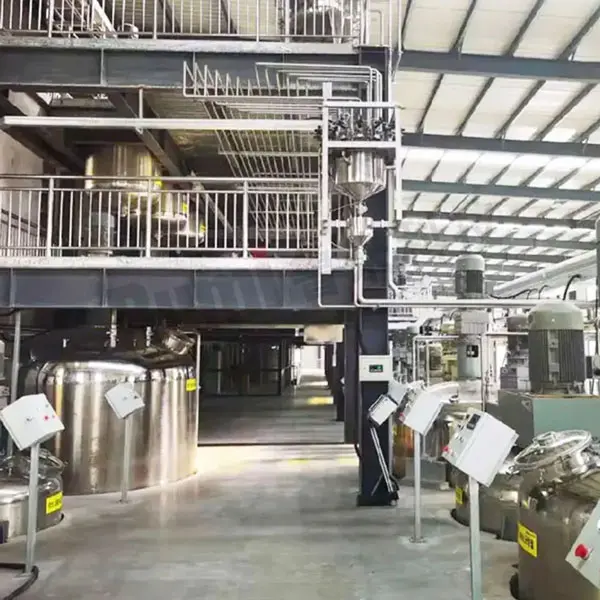
A Mixing tank with agitator is therefore not just a vessel equipped with a rotating shaft, but a controlled hydrodynamic system designed to manage viscosity-dependent flow regimes, eliminate stagnant zones, and maintain batch-to-batch consistency under continuous production conditions.
For procurement and engineering teams evaluating the Best mixing tank with agitator, the real challenge is not identifying whether mixing occurs, but whether the system can maintain predictable rheological performance across varying material states and production scales.
At the same time, decisions related to Mixing tank with agitator price are not simple equipment cost evaluations—they are lifecycle engineering decisions influenced by energy consumption, maintenance intervals, and process stability.
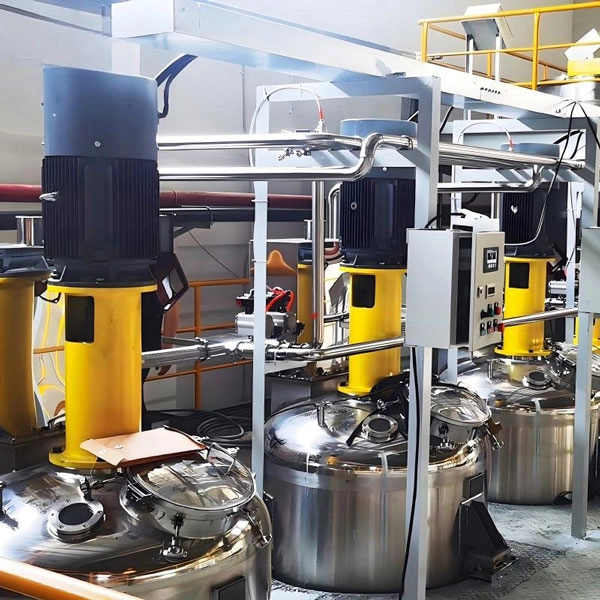
In industrial systems, mixing efficiency is determined by how effectively mechanical energy is converted into controlled fluid motion. Poorly designed systems create uneven shear zones, dead corners, and inconsistent dispersion patterns.
Three major failure mechanisms dominate industrial mixing inefficiency:
Flow stagnation zones caused by insufficient axial circulation, where low-energy regions inside the tank prevent full material exchange, leading to localized composition inconsistency and batch variability in chemical and coating processes.
Shear imbalance in high-viscosity systems, where excessive localized stress near the impeller creates over-shearing while other regions remain under-mixed, resulting in unstable rheological properties and inconsistent product performance.
Energy dissipation inefficiency, where motor input energy is not effectively converted into usable mixing flow but instead lost as heat and turbulence, increasing operational cost and accelerating mechanical wear in continuous production environments.
The engineering foundation of a Mixing tank with agitator lies in the controlled generation of axial and radial flow patterns through optimized impeller geometry, rotational speed control, and tank geometry matching.
Engineered impeller blade geometry is designed to generate controlled axial circulation loops that ensure full vertical mixing within the tank volume, eliminating density stratification in multi-component systems such as resins, slurries, and emulsions.
Multi-stage impeller configurations allow simultaneous management of macro-circulation and micro-dispersion zones, ensuring that both bulk mixing and fine particle distribution occur within a single operational cycle without requiring multiple processing stages.
For low-viscosity fluids, high-speed radial flow impellers promote rapid homogenization through turbulent mixing regimes, ensuring fast batch turnover in high-throughput production environments such as coatings and liquid chemicals.
For medium to high-viscosity systems, axial flow impellers generate deep circulation loops that reduce dead zones and ensure uniform shear distribution across the entire tank volume, preventing incomplete mixing in semi-solid or polymer-based formulations.
For non-Newtonian fluids, variable-speed control systems dynamically adjust rotational torque to maintain stable flow behavior despite changing viscosity during chemical reactions or temperature variation processes.
Optimized tank bottom curvature and wall-to-impeller spacing reduce stagnant flow regions where material accumulation typically occurs, improving cleaning efficiency and reducing contamination risks in food and pharmaceutical applications.
Baffle integration enhances turbulence control by breaking rotational vortex formation, converting circular flow into axial mixing energy that significantly improves overall mixing efficiency and reduces cycle time.
Industrial mixing systems are often required to operate continuously for extended production cycles, where mechanical wear and process drift become critical performance factors.
Shaft sealing systems are engineered for long-duration operation under chemical exposure and thermal variation, ensuring that leakage risks are minimized even under high-speed rotation and high-viscosity load conditions.
Bearing load distribution systems reduce axial stress concentration on rotating shafts, improving mechanical stability and extending service life under continuous 24/7 operation scenarios commonly seen in large-scale manufacturing plants.
Energy-efficient drive systems optimize torque-to-speed conversion, reducing unnecessary energy loss while maintaining stable mixing intensity across varying batch volumes and material types.
Ensures uniform reactant distribution throughout the tank volume, reducing localized concentration gradients that can lead to incomplete reactions or unwanted by-products in industrial chemical synthesis processes.
Maintains stable pigment dispersion and prevents sedimentation during production cycles, ensuring consistent color performance and viscosity stability across large batch production runs.
Provides hygienic mixing environments with controlled shear forces that preserve material integrity while ensuring complete ingredient homogenization in sauces, dairy products, and liquid formulations.
Delivers high-precision mixing control required for active ingredient uniformity, ensuring compliance with strict formulation standards and batch consistency requirements in regulated production environments.
The Mixing tank with agitator price is determined by multiple engineering and configuration variables rather than simple tank size or motor power.
Multi-stage or multi-impeller configurations increase manufacturing complexity but significantly improve mixing performance across different viscosity regimes, directly influencing equipment pricing based on engineering sophistication.
Stainless steel grades, corrosion resistance requirements, and hygiene compliance standards directly affect production cost, especially in food, pharmaceutical, and high-corrosion chemical environments.
Advanced variable-frequency drive systems and automated process control modules increase system intelligence and reduce operational variability, but also contribute to higher initial investment cost balanced by long-term efficiency gains.
Higher mixing uniformity requirements, tighter batch consistency tolerances, and extended operational stability specifications increase design complexity and directly influence final system cost structure.
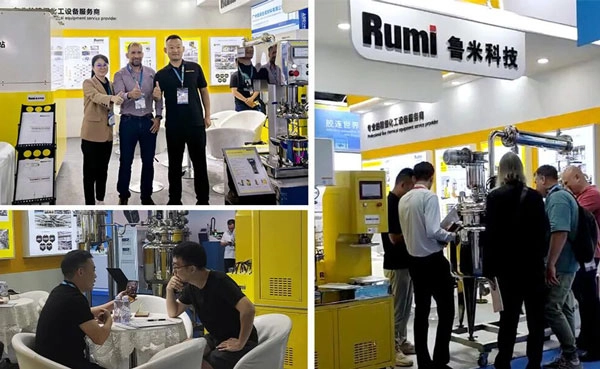
RUMI is a professional supplier focused on chemical equipment and intelligent process solutions, serving global industries with advanced mixing and dosing systems.
Since launching its first high-precision mixing and dosing equipment in 2018, RUMI Technology has evolved into a global provider of fine chemical process solutions, specializing in customized systems for coatings, resins, new materials, and energy-related industries.
Through continuous research and hundreds of engineering iterations, RUMI has developed patented technologies in mixing efficiency optimization, flow field control, and energy-efficient agitation systems.
The Mixing tank with agitator systems developed under RUMI engineering architecture integrate optimized impeller design, fluid dynamics modeling, and intelligent control systems to ensure stable mixing performance under complex industrial conditions.
With ISO9001 and CE certification, along with strict 72-hour factory testing and 24-hour response service systems, RUMI ensures reliable operational performance and long-term process stability for global industrial clients.
Procurement and engineering teams typically evaluate mixing systems using process-driven criteria:
Assess mixing uniformity across full tank volume rather than localized sampling points to ensure true process consistency under industrial-scale production conditions.
Evaluate system performance across different viscosity ranges to confirm adaptability for multi-product manufacturing environments requiring flexible production capability.
Analyze energy consumption per batch cycle to determine long-term operational cost efficiency rather than focusing solely on motor power ratings.
Verify mechanical stability under continuous operation to ensure shaft, sealing, and bearing systems can sustain long-term industrial workloads without performance degradation.
The Best mixing tank with agitator is defined by its ability to transform mechanical rotation into controlled, predictable, and repeatable fluid dynamics across a wide range of industrial processes.
Through optimized impeller geometry, viscosity-adaptive flow control, and engineered tank design, modern mixing systems achieve stable dispersion, reduced energy loss, and improved batch consistency in complex production environments.
When evaluated from a process engineering perspective, Mixing tank with agitator price reflects not only equipment cost but also long-term operational efficiency, maintenance frequency, and production stability—making it a core decision factor in industrial system design.