 en
en  vi
vi  it
it  es
es  tr
tr  ja
ja  pt
pt  nl
nl  ru
ru  fr
fr  de
de  pl
pl  ar
ar News
Latest news and events.




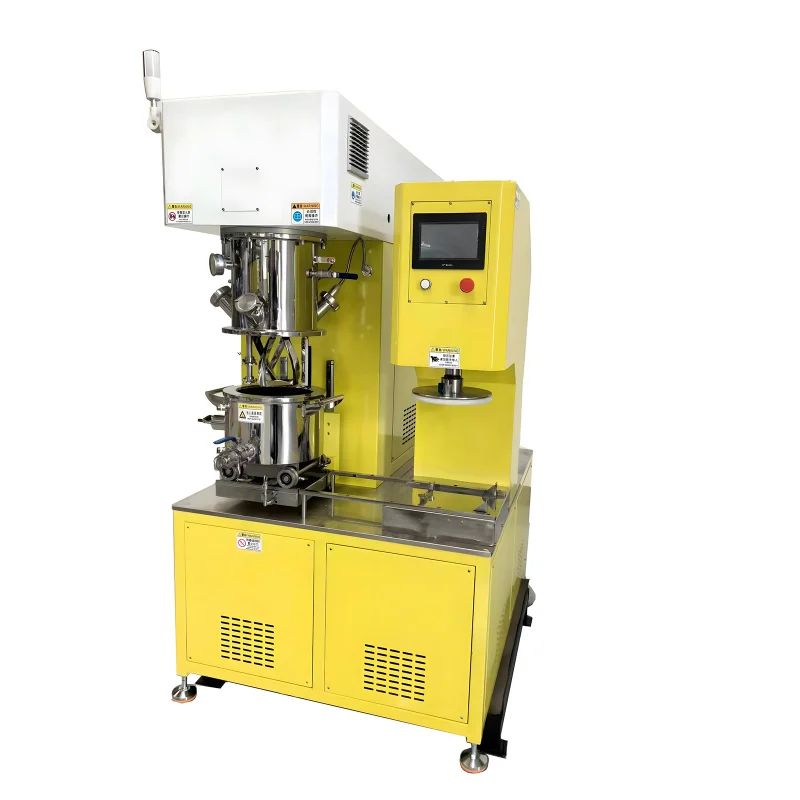
In industrial chemical production, the reactor is not simply a vessel—it is the core system that determines reaction kinetics realization, heat transfer efficiency, mass transfer uniformity, and ultimately product yield and batch consistency. For engineers and procurement teams evaluating Chemical Reactor working principle and Chemical Reactor price, the real decision driver is not the equipment itself, but how effectively it can reproduce laboratory reaction behavior at industrial scale without deviation in conversion rate, selectivity, or thermal stability.
Rumi has been deeply engaged in high-efficiency mixing and reaction system engineering since 2018, focusing on process-intensive industries such as fine chemicals, polymer synthesis, resin modification, and energy materials. Through iterative design of heat-transfer jackets, multi-stage agitation systems, and intelligent thermal-pressure coupling controls, Rumi reactors are engineered to maintain predictable reaction pathways even under highly exothermic or mass-transfer-limited conditions.
Understanding reactor selection therefore requires two parallel perspectives:
the mechanistic working principle of how reactions are controlled, and the price structure logic that defines lifecycle investment.
A modern industrial reactor operates on three coupled engineering domains: thermodynamics, fluid mechanics, and reaction kinetics. The Chemical Reactor working principle is fundamentally about controlling these domains simultaneously under dynamic operating conditions.
In most industrial reactions—especially polymerization, resin synthesis, and catalytic processes—heat release or absorption is continuous. If temperature gradients develop inside the vessel, reaction pathways shift, causing by-products or molecular weight inconsistencies.
Industrial reactors address this through structured heat-transfer systems:
Full jacket and dimple jacket configurations maintain uniform thermal contact across vessel walls, ensuring that heat exchange is not localized but distributed across the entire reaction volume, which stabilizes exothermic reaction rates and prevents thermal runaway in sensitive polymerization systems.
Internal coil and external semicircle heat exchange loops enhance thermal response speed, allowing rapid adjustment of reaction temperature during critical conversion stages where viscosity changes sharply.
Combined heating and cooling integration enables simultaneous heat input and extraction, which is essential in reactions with fluctuating enthalpy profiles.
These mechanisms ensure that reaction temperature remains within a narrow operational window, directly influencing conversion efficiency and molecular consistency.
Reaction performance is heavily dependent on how efficiently reactants are dispersed at micro and macro scales. Poor mixing leads to concentration gradients, incomplete conversion, and localized side reactions.
Typical industrial reactor mixing structures include:
Anchor-type agitators for high-viscosity systems, ensuring boundary layer disruption and preventing material stagnation near vessel walls.
Helical ribbon impellers that generate axial flow circulation, improving bulk homogenization in semi-solid or non-Newtonian systems.
Oblique blade configurations designed to enhance turbulent dispersion in low to medium viscosity systems, improving reactant contact frequency.
Combined mixing systems integrating multiple impeller types to maintain performance consistency across viscosity transitions during reaction progression.
The result is a controlled flow field that continuously renews reactant interfaces, improving mass transfer coefficients and stabilizing reaction rates across batches.
In reactions involving volatile components or solvent recovery, condensation control becomes critical.
Horizontal tube condensers provide stable heat removal capacity for continuous vapor-phase condensation.
Vertical condensers improve footprint efficiency and are preferred in space-constrained industrial setups.
Integrated reflux systems ensure controlled return of condensed material, maintaining reaction equilibrium and preventing compositional drift.
This directly impacts solvent recovery efficiency and product purity.
Multi-zone heat transfer design ensures stable thermal gradients across the reactor volume, preventing localized overheating or underreaction zones that typically cause batch inconsistency in industrial synthesis.
Multi-geometry agitation systems maintain uniform shear distribution, which stabilizes viscosity-dependent reactions and improves molecular structure uniformity.
Vacuum and inert gas compatibility eliminates oxygen interference in sensitive reactions, preserving product stability in oxidation-prone systems.
The Chemical Reactor price is not determined by vessel size alone. It is a composite function of process complexity, material selection, automation level, and thermal-mechanical integration depth.
Reactor material directly impacts cost due to corrosion resistance, mechanical strength, and regulatory compliance requirements.
Common options include:
SUS304 for general chemical processing environments with moderate corrosive exposure
SUS316L for chloride-rich or pharmaceutical-grade applications requiring higher corrosion resistance
Duplex stainless steel (SS2205) for high-pressure catalytic systems
PTFE-lined structures for highly aggressive chemical environments
Material selection significantly influences lifecycle cost rather than initial price alone.
Reactor geometry affects both fabrication difficulty and process capability:
Elliptical head designs improve pressure distribution and reduce stress concentration, enabling higher operational safety margins in pressurized reactions.
Flat cover configurations simplify maintenance access but require reinforced sealing systems to maintain airtight integrity.
Customized bottom structures influence discharge efficiency and residual material control, particularly in high-viscosity resin systems.
More complex geometries increase fabrication precision requirements, directly impacting pricing.
Modern reactors increasingly integrate digital control architectures:
PLC-based control systems manage multi-variable process conditions such as temperature ramps, agitation speed, and pressure regulation.
Frequency converter-driven agitators enable real-time torque adjustment based on viscosity changes during reaction progression.
Sensor-based feedback loops allow continuous monitoring of thermal stability and reaction consistency.
Higher automation levels increase initial cost but reduce operational variability and batch rejection rates.
Industrial reactors are evaluated not only by specifications but by their ability to solve real process instability issues.
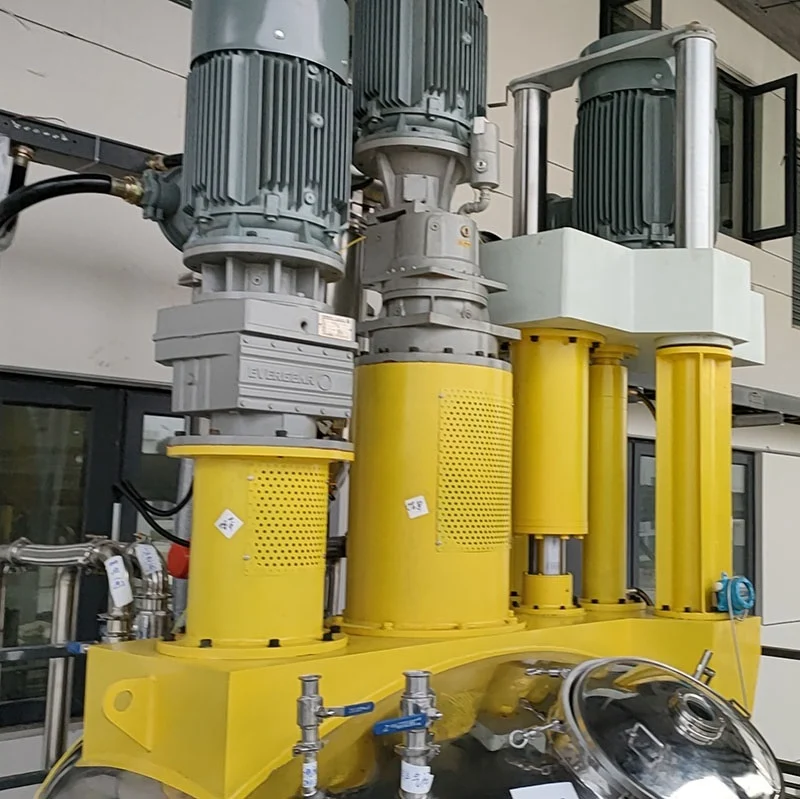
Rumi designs reactors with multi-layer thermal buffering structures that distribute heat release evenly. By combining jacketed heat exchange with controlled agitation flow patterns, reaction hotspots are eliminated, ensuring stable kinetics even under high reaction enthalpy conditions.
Many resin and polymer systems exhibit drastic viscosity changes during reaction stages. Without torque-adaptive mixing systems, this leads to dead zones and incomplete conversion.
Rumi reactors solve this through:
High-torque agitation systems that maintain rotational stability under increasing load
Multi-impeller coordination that adapts flow structure as viscosity increases
Scraper-assisted wall renewal systems preventing material buildup
Reactor volume selection should be based on residence time distribution requirements rather than nominal capacity, ensuring that reaction kinetics are fully completed under industrial throughput conditions without sacrificing conversion efficiency or molecular uniformity.
Heat transfer coefficient (U-value) must be evaluated under real operating viscosity conditions rather than standard fluid assumptions, as polymer systems behave non-linearly during reaction progression.
Agitation power density (kW/m³) is a more reliable indicator of mixing capability than nominal RPM values, particularly in high-viscosity systems where torque stability defines reaction consistency.
Chemical reactors are widely deployed in:
Resin polymerization systems requiring controlled molecular weight distribution
Pharmaceutical intermediate synthesis demanding strict impurity control
Petrochemical catalytic reactions requiring stable temperature-pressure coupling
New energy material synthesis where batch reproducibility determines downstream battery performance
Each application imposes different constraints on heat transfer speed, mixing uniformity, and pressure stability.
Multi-layer jacket structures allow precise thermal zoning control, ensuring independent heating and cooling zones that maintain optimal reaction kinetics throughout different stages of chemical transformation.
High-torque agitation systems ensure stable mixing performance even when viscosity increases by several orders of magnitude during polymerization or condensation reactions.
Integrated vacuum systems eliminate oxygen interference and improve reaction purity by preventing unwanted oxidation pathways.
In continuous stirred tank reactors, performance depends on maintaining steady-state equilibrium between inflow, reaction kinetics, and outflow, where mixing uniformity directly determines conversion stability.
Material grade, pressure rating, automation level, and heat transfer system complexity are the primary cost drivers, not simply volume or capacity.
Maintaining identical mixing Reynolds number and heat transfer coefficients between pilot and industrial scale is essential for reaction reproducibility.
The value of a chemical reactor is ultimately defined by its ability to maintain controlled reaction environments under variable industrial conditions. When evaluating Chemical Reactor working principle and Chemical Reactor price, engineering teams must prioritize thermal stability, mixing efficiency, and scalability over nominal specifications.
Through integrated thermal management systems, high-torque mixing architectures, and precision control logic, Rumi delivers reactor systems designed for stable, predictable, and scalable chemical production—ensuring that laboratory chemistry can be reliably translated into industrial output without performance deviation.