 en
en  vi
vi  it
it  es
es  tr
tr  ja
ja  pt
pt  nl
nl  ru
ru  fr
fr  de
de  pl
pl  ar
ar News
Latest news and events.




When liquid additives are still added manually, even a skilled operator can introduce variation from one batch to the next. Small differences in weighing, valve timing, material handling, or recording can affect the final formulation. For paints, inks, composites, cosmetics, adhesives, and other formulation-driven products, the problem is not simply labor consumption. It is whether the specified quantity is actually delivered every time and whether the production team can verify what happened during each batch.
Traditional metering methods can also become difficult when different additives have different viscosities, densities, dosing quantities, or flow characteristics. A dosing method that works well for a high-volume liquid may not provide the same control for a low-volume additive. This is why selecting the best automatic liquid dosing equipment requires more than comparing a nominal accuracy figure. The weighing method, metering components, valve response, control logic, calibration, recipe management, and production environment all need to work together.
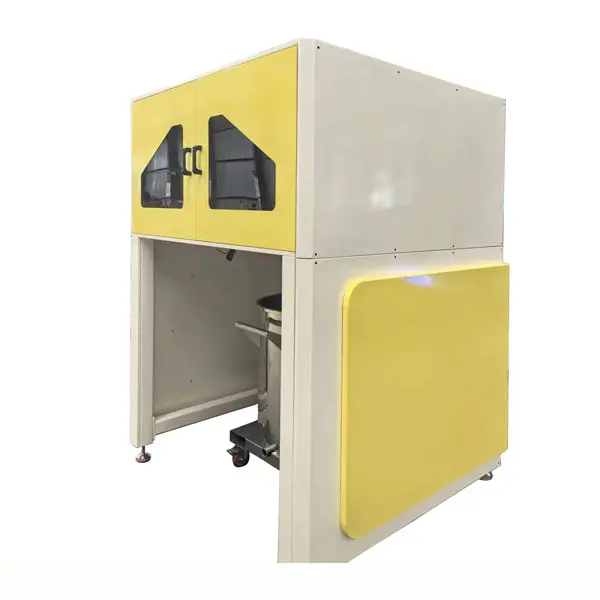
A high-accuracy automatic additives dosing system typically combines weighing and metering with controlled material delivery. Rumi's system uses a weighing module together with valves or other suitable conveying components to achieve controlled dosing and interlock control. Depending on the material and process configuration, the system can be engineered around the customer's specific dosing requirements rather than relying on one standard configuration.
The weighing module provides direct feedback on the quantity being added. Instead of relying only on an assumed flow rate or fixed dosing time, the control system can monitor the actual change in weight during the addition process. This is particularly valuable when an additive is used in relatively small quantities or when the formulation is sensitive to concentration changes.
Valve control is equally important. A dosing system needs to control not only whether a valve is open or closed, but also the sequence and conditions under which material can enter the receiving vessel. Interlock control can prevent the next dosing step from starting before the required condition has been reached. This reduces the risk of incorrect sequencing, unintended material addition, and operator intervention at critical stages.
For liquid additives, the appropriate valve and metering arrangement should be selected according to viscosity, density, required dosing quantity, flow behavior, and process requirements. High-viscosity materials may require a different delivery strategy from low-viscosity liquids. Similarly, a system designed for large-volume dosing should not automatically be assumed to provide the same performance when handling small quantities of expensive additives.
A PLC system becomes valuable when dosing needs to be repeatable rather than simply automatic. Rumi's optional PLC software can store production formulas and control automatic batching and dosing according to the selected recipe.
Formula management reduces the need for operators to repeatedly enter additive quantities manually. Once an approved formula is stored, the system can execute the required dosing sequence according to predefined parameters. This helps reduce common errors such as entering the wrong quantity, selecting the wrong additive, or adding materials in the wrong sequence.
For plants producing multiple formulations, recipe management also makes changeovers more controlled. Different product formulas can be selected without manually rebuilding the entire dosing instruction for every batch. The exact control logic depends on the customer's process, but the objective is consistent: move critical dosing decisions from memory and manual intervention into a controlled production procedure.
Data traceability adds another layer of control. Dosing records can provide information about what was added during a batch, supporting production review and quality investigation. For formulation-based industries, this is more useful than simply knowing that a machine completed its cycle. The recorded dosing information can help connect a finished batch with the actual additive quantities used during production.
There is no single accuracy number that can fairly describe every automatic dosing system. Actual dosing performance depends on the target quantity, material characteristics, weighing module resolution, metering method, valve response, calibration condition, installation, and operating environment.
For example, dosing a relatively large quantity of a stable liquid is fundamentally different from dosing a small quantity of a viscous additive. The system may also behave differently when material temperature changes its viscosity or when residual liquid remains in the delivery line.
For this reason, procurement teams should ask manufacturers how accuracy is evaluated and under what operating conditions. A useful technical evaluation should consider the actual additive, target dosing range, batch size, required repeatability, and production cycle rather than relying only on a percentage printed in a product brochure.
Calibration is another critical consideration. A well-designed system needs a practical method for checking and maintaining the weighing and dosing system over time. Stable measurement feedback is particularly important when the additive has a high unit value or when a small dosing deviation can alter the performance of the final product.
Automatic dosing becomes particularly useful where several additives must be introduced according to a defined formulation.
In paints and coatings, accurate additive dosing can help maintain the intended formulation when batches require multiple components with different addition quantities. In printing inks, controlled dosing is valuable because relatively small changes in additives can influence viscosity, flow, appearance, and printing behavior.
Composite manufacturers may use automated dosing for additives associated with resin and composite formulations, while textile auxiliary producers can benefit from repeatable batching across different product grades. Cosmetics and adhesives also require controlled formulation execution because product properties can be sensitive to additive ratios.
Food processing, construction chemicals, and perfume and aroma production present their own material-handling requirements. The same basic automation concept cannot simply be copied across every application. Material compatibility, viscosity, dosing quantity, vessel configuration, hygiene requirements where applicable, and production sequence should be considered during system design.
The best automatic liquid dosing equipment is not necessarily the machine with the highest advertised accuracy. It is the system that can maintain the required dosing performance under the customer's actual production conditions.
Procurement teams should evaluate:
Dosing accuracy and repeatability: Can the supplier demonstrate performance using the actual dosing range and material characteristics?
Weighing module: What measurement resolution and weighing configuration are appropriate for the batch size and additive quantity?
Metering method: Is the selected method suitable for the viscosity, density, flow behavior, and required dosing volume?
Valve control: Can valves provide stable and repeatable material delivery?
Interlock control: Can the system prevent incorrect sequencing or unauthorized dosing steps?
PLC system: Can the PLC manage the required automatic batching and dosing logic?
Formula management: Can operators store, select, and execute different approved recipes?
Data traceability: Can dosing information be recorded for production review and batch verification?
Material compatibility: Are wetted components suitable for the additives being handled?
Production-line integration: Can the dosing system communicate and coordinate with the customer's existing equipment and process?
Customization: Can the manufacturer modify the weighing, metering, valve, PLC, and software configuration around the actual process?
These questions are more useful than comparing equipment only by price or a single specification.
A capable manufacturer should be able to translate a production formula into an engineered dosing system. This means understanding the customer's additives, dosing quantities, batch size, production takt, formulation changes, required accuracy, and existing equipment before proposing the system configuration.
Rumi Technology has focused on fine chemical equipment since launching its first self-developed high-precision dosing system and high-efficiency mixing equipment in 2018. After multiple R&D iterations, the company developed its own dosing and mixing technologies and now focuses on customized equipment solutions for industries including paints and coatings, printing inks, composites, new materials, and other formulation-driven applications.
The company's High Accuracy Automatic Additives Dosing System can be configured with weighing and metering structures, weighing modules, valves or screw conveyors, and interlock control. An optional PLC system provides formula memory, automatic batching/dosing, and production data traceability. Rather than treating dosing equipment as a fixed standard machine, Rumi provides exclusive customized solutions according to each customer's specific requirements.
For buyers evaluating automatic liquid dosing equipment manufacturers, this engineering approach matters. The manufacturer should be able to address the complete control chain—from weighing and material delivery to valve operation, PLC logic, recipe management, and data recording—rather than supplying isolated components that the customer must integrate independently.
Rumi also operates a quality assurance system that includes 72-hour factory testing and a 24-hour after-sales response mechanism, with ISO 9001 and CE certifications. For production facilities where dosing equipment becomes part of a continuous manufacturing process, factory testing and responsive technical support can be as important as the initial equipment specification.
Yes, provided the system is engineered for the required number and characteristics of additives. A multi-additive system can use separate dosing paths and controlled valve sequences, while the PLC coordinates the required order and quantity.
The important point is that adding more dosing channels increases system complexity. Each additive may have a different dosing range, viscosity, material compatibility requirement, or delivery behavior. Therefore, a manufacturer should evaluate the additives individually instead of applying an identical dosing configuration to every material.
For plants with frequent recipe changes, PLC-based formula management can provide a significant operational advantage. The system can use stored recipes to control the required batching sequence, while interlocks and weighing feedback help reduce the risks associated with manual execution.
Ultimately, the right automatic liquid dosing equipment should be selected as a complete process-control solution rather than as a standalone dosing machine. Accurate weighing, appropriate metering, reliable valve control, PLC-based recipe management, interlocks, traceability, and production-line integration all contribute to consistent batches. For procurement teams, the strongest manufacturer is therefore not simply the one offering the lowest price or the largest catalog, but the one capable of engineering these functions around the customer's actual materials, formulas, production targets, and long-term operating requirements.