 en
en  vi
vi  it
it  es
es  tr
tr  ja
ja  pt
pt  nl
nl  ru
ru  fr
fr  de
de  pl
pl  ar
ar News
Latest news and events.



The quality of adhesive products depends heavily on how effectively raw materials are mixed during production. Unlike ordinary liquid blending processes, adhesive manufacturing often involves complex formulations containing resins, fillers, additives, and functional components with different viscosity characteristics. When these materials are not properly dispersed, manufacturers may experience unstable viscosity, inconsistent bonding performance, and variations between production batches.
For many adhesive producers, traditional mixing equipment becomes difficult to operate when handling high viscosity materials. Limited mixing force, insufficient circulation, and poor temperature control can create problems such as uneven material distribution, excessive air bubbles, and longer processing cycles. These issues not only affect final adhesive performance but also increase production costs through material waste, additional quality inspections, and frequent equipment maintenance.
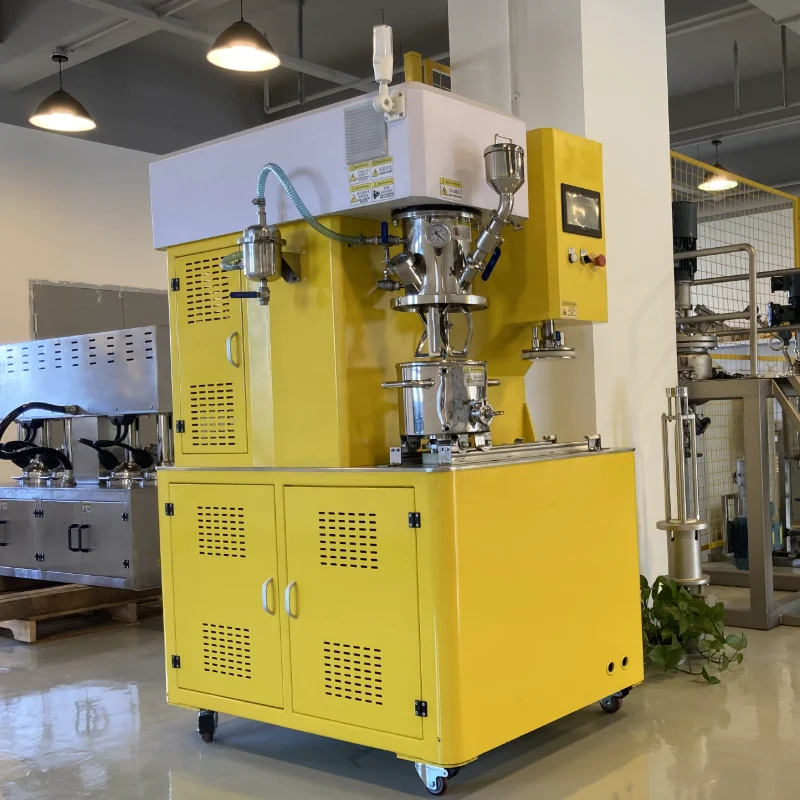
Modern adhesive manufacturers require more than a basic agitator. A reliable Adhesive Mixing Equipment solution must combine suitable mixing structures, accurate temperature management, strong material compatibility, and stable long-term operation. By selecting the right equipment configuration, companies can improve production consistency while reducing the risks associated with complex adhesive formulations.
RUMI Technology specializes in chemical equipment and customized solutions, providing professional mixing systems for resin, adhesive, coating, composite material, and other fine chemical industries. With experience in high-efficiency mixing technology and intelligent dosing solutions, RUMI Technology helps manufacturers achieve more stable and efficient production processes.
The biggest challenge in adhesive production is not simply moving materials inside a vessel. It is creating a controlled mixing environment where every component can be evenly distributed while maintaining the required physical and chemical properties of the formulation.
Different adhesive products have significantly different processing requirements. A low viscosity adhesive may require rapid circulation and efficient blending, while a high viscosity sealant or structural adhesive needs stronger torque, better wall scraping performance, and more controlled material movement. Therefore, the mixing system must be selected according to the characteristics of the adhesive rather than using a standard configuration for every application.
A professional Best Adhesive Mixing Machine is usually designed around several key factors, including mixing force, flow pattern, shear level, temperature stability, and material compatibility. These factors work together to determine whether the equipment can maintain consistent adhesive quality during continuous production.
For high viscosity adhesives, mixing efficiency mainly depends on how effectively the equipment moves materials throughout the vessel. Traditional impellers may create circulation only in limited areas, leaving high resistance zones where materials accumulate. Advanced mixing structures solve this problem by improving axial and radial movement, allowing the entire batch to participate in the mixing process.
Anchor Type and Helical Ribbon Type mixing systems are commonly used for demanding adhesive applications because they provide strong material circulation and better handling of thick formulations. The Anchor Type design is particularly suitable for materials that tend to stick to the vessel wall, as the structure helps move material away from the surface and reduces dead zones. This is valuable for products such as sealants, construction adhesives, and high viscosity polymer-based materials.
Helical Ribbon Type mixers provide strong vertical and horizontal material movement, making them suitable for adhesives with high solid content or dense formulations. The continuous circulation created by the ribbon structure improves ingredient distribution and helps maintain uniform viscosity throughout the batch.
For applications requiring fine dispersion, High Shear Mixing technology can provide additional processing capability. Some adhesives contain fillers, pigments, or functional additives that must be evenly distributed at a microscopic level. Properly controlled shear force helps break down agglomerates and improve formulation stability without unnecessarily increasing processing temperature.
In many industrial applications, the most effective solution is not a single mixing method but a combined system. By integrating different mixing functions, manufacturers can achieve both efficient circulation and precise dispersion. This approach is especially useful for advanced adhesive formulations where production requirements involve multiple processing stages.
Mixing performance alone cannot guarantee adhesive quality. Many adhesive formulations are sensitive to temperature changes, and even small variations during production can influence viscosity, reaction behavior, and final application performance.
A well-designed adhesive mixing machine integrates heating and cooling systems to maintain stable processing conditions. Depending on production requirements, manufacturers may use jacket heating, temperature controllers, cooling circulation systems, or chillers to regulate the material environment.
For example, some high viscosity adhesives require controlled heating to reduce resistance during mixing and improve material flow. However, excessive temperature increase may affect formulation stability or accelerate unwanted reactions. Precise temperature management allows manufacturers to maintain the ideal processing range throughout the entire mixing cycle.
Material contact selection is also an important factor in equipment reliability. Adhesive formulations may contain chemical components that require stronger corrosion resistance or higher durability. RUMI Technology provides equipment solutions using different material options according to application requirements, including SUS304 and SUS316L stainless steel configurations for demanding chemical environments.
SUS304 is commonly selected for general adhesive production because it provides a good balance between durability and cost efficiency. For applications involving more aggressive chemical components or higher corrosion resistance requirements, SUS316L can provide longer service life and improved reliability.
Vacuum processing is another important function for high-performance adhesive manufacturing. During mixing, air can become trapped inside high viscosity materials, creating bubbles that affect appearance, bonding strength, and product consistency. Vacuum mixing helps remove entrapped air and improves the quality of adhesives used in precision applications.
This function is particularly valuable for industries where adhesive performance and appearance are critical, including electronic assembly, composite manufacturing, and advanced industrial bonding applications.
The value of professional adhesive mixing equipment is reflected in how effectively it adapts to different production environments. Adhesive manufacturers do not work with a single material category. Epoxy adhesives, polyurethane adhesives, silicone sealants, hot melt adhesives, and coating materials each have different viscosity levels, reaction characteristics, and processing requirements. Therefore, the equipment configuration must be matched with the specific formulation and production process.
For epoxy adhesive production, mixing accuracy is one of the most important factors affecting final bonding performance. Epoxy systems usually involve resin components, curing agents, fillers, and additives that must be distributed evenly to achieve consistent mechanical properties. If mixing is insufficient, manufacturers may experience uneven curing behavior, unstable viscosity, or differences in bonding strength between batches.
A suitable adhesive mixing machine helps epoxy manufacturers maintain better formulation consistency through controlled agitation, stable temperature management, and effective dispersion. When combined with vacuum processing, the equipment can also reduce air entrapment, which is especially important for applications requiring strong adhesion and reliable structural performance.
Polyurethane adhesives present another challenge because their production process is highly sensitive to processing conditions. Changes in temperature, moisture exposure, or mixing efficiency may influence reaction stability and final product characteristics. For these materials, the mixing system must provide accurate control rather than simply increasing mechanical force.
By combining suitable agitation structures with reliable heating and cooling systems, manufacturers can maintain more stable production conditions. This is particularly important for industrial polyurethane adhesives used in automotive components, construction materials, and composite applications where consistent performance is required.
Silicone sealants are among the most demanding materials for mixing equipment because of their extremely high viscosity and high filler content. Conventional mixers often struggle with material movement, resulting in longer processing times and uneven dispersion.
For silicone sealant production, equipment with strong torque capability, effective wall scraping, and stable operation is essential. Anchor Type and Helical Ribbon Type mixing structures are commonly selected because they can handle thick materials while maintaining continuous circulation inside the vessel. This reduces material accumulation and improves batch uniformity.
Hot melt adhesive production also requires careful equipment selection because these materials depend heavily on temperature management. Unlike room-temperature adhesives, hot melt systems require controlled heating to maintain proper melting conditions while preventing unnecessary thermal degradation.
A professional mixing system allows manufacturers to manage both temperature and mechanical movement during processing. Stable heating performance, efficient circulation, and accurate control help reduce production variation and improve overall manufacturing efficiency.
In coating and composite material industries, adhesive mixing equipment also plays an important role in maintaining product appearance and functional performance. Coatings often require uniform distribution of pigments, fillers, and additives. Poor dispersion may cause surface defects, inconsistent color, or reduced application performance.
For these applications, manufacturers often require equipment that combines efficient mixing with precise process control. This demonstrates why a customized approach is more valuable than a standard machine configuration.
When purchasing industrial equipment, many companies initially focus on equipment price. However, the real value of a mixing system depends on how effectively it supports production stability, reduces operating costs, and maintains product quality over years of operation.
The Best Adhesive Mixing Machine should be evaluated based on several factors, including capacity, mixing configuration, material selection, automation level, energy consumption, and maintenance requirements.
Equipment capacity is one of the first considerations. A mixing vessel that is too small may limit production efficiency and increase the number of batches required, while an oversized system may increase investment costs and energy consumption. The ideal capacity should match current production needs while allowing reasonable expansion for future growth.
The mixing system configuration is another critical factor. Different adhesive formulations require different mechanical solutions. High viscosity materials may require Anchor Type or Helical Ribbon Type mixers, while formulations requiring fine dispersion may benefit from High Shear Mixing functions. For complex production processes, a combined mixing system may provide greater flexibility by supporting multiple processing stages.
Material selection directly affects equipment durability and operating reliability. Since adhesive production involves various chemical formulations, the contact materials must be selected according to corrosion resistance, cleaning requirements, and service conditions.
RUMI Technology develops customized chemical equipment solutions based on different production requirements. The company focuses on improving mixing efficiency and providing reliable systems for resin, adhesive, coating, and new material manufacturers. Through continuous research and development, RUMI Technology has developed high-efficiency mixing equipment and precision dosing solutions designed for modern chemical production challenges.
Automation is also becoming increasingly important in adhesive manufacturing. Manual operation may be suitable for small production environments, but larger manufacturers often require automated control systems to improve consistency and reduce human error.
Advanced control systems can monitor:
Mixing speed
Temperature changes
Processing time
Production parameters
This allows manufacturers to create more repeatable production processes and improve quality management.
Energy consumption and maintenance requirements should also be considered when evaluating equipment investment. A machine with higher efficiency and better structural design may reduce long-term operating expenses by lowering power consumption, minimizing cleaning time, and reducing unexpected downtime.
A reliable mixing system should not only perform well during initial operation but also maintain stable performance throughout its service life.
As a professional supplier focused on chemical equipment and solutions, RUMI Technology provides global customers with reliable products, strict quality control, and efficient technical support. The company has developed deep expertise in fine chemical equipment by focusing on high-efficiency mixing technology and intelligent dosing solutions.
Since launching its first self-developed high-precision dosing system and high-efficiency mixing equipment in 2018, RUMI Technology has continued to develop customized solutions for different industries. Through hundreds of research and development iterations, the company has established advanced technical capabilities and obtained multiple invention patents related to mixing and dosing technology.
RUMI Technology works with customers in various fields, including paint and ink manufacturing, resin production, new materials, composites, and chemical processing. For adhesive manufacturers, this experience allows the company to provide equipment solutions based on actual production requirements rather than standard designs.
The company has established a quality assurance system that includes 72-hour factory testing and 24-hour after-sales response. With ISO9001 and CE certifications, RUMI Technology supports customers worldwide with dependable equipment performance and professional service.
By combining engineering experience, customized design capability, and advanced manufacturing processes, RUMI Technology helps adhesive manufacturers improve mixing consistency, reduce production problems, and achieve more efficient operations.
Choosing suitable adhesive mixing equipment is a long-term investment decision. The right machine should not only meet current production requirements but also support future manufacturing development.
A high-performance mixing system provides benefits beyond improved blending efficiency. It helps manufacturers maintain stable viscosity, reduce material waste, shorten processing time, and improve overall product consistency.
For companies producing high viscosity adhesives, sealants, coatings, and advanced chemical materials, selecting equipment based on formulation characteristics and production goals is essential. Through professional engineering design, precise process control, and reliable manufacturing quality, modern Adhesive Mixing Equipment can become a key part of improving production competitiveness.
With advanced mixing technology and customized chemical equipment solutions, RUMI Technology continues to support global manufacturers in building more efficient, stable, and reliable adhesive production systems.