 en
en  vi
vi  it
it  es
es  tr
tr  ja
ja  pt
pt  nl
nl  ru
ru  fr
fr  de
de  pl
pl  ar
ar News
Latest news and events.



High-viscosity materials are difficult to process with conventional mixing equipment. As viscosity and solids content increase, the material may move slowly through the vessel, remain attached to the tank wall, or resist dispersion. Agglomerates can be difficult to break down, while air introduced during mixing may remain trapped in the product. For temperature-sensitive formulations, controlling heat generated during mixing or maintaining a required process temperature can add another challenge.
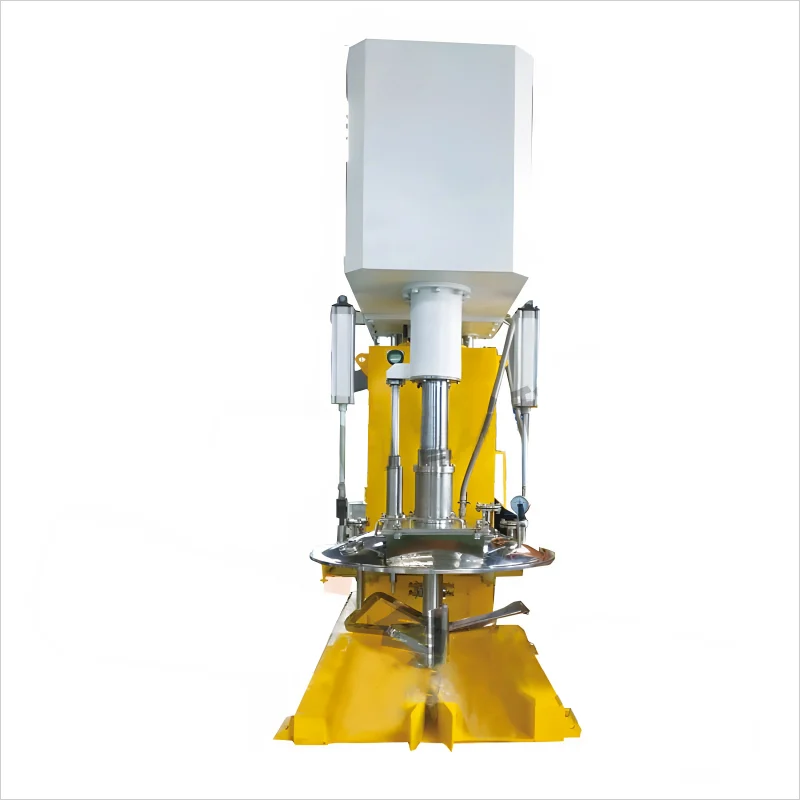
A double planetary mixer is designed around these processing conditions. Instead of relying on a single rotating shaft, it combines planetary movement, self-rotation, high-speed dispersion and wall scraping. Vacuum, heating or cooling, hydraulic lifting and PLC control can then be added according to the process. For companies comparing Double planetary mixer china price or evaluating Double planetary mixer china manufacturers, understanding how these functions work together is more useful than comparing equipment prices alone.
The main difference between a double planetary mixer and a conventional agitator is the movement of its mixing tools.
The planetary paddles rotate around their own shafts while simultaneously revolving around the center of the mixing vessel. This combination creates continuous movement through different areas of the tank rather than depending on rotation at one fixed position.
The two planetary paddles continuously push high-viscosity material through the vessel. As the material is moved toward the outer areas of the tank, the mixing pattern helps bring material from different zones into contact with the mixing tools. This is particularly important for materials that do not flow easily under their own weight.
The system can be understood as several functions working together:
Planetary rotation and self-rotation: promote continuous material circulation throughout the vessel.
Double planetary paddles: provide the primary mixing action for high-viscosity materials.
High-speed disperser: introduces a higher-shear dispersing action to help break down agglomerated material.
PTFE wall scraper: removes material adhering to the tank wall and returns it to the active mixing area.
The scraper is especially important when processing sticky formulations. Without effective wall scraping, material can remain outside the main mixing zone and gradually create differences in composition or temperature.
This is why a double planetary mixer is often considered for materials such as putty, silicone gel, sealants, structural adhesives, ceramic paste and other high-viscosity formulations. However, the correct configuration still depends on the material characteristics and production process rather than simply the application name.
The answer is not simply “higher efficiency.” Different components address different process limitations.
For a high-viscosity adhesive, for example, the planetary paddles provide the main bulk movement. The material does not need to flow freely through the vessel for the mixing tools to keep moving it.
For a lithium battery slurry or electronic paste, dispersion can become an additional concern. A high-speed disperser provides a separate dispersing action that complements the slower planetary mixing movement.
For sticky materials such as sealants or silicone-based products, material accumulation on the vessel wall can reduce effective mixing volume. The PTFE scraper continuously sweeps the wall, helping return material to the mixing zone.
This combination makes the equipment fundamentally different from simply increasing the speed of a conventional agitator.
When selecting a machine, buyers should therefore consider material viscosity, solid content, batch size, required mixing process and dispersion requirements together. There is no single mixer configuration that is automatically optimal for every high-viscosity formulation.
A vacuum system can be important when air incorporation or contact with atmospheric oxygen creates a process concern.
During mixing, air can become trapped in viscous materials and is difficult to release naturally because the material does not flow easily. Operating the vessel under vacuum can help remove bubbles generated during the mixing process and improve the consistency of the final mixture.
Vacuum processing can also reduce direct contact between the material and air. For formulations where oxygen exposure is undesirable, this provides an additional process-control function.
Temperature management is another consideration. High-viscosity mixing can generate heat, while some formulations require controlled heating to achieve suitable processing conditions. A jacketed tank can be configured for heating or cooling using a heater or chiller, allowing the process temperature to be adjusted according to material and production requirements.
For example, a formulation may require heating during one stage to improve processability and cooling during another stage to control the material temperature. The appropriate jacket configuration should therefore be determined from the actual formulation and process rather than treated as a standard requirement for every application.
Double planetary mixers are commonly considered for high-viscosity and difficult-to-disperse materials, including:
Putty
Silicone gel
Lithium battery slurry
Solder paste
Ceramic paste
Sealants
Structural adhesives
Soft cream
Toothpaste
These applications do not necessarily require identical equipment configurations.
A ceramic paste, for example, may place greater emphasis on dispersion and material compatibility. A structural adhesive may require controlled vacuum processing to reduce entrained air. A lithium battery slurry can involve demanding material-handling and dispersion considerations. Toothpaste and soft cream may require different sanitary or material-of-construction considerations.
The equipment should therefore be selected according to the formulation and process sequence, not simply according to the product category.
Capacity is one of the first specifications buyers compare, but working volume is more meaningful than nominal tank size when evaluating production requirements.
RUMI Technology's planetary mixer range covers 30L to 2000L, providing options for different batch-scale requirements. The appropriate model should be determined by the required batch size, material characteristics and actual working volume needed by the production process.
Other specifications deserve equal attention.
Paddle design determines how the material is circulated, while the high-speed disperser addresses the additional dispersion requirement. PTFE wall scrapers help prevent material from remaining on the vessel wall.
For formulations requiring reduced air incorporation, buyers should evaluate the vacuum system rather than assuming that every planetary mixer has the same vacuum capability. Similarly, if temperature control is part of the formulation, the heating/cooling jacket should be considered during equipment design.
Control requirements also vary. RUMI's equipment can incorporate a PLC touch screen and frequency-converter speed control, allowing operators to adjust mixing speed according to the production process.
A hydraulic lifting system is another practical consideration. The tank or mixing head can be raised and lowered into the mixing position by an oil hydraulic lift. Safety limit switches are used to prevent operation when the vessel or agitators are not in the correct mixing position.
These details matter during production because equipment selection is not only about how material is mixed. Loading, unloading, cleaning, maintenance and operator safety also affect the overall production workflow.
There is no meaningful single price for a double planetary mixer without defining the required configuration.
Several factors can significantly affect the quotation:
Working volume: A 30L machine and a 2000L machine naturally require different vessel structures, drive systems and supporting components.
Mixing and dispersion system: The planetary paddle arrangement and high-speed disperser add mechanical complexity compared with a basic agitator.
Vacuum configuration: A vacuum-capable system requires additional equipment and sealing considerations.
Heating and cooling: A jacketed vessel and associated heater or chiller connection increase system complexity compared with an unjacketed tank.
Material of construction: RUMI offers SUS304 or SUS316L options for contact materials. The appropriate choice should be based on formulation compatibility and production requirements.
Hydraulic lifting: Hydraulic lifting adds mechanical and hydraulic components but can provide practical advantages for equipment operation and maintenance.
PLC and automation: PLC control, electrical components and the required level of automation all influence the final configuration.
Customization: Tank dimensions, mixing tools, vacuum requirements, temperature-control arrangements and other process-specific requirements can change the equipment design and therefore the final quotation.
For this reason, buyers should not compare Chinese mixer suppliers only by the total equipment price. A lower quotation may represent a different working volume, simpler mixing configuration, fewer process-control functions or different materials of construction.
A more useful comparison is price versus actual process capability: working volume, mixing configuration, dispersion requirements, vacuum, temperature control, automation, maintenance and expected service requirements.
When comparing Double planetary mixer china manufacturers, overseas buyers should look beyond catalog specifications.
The first question is whether the manufacturer can translate a material-processing requirement into an equipment configuration. A capable supplier should be able to discuss paddle design, disperser requirements, wall scraping, vacuum processing, temperature control and material selection in relation to the customer's formulation.
The second consideration is customization. High-viscosity processing rarely follows one universal recipe. The manufacturer should be able to adjust the equipment configuration according to batch size, material behavior and process requirements.
Material traceability and construction details are also important, particularly when choosing between SUS304 and SUS316L. Buyers should clarify which components are in contact with the product and whether the proposed materials are appropriate for the formulation.
Factory testing is another useful verification point. RUMI Technology has established a quality assurance process that includes 72-hour factory testing, while its service system provides a 24-hour after-sales response. The company has developed its mixing and dosing technology since launching its first self-developed high-precision dosing system and high-efficiency mixing equipment in 2018.
Today, RUMI Technology focuses on customized fine chemical equipment solutions for applications including paints and inks, resins and new materials, new energy and composites. Its equipment development is supported by multiple R&D iterations and invention patents, while its quality system includes ISO9001 and CE certifications.
For an overseas buyer, these capabilities should be evaluated alongside actual equipment documentation, factory testing records, PLC commissioning, safety protection, spare-parts availability and after-sales support.
A double planetary mixer should not be selected simply because it is advertised as a high-viscosity mixer or because its China price is attractive.
The better approach is to start with the material: viscosity, solids content, batch size, dispersion difficulty and temperature sensitivity. These requirements then determine the working volume, planetary paddle configuration, disperser, wall scraper, vacuum system, jacket, material of construction and control system.
For buyers evaluating Double planetary mixer china manufacturers, the most useful supplier is therefore not necessarily the one offering the lowest quotation. It is the manufacturer that can connect those process requirements with a technically appropriate machine and provide the testing, documentation, commissioning and support needed to put the equipment into production.
That process-based approach makes equipment quotations easier to compare and helps buyers evaluate the total cost of ownership, rather than treating the initial machine price as the only purchasing criterion.