 en
en  vi
vi  it
it  es
es  tr
tr  ja
ja  pt
pt  nl
nl  ru
ru  fr
fr  de
de  pl
pl  ar
ar News
Latest news and events.




A reaction process requires more than simply holding and mixing materials. A conventional storage tank or basic mixing vessel may be sufficient for simple blending, but more demanding processes can encounter uneven mixing, inadequate temperature control, unsuitable material compatibility, leakage around the shaft seal, or pressure and vacuum limitations. These problems can directly affect reaction consistency, product purity, cycle time, and maintenance requirements.
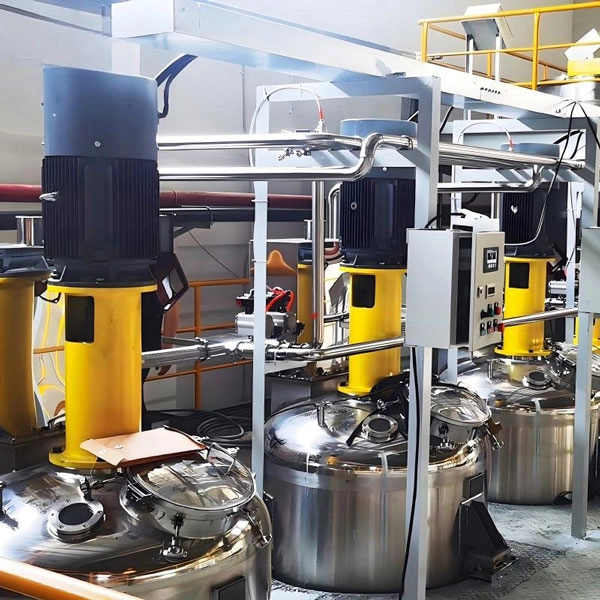
A stainless steel reaction tank is designed to provide a controlled environment for heating, cooling, mixing, and, when required, pressure or vacuum operation. For chemical, pharmaceutical, food, biotechnology, cosmetics, resin, and fine chemical production, the right vessel must be selected according to the actual process rather than by tank size or stainless steel weight alone.
For buyers comparing stainless steel reaction tank price and stainless steel reaction tank manufacturers, the key question is therefore not simply how much the vessel costs. It is whether the tank configuration, materials, mechanical systems, controls, and manufacturing quality are suitable for the intended process.
The first step is to define the process requirements. Batch volume, viscosity, temperature range, pressure or vacuum conditions, material compatibility, heat-transfer demand, and required mixing performance should be established before selecting the tank.
SS304 and SS316/316L are common choices, but they should not be treated as interchangeable materials.
SS304 can be suitable for many general-purpose applications where the process medium does not create significant compatibility concerns. SS316/316L may be selected when the formulation or cleaning conditions require greater resistance to specific corrosive environments.
The correct grade depends on the actual media, concentration, temperature, cleaning chemicals, and operating conditions. For pharmaceutical, food, and high-purity applications, the selection may also involve requirements for weld quality, internal surface condition, cleanability, and traceability.
A professional manufacturer should be able to explain why a particular stainless steel grade is appropriate for the process rather than simply recommending a more expensive material.
The agitator has a direct influence on reaction quality. Different materials require different mixing approaches. Low-viscosity liquids, viscous formulations, suspended solids, and shear-sensitive products do not necessarily require the same impeller configuration.
Agitator selection should consider viscosity, density, solids content, batch volume, required circulation, dispersion requirements, and heat-transfer conditions. Mixing speed should also be evaluated as part of the complete process rather than treated as an isolated specification.
The tank geometry, agitator position, shaft alignment, impeller design, and internal configuration work together. Poor mechanical alignment or an unsuitable agitator can increase vibration, create dead zones, and reduce mixing consistency.
The shaft seal is another important engineering point. Leakage, contamination, and maintenance problems can occur when the sealing system does not match the process conditions.
Depending on the application, buyers may need to evaluate the mechanical seal arrangement, operating temperature, pressure or vacuum conditions, material compatibility, and cleaning requirements.
Internal surface finish is equally important in processes where residue retention and cleanability matter. Pharmaceutical, food, biotechnology, and cosmetic applications can place greater emphasis on weld quality and internal surface condition because rough or poorly finished areas may make cleaning more difficult and create locations for material accumulation.
A jacketed reaction tank uses a heat-transfer space around the vessel to transfer thermal energy between the process material and a heating or cooling medium. This allows the operator to control the process temperature while mixing continues inside the tank.
The appropriate heating or cooling configuration depends on the required heat-transfer duty, process temperature, material characteristics, and production cycle. A jacket may be sufficient for one application, while another process may require a different heat-transfer arrangement.
Temperature control also depends on more than the jacket itself. Sensors, control valves, process instrumentation, circulation conditions, and control logic all affect how accurately the process temperature can be maintained.
For resin, coatings, adhesives, fine chemicals, and other temperature-sensitive materials, controlled heating and cooling can influence viscosity, reaction rate, and final product consistency.
Not every reaction requires a pressure-rated or vacuum-capable vessel. These functions should be specified when they are part of the actual process.
Vacuum operation can be useful when a process involves deaeration, solvent removal, evaporation, or other operations performed below atmospheric pressure. Pressure-rated construction may be required when the reaction or processing stage operates above atmospheric pressure.
In both cases, vessel design, wall thickness, closures, nozzles, seals, instrumentation, and safety provisions need to be considered as a complete system. Buyers should not assume that adding a vacuum connection automatically makes a standard mixing tank suitable for vacuum service.
The applicable design standard and certification requirements should also be confirmed according to the installation location and process. References to ASME, PED, GMP, or other standards should be based on the actual scope of application and the manufacturer's supporting documentation, rather than used as generic marketing claims.
For food, pharmaceutical, biotechnology, and cosmetic production, cleaning requirements can significantly affect the tank design.
CIP-related requirements may influence the internal geometry, spray or cleaning arrangement, surface finish, valves, connections, and instrumentation. Where hygienic processing is important, these details should be established at the engineering stage.
Process control can range from basic temperature and speed monitoring to integrated PLC-based control, depending on the production requirements. Automated control can coordinate functions such as agitation, temperature regulation, heating or cooling, and other process parameters.
The right level of automation depends on the process. More automation does not automatically mean better equipment if the process does not require it. The objective should be repeatable and controllable operation.
There is no meaningful way to determine stainless steel reaction tank price from capacity alone. Two vessels with similar volumes can have substantially different prices because their engineering requirements and configurations are different.
Important cost factors include:
Tank volume and overall vessel construction
SS304 or SS316/316L material selection
Wall thickness and structural requirements
Pressure or vacuum design requirements
Agitator type and drive configuration
Heating and cooling system
Mechanical seal and shaft-sealing arrangement
Internal surface treatment and polishing requirements
Valves, nozzles, ports, and process connections
Temperature, pressure, and other instrumentation
PLC or other automation requirements
CIP/SIP-related configuration where applicable
Testing, inspection, documentation, and applicable certification requirements
Customer-specific engineering and customization
This is why comparing suppliers only by stainless steel weight or nominal tank capacity can produce a misleading conclusion. A lower initial quotation may exclude important process components or engineering requirements that later become additional costs.
The more useful comparison is the total configuration and total cost of ownership, including maintenance, cleaning, replacement of seals or components, process reliability, and the suitability of the equipment for the intended production conditions.
A capable stainless steel reaction tank manufacturer should contribute more than fabrication. The manufacturer should be able to translate process requirements into a practical vessel design.
Buyers should examine whether the supplier can provide appropriate documentation and evidence covering:
Material certificates and material traceability
Welding procedures and welding inspection records
Tank and jacket design information
Agitator engineering and shaft alignment
Mechanical seal selection
Pressure or vacuum testing where applicable
Internal surface inspection and finish records
Instrumentation and control-system documentation
PLC control configuration where required
Factory testing and final inspection records
The manufacturer's engineering process is particularly important for customized equipment. A reliable supplier should evaluate batch size, viscosity, operating temperature, pressure or vacuum requirements, corrosive media, mixing characteristics, and heat-transfer demand before finalizing the design.
RUMI Technology approaches this type of equipment from its broader experience in chemical equipment and process solutions. Since launching its first self-developed high-precision dosing system and high-efficiency mixing equipment in 2018, RUMI has focused on fine chemical equipment and customized solutions for industries including paint and ink, resin and new materials, new energy, and composites.
Its manufacturing and quality system includes factory testing and after-sales support, with the company stating a 72-hour factory testing process and 24-hour after-sales response, alongside ISO9001 and CE certifications. These capabilities are relevant when buyers need equipment that must integrate mixing, dosing, temperature management, and process control rather than operate as an isolated vessel.
When selecting a stainless steel reaction tank, the most reliable sequence is to start with the process rather than the quotation.
Define the material and its compatibility requirements first. Then establish batch volume, viscosity, temperature, pressure or vacuum conditions, and heat-transfer demand. From these parameters, the manufacturer can determine the appropriate stainless steel grade, vessel structure, agitator, mixing configuration, shaft seal, jacket or other heat-transfer system, instrumentation, and control architecture.
Only after these requirements are established should buyers compare stainless steel reaction tank price between manufacturers.
For chemical, pharmaceutical, food, biotechnology, resin, and fine chemical production, the best equipment is not necessarily the vessel with the lowest purchase price. It is the configuration that provides the required reaction environment, can be manufactured and tested according to the applicable requirements, and remains practical to operate and maintain throughout its service life.