 en
en  vi
vi  it
it  es
es  tr
tr  ja
ja  pt
pt  nl
nl  ru
ru  fr
fr  de
de  pl
pl  ar
ar News
Latest news and events.

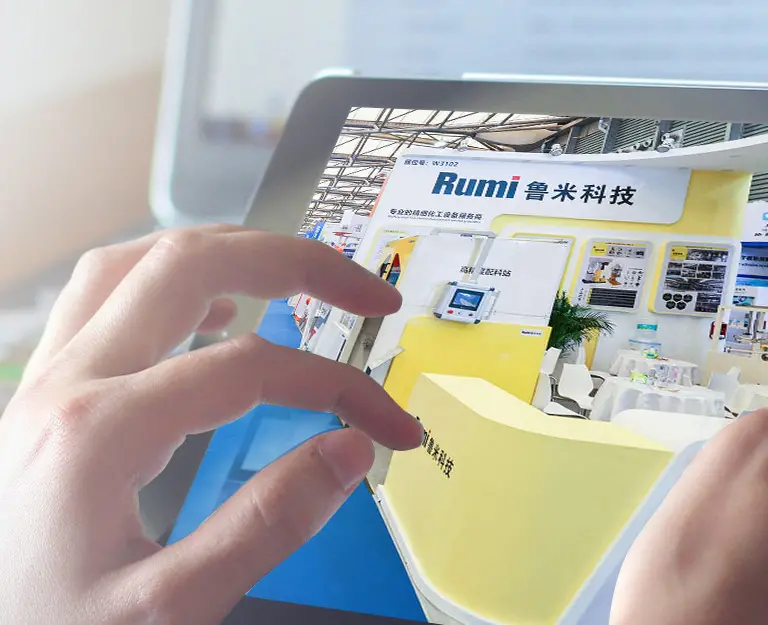


In the production of silicone sealants, consistency is not only related to product appearance but also directly affects curing performance, adhesion strength, durability, and customer satisfaction. However, many sealant manufacturers still rely on manual weighing, semi-automatic feeding, or separated production processes, which can create challenges in large-scale manufacturing.
When raw materials are not measured accurately, even small deviations in formulation ratios may lead to differences in viscosity, curing speed, elasticity, and sealing performance. For manufacturers producing thousands of batches annually, these variations can increase quality control pressure and create unnecessary material waste.
Traditional production methods also face limitations when handling high-viscosity sealant materials. Silicone sealants usually contain polymers, fillers, additives, and functional components with different physical characteristics. Without stable transportation, accurate dosing, and efficient mixing coordination, problems such as uneven formulation, production delays, and batch-to-batch differences may occur.
As demand for construction sealants, industrial sealing materials, and electronic-grade adhesives continues to increase, manufacturers need more reliable production solutions. A professional Silicone Sealant Batching System provides a more efficient approach by integrating material storage, precise dosing, automatic control, and production process management into one coordinated system.
Through automated operation and accurate formulation control, modern batching systems help sealant manufacturers reduce human error, improve production efficiency, and maintain stable product quality during continuous manufacturing.
The quality of silicone sealant begins with accurate raw material proportioning. Unlike simple mixing processes, sealant manufacturing requires precise control over multiple components, including silicone polymers, fillers, plasticizers, catalysts, and other additives.
A high-performance batching system is designed to control each material input according to predefined production parameters. Instead of depending on manual measurement, automated dosing modules can accurately manage the feeding process and maintain consistent formulation ratios.
This precision is especially important for silicone sealants because different raw material proportions directly influence final product characteristics. For example, excessive filler content may affect viscosity and workability, while inaccurate additive ratios may influence curing performance and long-term durability.
By improving dosing accuracy, a Silicone Sealant Batching System helps manufacturers achieve:
More consistent viscosity between different production batches.
Reduced raw material loss caused by measurement errors.
Improved repeatability for large-scale production.
Better control over product performance.
For companies supplying construction projects, automotive applications, or industrial sealing solutions, maintaining consistent product quality is essential. Automated batching technology allows manufacturers to reduce variation and build more reliable production processes.
Modern sealant production requires more than accurate material measurement. The entire production process must be coordinated to ensure stable operation from material feeding to final mixing.
An advanced batching system integrates automated control technology to manage key production steps, including:
Raw material feeding sequence.
Dosing quantity and timing.
Production parameter monitoring.
Process data recording.
Equipment operation coordination.
Compared with manual operation, an automated system reduces dependence on operator experience and minimizes production differences caused by human factors.
For example, in a traditional production environment, operators may need to manually calculate material quantities, control feeding time, and monitor process conditions. This approach becomes increasingly difficult as production capacity grows.
With an automated batching system, manufacturers can establish standardized production procedures. Each batch follows the same programmed parameters, improving consistency and making quality management more efficient.
This advantage is particularly valuable for companies producing multiple sealant formulations. Different products may require different material ratios and processing conditions, and automated control allows manufacturers to switch between production requirements more efficiently.
Silicone sealants are typically high-viscosity materials, which creates additional challenges during production. Unlike low-viscosity liquids, these materials require stronger transportation capability and optimized processing systems.
An effective Sealant Batching System must ensure that materials can move smoothly through the production process while maintaining accurate feeding performance.
Stable transportation helps prevent:
Material blockage.
Uneven feeding.
Production interruptions.
Excessive residue inside the system.
After accurate dosing, the mixing stage becomes another critical factor affecting product quality. Proper mixing ensures that fillers, additives, and polymer components are evenly distributed throughout the sealant formulation.
For different sealant products, manufacturers may require different mixing configurations. High-viscosity materials often need stronger mechanical performance to achieve uniform dispersion, while sensitive formulations require controlled processing conditions to avoid unnecessary material changes.
By combining accurate dosing with efficient mixing, a complete sealant production system can improve overall manufacturing reliability.
The demand for automated sealant production equipment continues to grow because different industries require stable and efficient manufacturing solutions.
Construction sealants are widely used in building joints, curtain walls, windows, and structural applications. These products require reliable adhesion, weather resistance, and long-term sealing performance.
For construction sealant manufacturers, production efficiency is a major consideration because large projects often require continuous supply.
A batching system helps manufacturers improve:
Production capacity.
Formula accuracy.
Batch consistency.
Material utilization.
By reducing manual intervention, companies can maintain stable production even under high-volume manufacturing conditions.
Industrial sealants are used in applications such as machinery, transportation equipment, and manufacturing systems. These products often require specific performance characteristics, including resistance to temperature changes, chemicals, and mechanical stress.
Because industrial formulations can involve complex ingredient combinations, precise batching becomes increasingly important.
An automated system allows manufacturers to control each material component more effectively, helping ensure that final products meet specific performance requirements.
Electronic applications usually have stricter requirements regarding cleanliness, consistency, and reliability.
Sealants used in electronic components may require:
Low defect rates.
Stable curing behavior.
Precise formulation control.
Automated batching technology reduces contamination risks caused by excessive manual handling and provides better process control for high-value sealing materials.
Selecting the Best Sealant Batching System requires more than comparing initial equipment prices. For manufacturers, the real value comes from production stability, operating efficiency, and long-term reliability.
Several factors should be considered when evaluating equipment.
Different sealant products have different formulation requirements. High-performance silicone sealants generally require higher dosing precision because small formulation changes may influence product characteristics.
Manufacturers should evaluate whether the system can provide:
Stable measurement accuracy.
Reliable feeding performance.
Repeatable production results.
Higher precision can reduce material waste and improve overall production efficiency.
Sealant manufacturers often have different production processes, factory layouts, and formulation requirements. A standard system may not always provide the best solution.
A customized batching system can be designed according to:
Production capacity.
Raw material characteristics.
Manufacturing workflow.
Automation requirements.
This flexibility allows companies to build equipment that matches their actual production conditions.
The required automation level depends on production scale and management goals.
Small and medium manufacturers may choose semi-automatic solutions, while large-scale producers often require fully automated systems to support continuous production.
Important considerations include:
Daily output requirements.
Future production expansion.
Labor cost reduction.
Process management efficiency.
Equipment investment should also consider long-term operation.
A reliable batching system can reduce costs by:
Lowering raw material waste.
Reducing manual labor requirements.
Minimizing production downtime.
Improving equipment utilization.
A system with better engineering design may provide higher value over its service life compared with a lower-cost solution that requires frequent maintenance.
RUMI Technology is a professional supplier focused on chemical equipment and solutions, providing global customers with reliable products, strict quality control, and efficient service. The company specializes in developing advanced mixing and dosing technologies for industries requiring precise process control.
Since launching its first self-developed high-precision dosing system and high-efficiency mixing equipment in 2018, RUMI Technology has continued to focus on becoming a professional fine chemical equipment service provider. Through hundreds of research and development iterations, the company has developed advanced technologies and established strong expertise in intelligent dosing and mixing solutions.
For sealant manufacturers, RUMI Technology provides customized equipment solutions designed around specific production requirements. Whether customers need improved dosing accuracy, more efficient material handling, or optimized production workflows, the company focuses on creating systems that match actual manufacturing conditions.
RUMI Technology has also developed solutions for paint, ink, resin, new materials, composites, and other chemical industries. This cross-industry experience allows the company to apply advanced mixing and dosing technologies to different production challenges.
To ensure equipment reliability, RUMI Technology has established a quality assurance system featuring 72-hour factory testing and 24-hour after-sales response. With ISO9001 and CE certifications, the company supports global customers with dependable equipment performance and professional technical service.
As sealant markets become more competitive, manufacturers need production systems that deliver consistent quality while improving efficiency. Manual processes may be suitable for small-scale operations, but large-scale production requires better control, higher accuracy, and stronger automation capabilities.
A well-designed Silicone Sealant Batching System helps manufacturers achieve these goals by combining precision dosing, stable transportation, automated control, and efficient production management.
By selecting equipment based on formulation requirements, production capacity, and long-term operating goals, companies can reduce waste, improve productivity, and create a more stable manufacturing process.
For modern sealant producers, the right batching system is not simply production equipment—it is an important foundation for improving product consistency and maintaining long-term competitiveness.