 en
en  vi
vi  it
it  es
es  tr
tr  ja
ja  pt
pt  nl
nl  ru
ru  fr
fr  de
de  pl
pl  ar
ar News
Latest news and events.




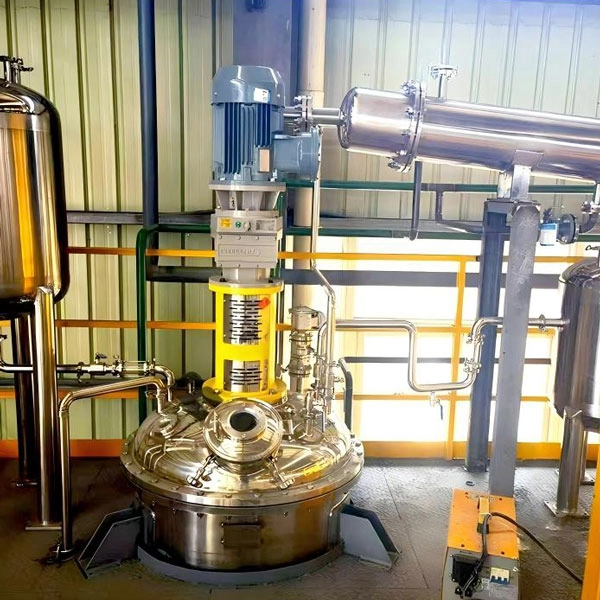
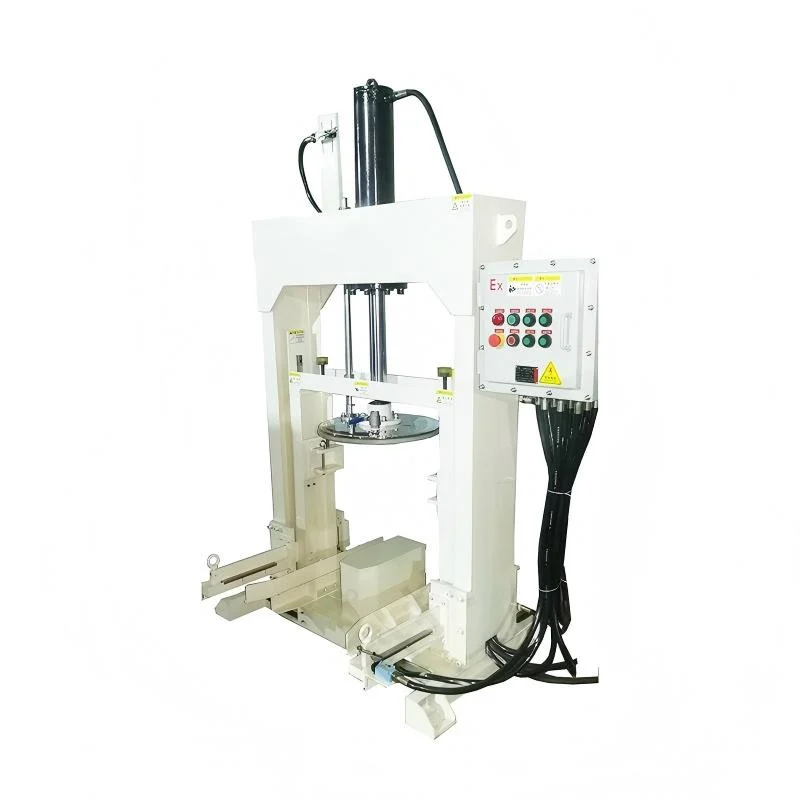
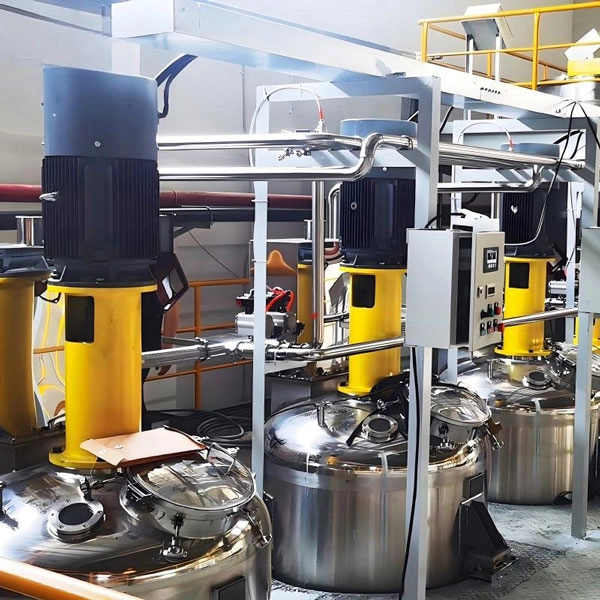
In modern fine chemical, energy material, and advanced polymer industries, a high viscosity mixing machine is not a conventional blending device but a controlled rheological transformation system designed to process materials that exhibit extreme resistance to flow. These materials—such as silicone sealants, lithium battery slurries, structural adhesives, and resin composites—require precisely engineered shear fields and stable torque delivery to achieve uniform dispersion.
Rumi Technology, a global supplier of chemical equipment and solutions, has developed advanced mixing systems since 2018, focusing on high-efficiency, low-energy mixing and intelligent dosing technologies. With ISO9001 and CE certifications, and a 72-hour factory testing protocol, the company builds equipment designed specifically for high-stability industrial production environments where batch consistency is a critical engineering requirement.
The core requirement of any high viscosity mixing equipment is not rotational speed but torque stability under dynamically changing load resistance. As viscosity increases during chemical reactions or material phase transitions, resistance torque rises non-linearly, requiring a drive system capable of maintaining stable output without fluctuation.
The high-torque servo drive system in Rumi’s design ensures that mechanical force remains consistent even under extreme resistance conditions. This is essential for maintaining uniform shear distribution throughout the mixing process.
The torque control system operates through closed-loop feedback, continuously adjusting output based on real-time resistance detection. This prevents speed collapse or overload conditions that commonly occur in conventional mixing systems when processing ultra-high viscosity materials.
In addition, frequency conversion control ensures that speed and torque remain synchronized with material rheology, allowing stable operation across different viscosity stages without compromising dispersion quality.
The performance of a Best high viscosity mixing machine is fundamentally defined by how effectively it reconstructs internal material flow under extreme resistance conditions. Unlike low-viscosity systems where turbulence dominates mixing, high-viscosity systems rely on controlled shear field engineering.
The dual-motion mixing system generates continuous macro-scale circulation while simultaneously applying localized micro-shear forces, ensuring that both bulk homogenization and particle-level dispersion occur within a single integrated mixing cycle
The flow path is continuously restructured through planetary or dual-shaft movement, eliminating stagnant zones that typically lead to incomplete dispersion, agglomeration, or uneven reaction distribution in high-solid-content materials
The wall-scraping system ensures full material recovery from the tank surface, preventing thermal degradation and ensuring that all material participates in active mixing rather than remaining in low-shear boundary zones
These mechanisms collectively ensure that material is not simply stirred but structurally reorganized at both macro and micro scales.
Vacuum integration is a critical function in vacuum planetary mixing machine design, especially when processing materials where air entrapment directly affects mechanical or chemical performance.
During high-viscosity mixing, air bubbles become trapped within the material matrix due to limited flow mobility. These micro-voids can significantly degrade structural integrity, electrical performance, or adhesive strength depending on the application.
Vacuum systems eliminate these trapped gases during the mixing cycle, ensuring a dense and uniform final structure. This is particularly important in lithium battery slurries, where voids can reduce electrode conductivity, and in adhesives, where bubbles can compromise bonding strength.
Temperature-controlled jacket systems further stabilize viscosity during mixing, ensuring that materials remain within optimal processing windows throughout the entire cycle.
The mechanical structure of high viscosity mixing equipment must be engineered to withstand sustained high-load operation without deformation or performance drift.
Reinforced transmission systems ensure that torque is distributed evenly across all mechanical components, preventing localized stress accumulation that could lead to premature wear or structural failure under continuous industrial operation
Dual-shaft and planetary hybrid configurations create multi-directional shear fields that enhance dispersion efficiency while reducing localized over-shearing, ensuring balanced material processing in complex multi-phase formulations
Tank and frame structures are designed for high rigidity, ensuring that mechanical vibration does not interfere with shear consistency or lead to instability in long-duration production cycles
High-viscosity mixing systems are essential in industries where material consistency directly determines final product performance. These include energy storage materials, advanced adhesives, high-performance coatings, and polymer composites.
In lithium battery production, uniform slurry dispersion directly affects electrode efficiency and energy density. In adhesive manufacturing, consistent particle distribution determines bonding strength and long-term durability. In resin systems, mixing uniformity ensures predictable mechanical and thermal properties across batches.
The primary engineering challenge in these applications is not simply achieving mixing, but maintaining repeatable consistency under high resistance conditions over long production cycles.
Viscosity handling range defines whether the equipment can maintain stable shear performance under extreme resistance conditions, which directly affects its suitability for materials such as silicone, epoxy, or high-solid-content slurries
Torque stability determines whether the system can maintain uniform mixing without speed fluctuation, which is critical for preventing batch inconsistency in industrial-scale production environments
Vacuum efficiency affects the level of bubble removal and internal density uniformity, directly influencing mechanical strength, electrical performance, and structural reliability of final materials
Different mixing architectures produce fundamentally different shear behaviors in high-viscosity environments.
Planetary systems generate complex orbital shear fields that provide uniform macro-scale mixing and fine dispersion simultaneously. Dual-shaft systems, on the other hand, create high-intensity localized shear zones that are more effective for breaking down agglomerates in dense formulations.
The choice between these systems depends on whether the process prioritizes uniformity across large volumes or high-intensity dispersion of tightly bound particle clusters.
Industrial production requires not only high initial mixing performance but also sustained operational stability under continuous load conditions. Equipment must maintain torque consistency, mechanical precision, and thermal stability across extended production cycles.
Rumi Technology designs its systems with reinforced transmission architecture and precision-engineered sealing systems to ensure long-term operational reliability. Each unit undergoes 72-hour continuous factory testing to validate torque stability, vacuum integrity, and mixing uniformity under real industrial conditions.
This ensures that equipment maintains consistent performance even in 24/7 production environments typical of chemical, energy, and advanced material manufacturing industries.
A Best high viscosity mixing machine is defined not by its ability to rotate, but by its capacity to maintain stable shear, torque consistency, and dispersion uniformity under extreme material resistance conditions.
Rumi Technology integrates high-torque drive systems, advanced shear field engineering, and vacuum thermal control into a unified mixing architecture designed for industrial-grade production environments. This ensures that users achieve not only effective mixing but also long-term process stability, batch-to-batch consistency, and scalable manufacturing reliability in the most demanding high-viscosity applications.