 en
en  vi
vi  it
it  es
es  tr
tr  ja
ja  pt
pt  nl
nl  ru
ru  fr
fr  de
de  pl
pl  ar
ar News
Latest news and events.



In many industrial production environments, liquid formulation accuracy directly affects final product quality. However, traditional manual batching methods often create challenges that are difficult to control as production volumes increase. Manual weighing and transfer operations can introduce measurement deviations, operator-related errors, and inconsistent ratios between different production batches.
These issues become more noticeable when manufacturers handle multiple liquid raw materials with different viscosities, densities, or chemical characteristics. A small deviation in additive concentration, resin ratio, solvent proportion, or active ingredient dosage may influence product performance, stability, and compliance.
For industries such as chemicals, coatings, food processing, pharmaceuticals, and advanced materials, maintaining consistent formulations across hundreds or thousands of batches requires more than experienced operators. This is why more manufacturers are turning to professional Liquid Batching System Manufacturers to develop automated solutions that combine accurate measurement, controlled material transfer, and intelligent recipe management.
A well-designed Liquid Batching System is not simply an automated filling device. It is a production control platform that manages the complete process from raw material storage and transportation to precise dosing and batch tracking.
The main value of a Liquid Batching System lies in its ability to control multiple liquid components with repeatable accuracy during continuous industrial production.
In conventional manual operations, operators must measure each ingredient separately before transferring materials into mixing equipment. This process depends heavily on human experience and operating discipline. When production schedules become more demanding, maintaining the same formulation accuracy across multiple shifts becomes increasingly difficult.
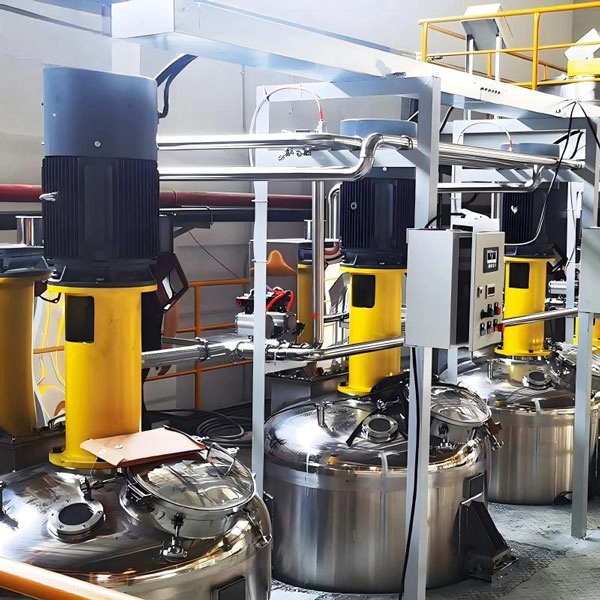
Modern liquid batching systems solve this challenge through integrated measurement modules, automated valves, pumps, sensors, and control software. Depending on the application requirements, manufacturers may configure systems with different measurement technologies, including flow-based metering, weighing systems, or combined measurement methods.
For example, a coating manufacturer may need to combine resin, solvent, additives, and color components in precise proportions. The batching system can automatically call the required formula, control each liquid input sequence, and monitor the actual feeding process to reduce deviation between target and actual values.
For chemical production, the ability to handle multiple liquid materials is especially important. Different raw materials may have different flow characteristics, corrosion requirements, and storage conditions. A properly engineered system must consider these factors during equipment design rather than simply adding more pumps and pipelines.
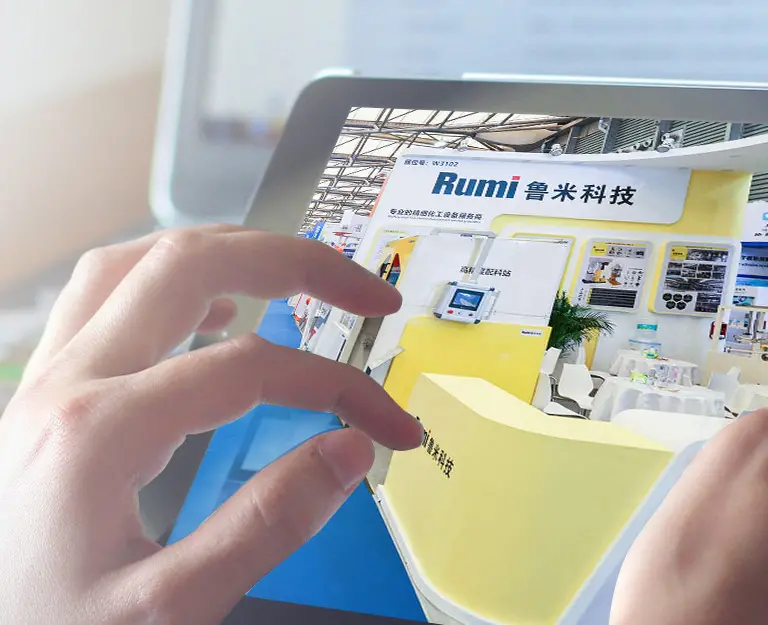
RUMI Technology focuses on providing customized chemical equipment and solutions for global industrial customers. As a professional supplier focused on chemical equipment and solutions, Rumi serves worldwide clients with reliable products, strict quality control, and efficient service, helping customers establish long-term partnerships.
Since launching its first self-developed high-precision dosing system and high-efficiency mixing equipment in 2018, RUMI Technology has continued developing solutions based on its goal of becoming a “professional fine chemical equipment service provider.” Through hundreds of research and development iterations, the company has developed patented technologies and established expertise in intelligent dosing and mixing solutions.
This technical background allows RUMI to provide liquid batching solutions designed for industries including coatings, inks, resins, new materials, composites, and energy-related applications.
When comparing different Liquid Batching System Price options, purchasing decisions should not be based only on initial equipment cost. The actual value of a system depends on whether it can maintain stable operation throughout years of industrial production.
Several technical factors directly influence system pricing and long-term performance.
The measurement method is one of the most important factors affecting both price and application performance.
A basic system for simple liquid transfer may use standard flow measurement components, while high-value production processes may require higher precision weighing modules, advanced sensors, or closed-loop control systems.
Industries producing pharmaceutical liquids, specialty chemicals, or high-performance coatings often require tighter control because even small formulation variations can affect product properties.
A system designed for two or three liquid materials has different requirements compared with a production line handling dozens of ingredients.
More components require:
Additional storage tanks
Independent pipelines
More control valves
Expanded control logic
More complex recipe management
Production capacity also affects pump selection, pipeline sizing, and automation configuration. A system designed for laboratory-scale testing cannot simply be expanded for large-scale continuous manufacturing without considering process requirements.
The automation level significantly influences system capability.
A modern Liquid Batching System may include:
PLC-based process control
Touchscreen HMI operation
Recipe storage and switching
Batch data recording
Alarm monitoring
Production communication interfaces
For manufacturers producing multiple formulas, recipe management is especially valuable because operators can switch between different production requirements without manually recalculating material ratios.
Liquid characteristics determine equipment configuration.
For corrosive chemical materials, stainless steel grades, sealing materials, and pipeline designs must be carefully selected. Food and pharmaceutical applications may require sanitary structures and cleaning considerations.
This is why experienced Liquid Batching System Manufacturers focus on process analysis before equipment design. The same batching principle may require completely different engineering solutions depending on whether the application involves solvents, edible liquids, pharmaceutical ingredients, or coating materials.
RUMI Technology has built its customized solution capability through continuous development in chemical equipment manufacturing. The company provides solutions supported by a quality assurance system that includes 72-hour factory testing, 24-hour after-sales response, ISO9001 certification, and CE certification.
A high-quality Liquid Batching System provides value by creating a controlled production environment where different liquid materials can be managed accurately, consistently, and safely.
Chemical plants often handle multiple additives, solvents, catalysts, and liquid intermediates. Automated batching helps control complex formulations while reducing manual handling risks.
For processes where reaction performance depends on exact material ratios, stable dosing sequences and accurate batch records are essential.
Food manufacturers require reliable control of liquid ingredients such as flavors, additives, concentrates, and functional components.
Automated recipe management allows different product formulations to be produced while maintaining consistent taste, composition, and quality standards.
Pharmaceutical liquid manufacturing places higher requirements on traceability and process control.
A suitable batching system can support controlled ingredient addition, production records, and repeatable manufacturing procedures required for regulated production environments.
Paint, ink, resin, and composite manufacturers often work with complex formulas involving multiple liquid components.
A customized batching system can coordinate material storage, transportation, and dosing processes while supporting frequent formula changes and different production volumes.
For these industries, the key advantage is not only automation itself, but the ability to maintain stable product quality when production becomes larger, more complex, and more demanding.
Selecting a Liquid Batching System requires more consideration than comparing equipment specifications or initial quotations. The most suitable solution should match the actual production process, material characteristics, automation requirements, and future expansion plans.
Professional Liquid Batching System Manufacturers provide value through engineering experience, customized design capabilities, and reliable control technologies. With the right system configuration, manufacturers can achieve better batch consistency, stronger process control, and more predictable long-term production performance.
RUMI Technology continues to focus on advancing mixing and dosing technology, providing intelligent solutions that support the evolving requirements of the global fine chemical industry. Through continuous innovation and engineering expertise, RUMI Intelligent Manufacturing helps industrial companies build more reliable and controllable liquid production processes.