 en
en  vi
vi  it
it  es
es  tr
tr  ja
ja  pt
pt  nl
nl  ru
ru  fr
fr  de
de  pl
pl  ar
ar News
Latest news and events.



In many industrial production environments, maintaining consistent liquid quality is more difficult than simply combining several raw materials. Traditional manual mixing methods often struggle to maintain stable operating conditions, especially when production involves high-viscosity liquids, multiple components, or temperature-sensitive materials.
Manual stirring processes depend heavily on operator experience. Differences in mixing time, rotation speed, and material handling methods can create variations between batches. For products such as coatings, resins, pharmaceutical liquids, food ingredients, and chemical formulations, these variations may affect viscosity, stability, appearance, and final performance.
The challenges become more complex when manufacturers process materials that tend to separate, settle, or require controlled temperature conditions. High-viscosity liquids may develop uneven flow patterns, while certain chemical materials require corrosion-resistant equipment and precise process control.
For these reasons, more industrial companies are turning to professional Liquid Mixing Tank Manufacturers to develop equipment solutions that provide stable mixing performance, flexible process adaptation, and reliable long-term operation.
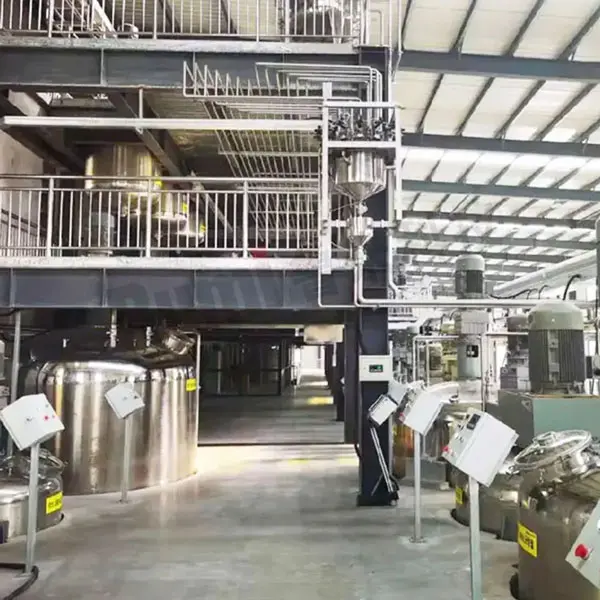
A modern Liquid Mixing Tank is not only a container with an agitator. It is an engineered processing system designed around material characteristics, mixing requirements, temperature control, and production conditions.
The performance of a Liquid Mixing Tank depends largely on how well the equipment design matches the physical properties of the materials being processed.
Different liquids require different mixing strategies. Low-viscosity liquids may need rapid circulation to achieve consistent blending, while high-viscosity materials require stronger torque, optimized impeller designs, and controlled shear forces to avoid incomplete mixing or excessive energy consumption.
A properly designed mixing system considers factors such as:
Liquid viscosity range
Material density differences
Solid particle dispersion requirements
Mixing time requirements
Temperature sensitivity
Production batch size
For example, in coating production, pigments, resins, solvents, and additives must remain evenly dispersed throughout the process. A mixing tank with unsuitable agitation performance may create problems such as pigment settling, inconsistent color, or unstable viscosity.
In resin and new material manufacturing, materials often become more difficult to process as viscosity increases. The mixing structure must provide sufficient circulation and torque while avoiding unnecessary mechanical stress on the equipment.
High-quality Liquid Mixing Tanks provide manufacturers with greater control through optimized agitation systems, adjustable operating speeds, and process-specific configurations. These features allow companies to maintain more stable production conditions instead of relying on manual adjustments.
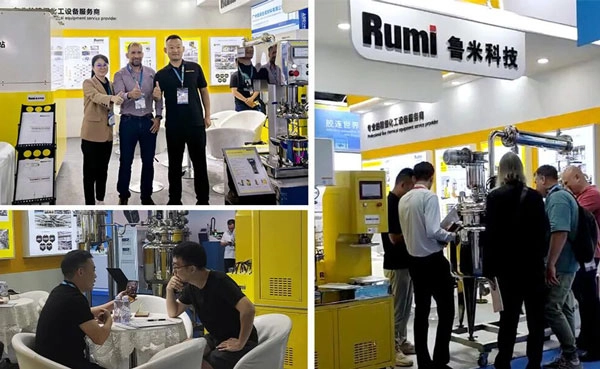
RUMI Technology specializes in chemical equipment and industrial mixing solutions for global customers. As a professional supplier focused on chemical equipment and solutions, Rumi provides reliable products, strict quality control, and efficient service to build long-term partnerships worldwide.
Since developing its first self-developed high-precision dosing system and high-efficiency mixing equipment in 2018, RUMI Technology has continued focusing on its goal of becoming a professional fine chemical equipment service provider. Through hundreds of research and development iterations, the company has developed patented technologies and established strong capabilities in mixing and dosing equipment design.
When evaluating Liquid Mixing Tank Price, many buyers focus only on the initial quotation. However, industrial users should consider how equipment configuration affects production reliability, maintenance requirements, and operating costs over years of use.
Several technical factors determine the actual value of a mixing tank.
Material selection directly affects equipment durability and application suitability.
Stainless steel materials such as SS304 and SS316L are commonly selected for industrial mixing tanks because they provide different levels of corrosion resistance and chemical compatibility.
SS304 is suitable for many general industrial applications, while SS316L is often preferred for more demanding environments involving corrosive materials, pharmaceutical production, or strict hygiene requirements.
The correct material choice helps reduce maintenance frequency and prevents contamination risks during long-term operation.
The agitator design and motor selection have a direct impact on processing capability.
Important considerations include:
Impeller type
Mixing speed range
Motor power
Torque requirements
Variable speed control
A low-viscosity liquid may require a different mixing structure compared with a high-solid-content resin or industrial slurry. Selecting the correct configuration prevents problems such as insufficient circulation, excessive energy use, or unstable product quality.
Many industrial materials require controlled heating or cooling during mixing.
A Liquid Mixing Tank equipped with a jacket system can provide more stable temperature management by circulating heating or cooling media around the tank wall.
This is especially valuable in applications such as:
Resin processing
Chemical reactions
Pharmaceutical liquids
Temperature-sensitive formulations
Stable temperature control helps maintain consistent material characteristics throughout production.
The sealing structure influences equipment reliability, especially in applications involving vacuum processing, solvent materials, or controlled environments.
Depending on the process requirements, manufacturers may configure systems with:
Mechanical seals
Vacuum capability
Inert gas protection
PLC control
HMI operation
Process monitoring functions
These options allow the equipment to adapt to more complex production requirements.
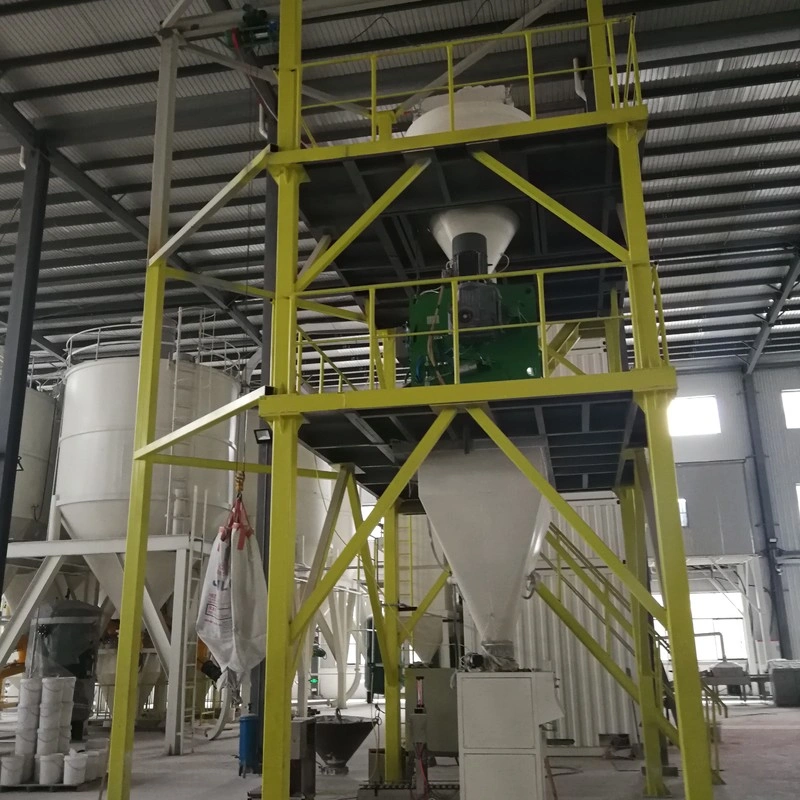
As experienced Liquid Mixing Tank Manufacturers, RUMI Technology focuses on customized engineering solutions rather than standardized equipment only. The company provides mixing systems for paint, ink, resin, composite materials, and new energy industries based on different production requirements.
RUMI has established a quality assurance system supported by 72-hour factory testing and 24-hour after-sales response. With ISO9001 and CE certifications, the company continues improving equipment reliability and manufacturing standards for global customers.
A high-performance Liquid Mixing Tank is valuable because it can adapt to different industrial processes, including dissolving, blending, dispersion, and reaction operations.
Chemical producers often handle liquids with different viscosities, chemical properties, and processing requirements.
Corrosion-resistant stainless steel construction, suitable sealing systems, and customized agitation designs allow mixing tanks to operate reliably in demanding chemical environments.
Paint and ink manufacturers require stable dispersion of pigments, resins, solvents, and additives.
The mixing system must maintain consistent material distribution while supporting different formulas and production volumes.
Food and pharmaceutical production require stricter control of hygiene, material compatibility, and process stability.
Stainless steel construction, temperature-controlled operation, and reliable sealing systems help meet production requirements for sensitive liquid products.
Advanced materials often involve complex formulations and high-viscosity components.
Customized mixing tanks with stronger agitation capability, controlled temperature systems, and automated operation help manufacturers maintain consistent production performance.
Selecting the right Liquid Mixing Tank requires more than comparing capacity or equipment prices. The most suitable solution should match material characteristics, production scale, process conditions, and future expansion requirements.
Professional Liquid Mixing Tank Manufacturers provide value through engineering experience, customized design capability, and reliable equipment performance. From stainless steel selection and agitation structure to temperature control and automation integration, every configuration decision influences long-term production results.
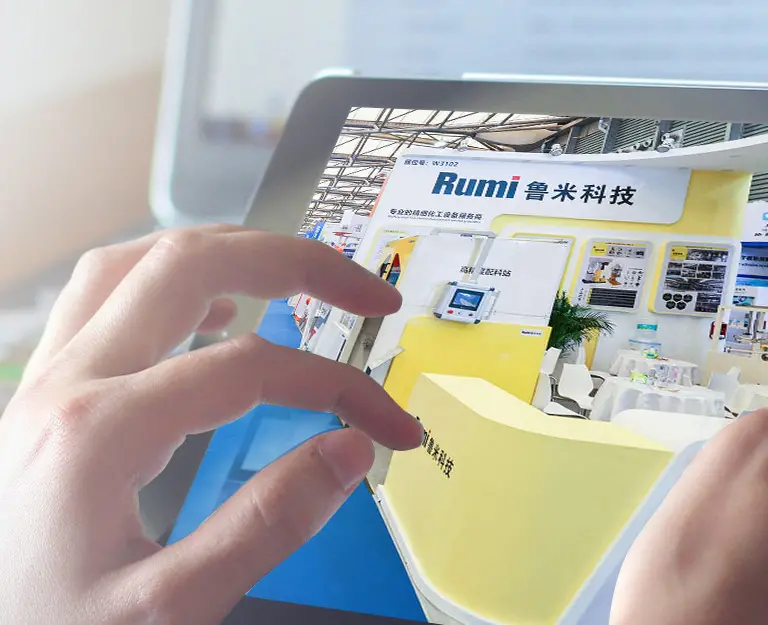
RUMI Technology continues advancing mixing and dosing technology with a focus on intelligent manufacturing solutions for the global fine chemical industry. Through customized equipment design and continuous technical development, RUMI Intelligent Manufacturing supports companies seeking more stable, controllable, and reliable liquid processing systems.