en
 vi
 it
 es
 tr
 ja
 pt
 nl
 ru
 fr
 de
 pl
 ar
News
Latest news and events.



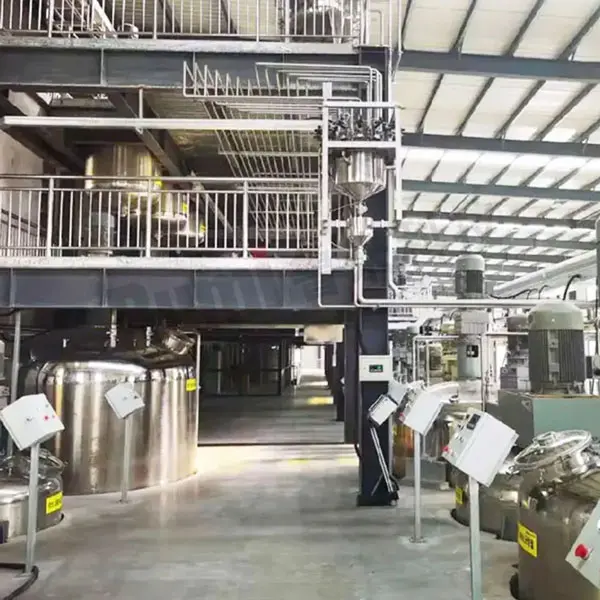
Silicone sealant manufacturing requires more than simply combining raw materials in a mixing vessel. The quality of the finished sealant depends on several interconnected factors, including raw material dosing accuracy, filler dispersion, mixing efficiency, air removal, temperature control, and production consistency. For manufacturers producing construction sealants, industrial adhesives, and other silicone-based sealing materials, weaknesses in any of these stages can lead to uneven viscosity, trapped air, unstable product performance, and inconsistent batches.
A properly configured Silicone sealant manufacturing machine helps manufacturers control these critical production stages. By combining suitable mixing structures, dispersion technology, vacuum processing, and automated material handling, the equipment can improve batch consistency and reduce unnecessary manual operations.
However, not every sealant production machine uses the same mixing principle or supports the same manufacturing process. Single-component and two-component silicone sealants have different formulation and processing requirements. Therefore, equipment selection should be based on the actual formulation, target output, material characteristics, and production objectives rather than equipment capacity alone.
For manufacturers evaluating equipment investments, understanding the relationship between machine configuration, production performance, and Sealant manufacturing machine price is essential to making a practical purchasing decision.
A silicone sealant production process generally involves raw material preparation, accurate dosing, mixing, dispersion, vacuum deaeration, discharge, and packaging. Each stage has a different function, and the equipment must be configured to accommodate the physical and chemical characteristics of the formulation.
Silicone sealant formulations may contain silicone polymers, fillers, plasticizers, crosslinking agents, catalysts, and other additives. The exact ingredients depend on the intended sealant type and performance requirements.
Dosing accuracy is particularly important because variations in the proportions of base materials and additives can affect viscosity, curing behavior, and final product properties.
A suitable production system may incorporate weighing systems, storage tanks, feeding equipment, and controlled material transfer. For powder fillers, the feeding arrangement should also minimize material loss and uncontrolled dust release.
For manufacturers handling multiple formulations, automated dosing can improve repeatability and reduce operator-dependent variations between batches.
Mixing technology is one of the most important considerations when selecting a silicone sealant manufacturing machine. Different mixing mechanisms perform different functions and should not be treated as interchangeable.
Planetary mixing
Planetary mixers use rotating mixing blades that move around the vessel while also rotating around their own axes. This combined movement helps circulate highly viscous materials and improves contact between different areas of the batch.
This configuration is particularly suitable for high-viscosity silicone sealant formulations containing substantial quantities of powder fillers.
The effectiveness of planetary mixing depends on blade geometry, clearance, rotational speed, vessel design, and material rheology. Properly designed planetary mixing systems can reduce poorly mixed areas and improve batch uniformity.
High-speed dispersion
High-speed dispersers generally use a rotating dispersing disc to generate strong local shear forces within the material.
Their primary function is to break down filler agglomerates and improve the distribution of solid particles throughout the liquid or paste phase.
However, high-speed dispersion does not automatically guarantee uniform mixing throughout a highly viscous batch. In many applications, it works more effectively alongside an appropriate main mixing mechanism.
For silicone sealant manufacturers, the choice between high-speed dispersion and planetary mixing should depend on filler characteristics, formulation viscosity, and the required degree of dispersion.
Vacuum mixing and deaeration
Air can enter the material during powder feeding, mixing, and material transfer. If these air pockets remain in the finished sealant, they may cause visible bubbles, inconsistent extrusion, or defects in the applied sealing bead.
Vacuum processing reduces the pressure inside the mixing vessel, allowing entrained air to expand and escape from the material.
For high-viscosity formulations, effective deaeration also depends on material circulation, exposed surface area, mixing conditions, and the vacuum system's ability to handle vapor and entrained material.
A vacuum mixing system should therefore be evaluated as an integrated process configuration rather than simply by whether the machine has a vacuum pump.
Temperature influences material viscosity and processing behavior. Excessive heat can affect sensitive ingredients, while insufficient temperature control may increase mixing resistance and make material handling more difficult.
A suitable temperature control system helps maintain the required processing conditions throughout production.
The vessel may incorporate a heating or cooling jacket, depending on the formulation and manufacturing requirements. Temperature monitoring should be coordinated with mixing and vacuum operations.
Equipment sealing is equally important. Sealed vessel covers, suitable shaft sealing arrangements, and reliable connections help maintain vacuum conditions and reduce the risk of material leakage or external contamination.
Single-component (1K) and two-component (2K) silicone sealants should not automatically use identical production configurations.
Single-component silicone sealants generally require careful control of moisture exposure because premature contact with moisture can affect storage stability and curing behavior. Their production systems commonly emphasize controlled raw material handling, suitable moisture protection, vacuum processing, and moisture-resistant packaging.
Two-component silicone sealants involve separately prepared components that are combined at the point of application. Depending on the formulation, the production system may require separate mixing vessels, independent dosing arrangements, and dedicated storage and packaging systems for each component.
The mixing process must maintain the required formulation consistency while preventing premature interaction between incompatible ingredients.
For both product types, the appropriate equipment configuration should be determined by the actual chemistry, viscosity, filler loading, and packaging requirements.
A complete silicone sealant production line involves more than the main mixing machine. Material preparation, transfer, storage, discharge, and packaging equipment must work together to maintain stable production.
A typical manufacturing arrangement may include the following stages:
Raw material preparation: Silicone polymers, fillers, additives, and other formulation components are prepared according to the production recipe.
Dosing and feeding: Materials are weighed and transferred into the mixing vessel. Feeding equipment should accommodate both liquid and powder materials.
Mixing and dispersion: The main mixing system combines the ingredients, while the selected dispersion mechanism helps distribute fillers and additives.
Vacuum deaeration: The material undergoes vacuum treatment to reduce entrained air before discharge.
Material discharge: The finished sealant is transferred through a suitable discharge arrangement, such as a bottom discharge valve or controlled transfer system.
Filling and packaging: Packaging equipment fills cartridges, sausages, pails, or other containers according to the finished product format.
The connection between these stages directly affects production efficiency. For example, a high-capacity mixing vessel may not deliver the expected output if the downstream discharge or filling equipment cannot handle the same production flow.
Equipment capacity should be matched to actual batch requirements and production scheduling.
Manufacturers producing several sealant formulations in relatively small batches may prioritize flexible mixing systems, convenient cleaning, and manageable changeover procedures.
By comparison, larger manufacturers operating standardized formulations may benefit from higher-capacity equipment, automated material feeding, centralized control systems, and coordinated packaging lines.
The selection process should consider:
Required batch volume and daily production targets.
Formulation viscosity and filler loading.
Mixing and vacuum processing time.
Material transfer and discharge efficiency.
Packaging speed and container specifications.
Cleaning requirements between different formulations.
Expected production shifts and equipment utilization.
Automation can reduce manual dosing errors and improve process repeatability. However, the control system should provide meaningful process functions, such as recipe management, mixing sequence control, temperature monitoring, vacuum operation, and production data recording.
A more automated system is not necessarily the best choice for every factory. The investment should correspond to the manufacturer's production scale and process management requirements.
Material-contact components must be selected according to the chemical compatibility, viscosity, and processing conditions of the formulation.
Stainless steel is commonly considered for chemical processing equipment, but the appropriate grade and surface finish should be determined by the actual ingredients and cleaning requirements.
Vessel geometry, internal surface finish, blade clearance, discharge valve design, and dead-zone control also affect how much material remains inside the machine after discharge.
For manufacturers switching between different formulations, residual material can create contamination risks and increase cleaning time.
A well-designed machine should provide practical access to areas requiring inspection and cleaning. Replaceable sealing components, accessible maintenance points, and appropriate spare parts support can also reduce unexpected downtime.
A single mixing machine may be sufficient for manufacturers with limited output or straightforward production requirements.
However, factories planning larger production operations may need an integrated system involving:
Raw material storage tanks.
Powder conveying and feeding equipment.
Liquid dosing and weighing systems.
Vacuum planetary mixing machines.
Intermediate storage or buffer tanks.
Material transfer pumps and pipelines.
Automatic filling and packaging machines.
Electrical control and monitoring systems.
The final configuration should reflect the production process rather than simply adding more equipment. Proper coordination between mixing capacity, material transfer, and packaging capacity is essential for achieving stable overall production.
The Sealant manufacturing machine price varies according to equipment design, processing capacity, technical configuration, automation level, and customization requirements.
For procurement managers, comparing quotations based only on the mixing vessel's nominal capacity can lead to an inaccurate assessment. Two machines with similar capacities may have significantly different capabilities because of differences in mixing structures, drive systems, vacuum configurations, and supporting components.
1. Mixing structure and equipment type
Planetary mixing machines, high-speed dispersion systems, and integrated vacuum mixing equipment involve different mechanical structures and manufacturing requirements.
A machine designed for highly viscous, filler-rich silicone sealant may require more complex blade arrangements and stronger mechanical components than a basic mixing unit.
2. Production capacity
Larger vessels generally require more substantial structural support, appropriately sized drive systems, and suitable discharge arrangements.
However, purchasing the largest available machine does not automatically improve production economics. Actual batch requirements, material processing time, and downstream capacity should determine the appropriate size.
3. Vacuum system configuration
Vacuum pump selection, pipeline design, sealing arrangements, and vapor or material protection requirements all influence equipment cost.
For manufacturers requiring reliable deaeration of high-viscosity materials, the overall vacuum system design is more important than evaluating the pump specification alone.
4. Drive system and temperature control
Motor power, transmission design, speed regulation, heating or cooling arrangements, and temperature monitoring all contribute to the final configuration.
These components should be selected according to material resistance, mixing requirements, and operating conditions.
5. Automation and control systems
Basic control systems generally involve fewer functions than systems incorporating automatic dosing, recipe management, process monitoring, and integrated production control.
The additional investment may be worthwhile for manufacturers handling multiple batches or requiring consistent production records.
6. Material-contact components and customization
The selected stainless steel grade, internal surface finish, sealing materials, and specialized vessel structures can affect manufacturing costs.
Custom configurations for particular formulations, plant layouts, discharge requirements, or packaging systems may also increase the overall project budget.
Instead of assuming that a particular price range corresponds to a fixed machine configuration, buyers should compare equipment according to its actual capabilities.
| Equipment configuration | Typical application | Main purchasing consideration |
|---|---|---|
| Basic mixing equipment | Straightforward formulations and smaller production operations | Mixing capability and material compatibility |
| Vacuum mixing equipment | Formulations requiring controlled deaeration | Vacuum performance and vessel sealing |
| Integrated planetary dispersion systems | High-viscosity, filler-rich formulations | Mixing uniformity and dispersion efficiency |
| Automated production lines | Larger or standardized manufacturing operations | Process coordination and production capacity |
Actual prices should be evaluated through manufacturer quotations based on the required technical specification. There is no reliable universal price classification without considering the complete equipment configuration.
A competitive quotation is only one part of the purchasing decision.
For silicone sealant manufacturers, equipment suppliers should demonstrate their understanding of the actual production process, particularly the relationship between material viscosity, filler characteristics, mixing mechanisms, and vacuum deaeration.
Important evaluation points include:
Experience in chemical and sealant processing equipment.
Ability to recommend suitable mixing and dispersion structures.
Engineering capability for customized production systems.
Quality of vessel fabrication and critical mechanical components.
Electrical control design and process monitoring functions.
Factory testing and equipment inspection procedures.
Installation, commissioning, and operator training.
Availability of spare parts and after-sales technical support.
Manufacturers should also consider operating costs, including energy consumption, routine maintenance, sealing component replacement, cleaning time, and potential production downtime.
A machine with a lower purchase price may become more expensive over its operating life if it cannot achieve the required mixing quality or requires frequent maintenance.
For this reason, the most useful comparison is not simply the initial equipment quotation, but the relationship between investment cost, usable production capacity, product consistency, and long-term operating performance.
Selecting a silicone sealant production system requires an understanding of both mechanical equipment design and the manufacturing characteristics of the material being processed.
RUMI Technology focuses on chemical equipment and integrated processing solutions for global industrial customers. Since launching its first self-developed high-precision dosing system and high-efficiency mixing equipment in 2018, the company has continued to develop its capabilities in mixing technology, dosing accuracy, and customized equipment engineering.
Through extensive research and development, RUMI Technology has developed technical expertise supported by multiple invention patents. Its solutions serve manufacturers in industries including paints and inks, resins, new materials, new energy, and composite materials.
This experience in fine chemical processing provides a foundation for addressing different material handling and mixing requirements.
For silicone sealant production projects, equipment selection should begin with an evaluation of the formulation, material viscosity, filler characteristics, required batch size, and target production capacity. The appropriate mixing structure, vacuum system, dosing arrangement, and discharge configuration can then be determined according to the actual process.
RUMI Technology also maintains a quality assurance system that includes 72-hour factory testing and a 24-hour after-sales response commitment. The company holds ISO9001 and CE certifications, supporting its focus on equipment quality and international customer service.
Rather than treating every production project as a standard machine order, an experienced equipment supplier should evaluate the manufacturing process as a whole and recommend a configuration that matches the customer's production objectives.
Choosing the right Silicone sealant manufacturing machine requires a clear understanding of formulation characteristics, mixing principles, vacuum deaeration requirements, production capacity, and packaging arrangements.
Planetary mixing, high-speed dispersion, and vacuum processing perform different functions, and their combination should be determined by the actual silicone sealant formulation. Single-component and two-component products may also require different material handling and production configurations.
When evaluating Sealant manufacturing machine price, manufacturers should consider the complete equipment specification, automation level, material compatibility, maintenance requirements, and long-term production efficiency rather than focusing exclusively on the initial purchase cost.
For sealant manufacturers and industrial equipment buyers, the right investment is a production system that consistently meets product quality requirements, supports the intended production volume, and remains economically practical throughout its service life. Working with an experienced equipment manufacturer such as RUMI Technology can help translate these production requirements into a suitable mixing and processing solution.