en
 vi
 it
 es
 tr
 ja
 pt
 nl
 ru
 fr
 de
 pl
 ar
News
Latest news and events.




Battery material production requires much more than simply reducing particle size or mixing different raw materials. Lithium-ion battery manufacturers must maintain strict control over particle distribution, material uniformity, moisture content, contamination and processing consistency. Even small variations during material preparation can affect electrode coating behavior, slurry stability, electrode density and ultimately battery performance.
For cathode and anode material producers, these requirements create significant challenges when selecting production equipment. Inconsistent grinding may produce unwanted particle sizes, inadequate mixing can cause uneven material distribution, and poor moisture control during drying may lead to differences between production batches. Equipment contamination and material loss can also increase operating costs and compromise product quality.
Choosing suitable battery material processing equipment therefore requires a clear understanding of material properties, processing methods and production objectives. Reliable equipment should not only perform individual operations effectively but also integrate with the overall manufacturing process. For companies comparing battery material processing equipment manufacturers or looking for battery material processing equipment for sale, evaluating processing accuracy, equipment compatibility and long-term operating stability is essential.
Battery materials undergo several processing stages before they are ready for electrode manufacturing or other downstream applications. Each stage requires equipment designed around a specific physical or chemical processing objective. Understanding these differences helps manufacturers avoid selecting equipment that cannot meet their actual production requirements.
Crushing and grinding equipment reduces the particle size of raw materials through mechanical force. Depending on the material and required particle characteristics, processing may involve impact, compression, shear or other grinding mechanisms.
These operations are important for preparing certain mineral-based battery raw materials, electrode material precursors and recycled battery materials. However, crushing and fine grinding are not interchangeable. Crushing primarily reduces larger feed materials into smaller pieces, while fine grinding aims to achieve a more controlled particle size distribution.
For cathode materials, excessive grinding can damage particle structures or generate unwanted fine particles. For anode materials such as graphite, maintaining suitable particle morphology and particle size distribution is particularly important because these properties influence electrode packing and processing behavior.
Equipment selection should consider feed particle size, material hardness, target particle distribution, heat generation, wear resistance and contamination risks. Grinding components and material-contact surfaces also require careful selection to minimize metallic contamination.
Mixing and dispersion are fundamental operations in battery material preparation, but they serve different purposes.
Mixing distributes multiple materials throughout a batch to achieve a consistent composition. Dispersion focuses on breaking down agglomerates and distributing fine particles more evenly within a liquid or another medium.
In cathode and anode slurry preparation, active materials, conductive additives, binders and solvents must be combined according to the formulation and process requirements. Inadequate mixing can create local concentration differences, while insufficient dispersion may leave agglomerates that affect coating uniformity.
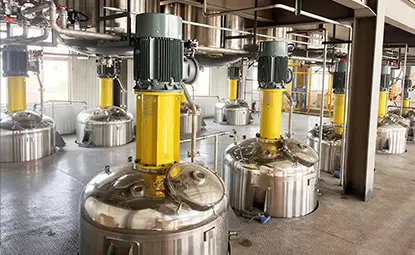
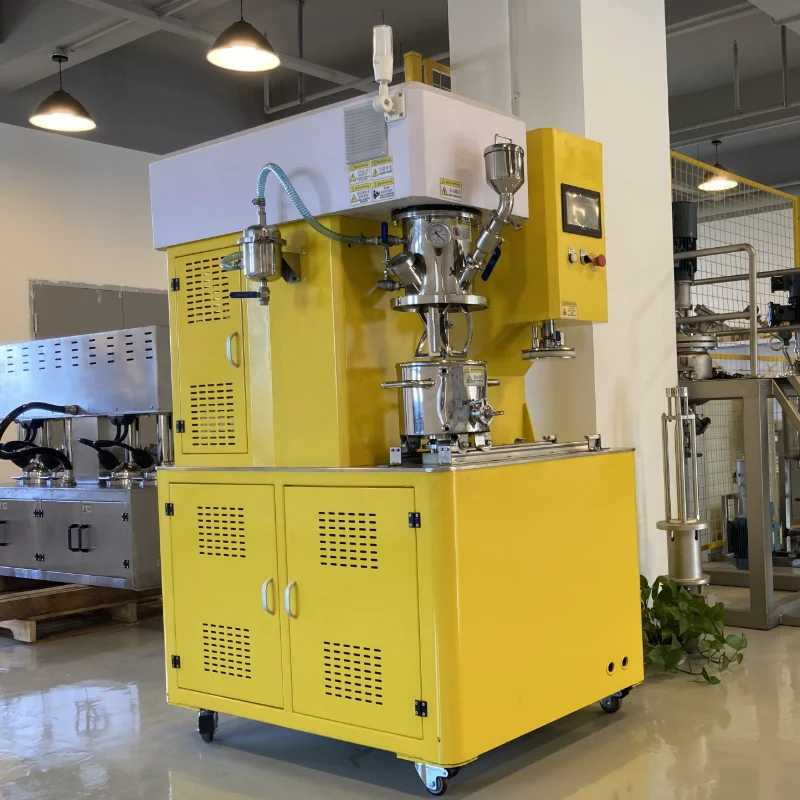
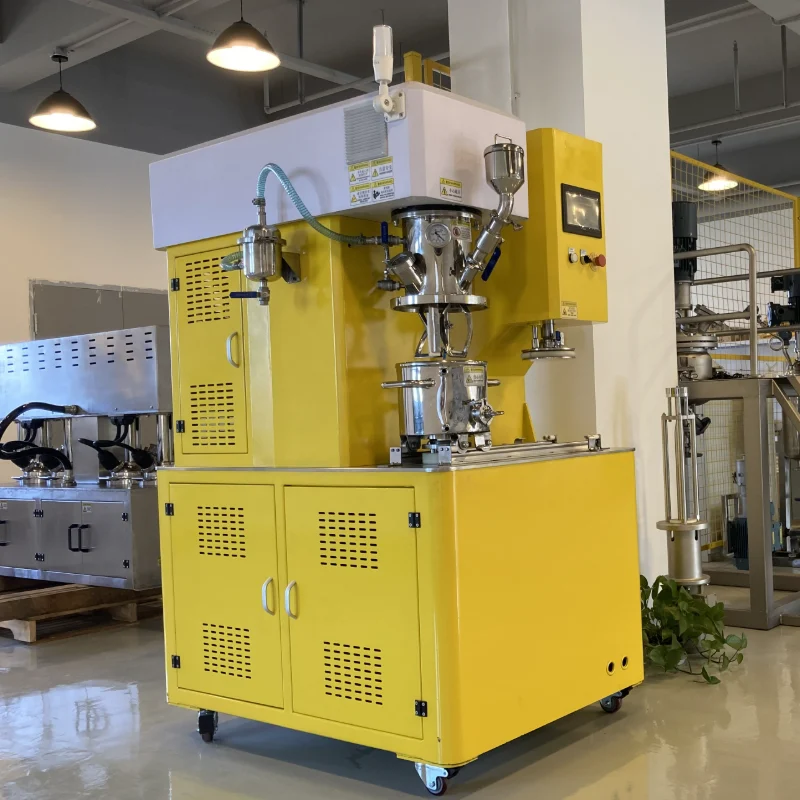
Different mixing technologies are suitable for different materials and formulations. High-shear mixing provides strong mechanical action for breaking down agglomerates. Planetary mixing can support the processing of high-viscosity materials through combined rotational movements. Vacuum mixing may help remove entrained air during suitable slurry preparation processes.
The correct solution depends on slurry viscosity, solid content, material sensitivity, batch size and the required degree of dispersion. Mixing speed alone is not a reliable indicator of performance. Impeller geometry, vessel design, shear distribution and processing time also influence the final result.
Moisture control is particularly important in lithium-ion battery manufacturing. Water contamination can affect moisture-sensitive materials, electrolyte compatibility and electrode processing.
Drying equipment removes moisture through controlled heat transfer and mass transfer. Depending on the material and production stage, manufacturers may use vacuum drying, tray drying or continuous drying systems.
Cathode and anode materials have different drying requirements depending on their chemical composition, surface characteristics and upstream processing conditions. Graphite, for example, requires suitable moisture management before downstream electrode production. Certain cathode materials may also require carefully controlled drying conditions to avoid unwanted changes in material properties.
Temperature, residence time, material bed depth and airflow or vacuum conditions all influence drying performance. Excessive temperature may damage sensitive materials, while insufficient drying can leave residual moisture and cause downstream quality problems.
Drying equipment should therefore be evaluated based on actual material testing rather than nominal heating capacity alone.
Screening equipment separates materials according to particle size using selected mesh openings or other classification mechanisms.
It is commonly used after crushing, grinding or drying to remove oversized particles, foreign matter or unwanted agglomerates. This helps improve downstream feeding consistency and maintain more controlled material characteristics.
For battery material production, screening equipment must be compatible with the particle properties and contamination requirements of the material being processed. Screen material, mesh design, vibration characteristics and sealing structure all deserve attention.
Screening should not be confused with grinding. A screening machine classifies particles but does not necessarily reduce their size.
Conveying systems transfer powders and granules between processing stages. Common solutions include screw conveyors, vacuum conveying systems and other enclosed powder-handling equipment.
For battery material manufacturers, conveying performance directly affects material loss, dust generation and contamination risks. Enclosed transfer systems can reduce exposure to the surrounding environment and help maintain cleaner production conditions.
The conveying method should match powder flowability, bulk density, particle characteristics and transfer distance. For moisture-sensitive or reactive materials, sealing and environmental control may be particularly important.
Selecting individual machines is only one part of equipment planning. Battery material processing requires coordinated operations, and poor integration between equipment can create bottlenecks even when each machine performs its own function correctly.
The production process typically begins with raw material receiving, inspection, storage and preparation. Depending on the material, the next stages may include crushing, grinding, screening or other pretreatment operations.
Cathode material production may involve lithium-containing compounds, transition-metal-based materials and other formulation-specific raw materials. Their processing requirements depend on the selected cathode chemistry and production route.
Anode production may involve natural graphite, synthetic graphite, silicon-based materials or other carbon-based materials. These materials can have significantly different hardness, morphology and contamination-control requirements.
Battery recycling introduces additional challenges because recovered materials may contain mixed particle sizes, impurities and residual components. Separation, classification and purification requirements must therefore be considered before selecting downstream processing equipment.
After material preparation, mixing and dispersion equipment may be used to produce uniform mixtures or electrode slurries.
For electrode manufacturing, slurry preparation requires controlled addition of active materials, conductive agents, binders and suitable solvents. The order of addition, mixing intensity and processing time can influence viscosity, dispersion quality and slurry stability.
A well-designed mixing system should support controlled feeding, consistent mixing conditions and effective discharge. High-viscosity formulations may require specialized agitator configurations, while formulations containing fine conductive materials may need additional dispersion capabilities.
For equipment manufacturers, understanding the customer's formulation and production process is essential. A mixing machine that performs well with one material system may not deliver equivalent results with another.
After wet processing, materials may require drying, screening, classification or other post-processing operations. The exact sequence depends on whether the production line handles raw powders, intermediate materials, recycled materials or finished electrode slurry.
Temperature monitoring and process control help maintain consistent drying conditions. Where moisture-sensitive materials are involved, enclosed transfer and suitable environmental controls can reduce exposure during material movement.
Automated feeding, weighing and dosing systems can also improve batch repeatability. Accurate material addition is particularly important when handling multiple ingredients with different physical properties or when processing formulations that require strict composition control.
Automation should be designed around actual process requirements rather than added simply to increase equipment complexity.
A well-configured system may include:
Automated weighing and dosing: Controls ingredient addition and reduces errors associated with manual handling.
Sealed material transfer: Helps limit powder leakage, dust exposure and environmental contamination.
Temperature monitoring: Supports consistent thermal conditions during mixing and drying.
Dust collection: Controls airborne powder during suitable handling and transfer operations.
Vacuum processing: Can assist with air removal during compatible mixing and slurry preparation processes.
Inert gas protection: May be necessary for materials that are sensitive to oxygen or moisture, subject to process-specific safety assessment.
Inert gas protection and explosion protection must be evaluated separately. The use of nitrogen or another inert gas does not automatically make a process safe. Manufacturers should assess combustible dust characteristics, oxygen concentration, ignition sources, pressure conditions and applicable safety requirements before determining the necessary protection measures.
Equipment layout should also allow convenient cleaning, inspection and maintenance. This is particularly important when production lines handle different material formulations or when cross-contamination could affect product quality.
For battery material producers, choosing a supplier is a technical and financial decision. The lowest initial quotation does not necessarily represent the most economical solution over the equipment's service life.
When comparing battery material processing equipment manufacturers, buyers should first determine whether the supplier understands the actual material processing requirements.
Important evaluation factors include:
Industry and material experience: Ask whether the manufacturer has experience with similar materials, processing stages and production conditions. Experience with general chemical mixing does not automatically demonstrate expertise in every battery material application.
Equipment design capability: Examine the design of mixing vessels, agitators, grinding components, feeding structures, sealing systems and material-contact surfaces. These details directly influence processing consistency and contamination control.
Process customization: Different battery chemistries and production routes require different equipment configurations. A capable manufacturer should be able to evaluate material properties, target output and process conditions before recommending a solution.
Testing and quality assurance: Ask whether the supplier can conduct material trials, verify equipment operation and provide relevant inspection documentation before delivery.
Project delivery experience: Evaluate engineering coordination, equipment manufacturing, installation support, commissioning and after-sales service. For integrated production systems, the ability to coordinate different processing stages is particularly valuable.
The price of battery material processing equipment varies considerably depending on its function, configuration and production requirements.
Several factors influence the quotation.
| Cost factor | Influence on equipment price |
|---|---|
| Equipment type | Grinding, mixing, drying and conveying systems require different structures and technologies. |
| Processing capacity | Larger production requirements may involve greater equipment volume and more powerful drive systems. |
| Contact materials | Stainless steel grades, specialized alloys and surface treatments affect manufacturing costs. |
| Temperature control | Heating, cooling, insulation and monitoring systems increase configuration complexity. |
| Automation | Automated feeding, weighing, control systems and data integration affect the overall investment. |
| Customization | Special vessel structures, sealing requirements and production-line integration increase engineering costs. |
When searching for battery material processing equipment for sale, buyers should compare more than the quoted purchase price.
Processing capacity should be evaluated using the actual material, operating conditions and required product quality. For batch equipment, buyers should distinguish between nominal vessel volume, usable working volume and actual batch output. For continuous systems, stable throughput under the intended operating conditions is more meaningful than theoretical maximum capacity.
Other important considerations include installed power, energy consumption, cleaning requirements, spare parts availability and maintenance intervals.
The total cost of ownership includes the initial equipment purchase, installation, commissioning, energy consumption, labor, maintenance, replacement components and potential production losses.
For example, a mixing system with a lower purchase price may require longer processing cycles or more frequent cleaning. A more suitable system with better mixing geometry and process control may improve batch consistency and reduce operating interruptions.
Similarly, a poorly designed powder transfer system may create material losses and require additional cleaning. These costs can accumulate throughout the production cycle.
Buyers should therefore request technical proposals that explain expected processing conditions, equipment configuration, maintenance requirements and service responsibilities.
A reliable supplier should also clarify which performance indicators can be verified through material trials and which depend on the customer's actual formulation and operating conditions.
Selecting battery material processing equipment requires a systematic understanding of material characteristics, processing technology and production objectives. Crushing, grinding, mixing, dispersion, drying, screening and conveying each perform different functions, and their effectiveness depends on how well the equipment matches the specific material and process.
For cathode and anode manufacturers, particle characteristics, moisture management, contamination prevention and batch consistency are central considerations. For battery recycling companies and research facilities, equipment flexibility, material compatibility and process adaptability may be equally important.
When comparing battery material processing equipment manufacturers or evaluating battery material processing equipment for sale, buyers should look beyond basic specifications and purchase prices. Engineering capability, process testing, equipment reliability, customization and long-term operating costs all contribute to the success of an investment.
Rumi Technology focuses on fine chemical equipment and customized processing solutions, with experience in high-precision dosing and high-efficiency mixing systems. Since developing its first self-developed dosing and mixing equipment in 2018, the company has continued to invest in equipment development and process optimization. Its quality assurance approach includes 72-hour factory testing, 24-hour after-sales response, and ISO9001 and CE certifications.
For battery material manufacturers evaluating customized mixing and dosing solutions, Rumi can bring its experience in material handling, mixing technology and process-oriented equipment design into the equipment evaluation and solution development process. The most suitable configuration should always be determined through material characteristics, process requirements and practical testing.
Ultimately, the right equipment investment is not simply about purchasing individual machines. It is about establishing a stable, controllable and efficient processing system that supports consistent material quality and long-term production performance.