 en
en  vi
vi  it
it  es
es  tr
tr  ja
ja  pt
pt  nl
nl  ru
ru  fr
fr  de
de  pl
pl  ar
ar News
Latest news and events.




In adhesive manufacturing, a mixing tank must do more than combine raw materials. It must maintain consistent product quality while handling changes in viscosity, temperature sensitivity, filler content, and production volume. Conventional mixing tanks may struggle with uneven dispersion, material buildup on vessel walls, localized agglomeration, unstable temperature control, and difficult cleaning. These problems can lead to batch-to-batch variation, longer processing cycles, and unnecessary maintenance.
Selecting the right adhesive mixing tank requires a clear understanding of the formulation, mixing mechanism, heat-transfer requirements, and discharge process. For manufacturers producing water-based adhesives, solvent-based formulations, hot melt adhesives, or high-viscosity bonding compounds, equipment design directly affects mixing consistency and operational reliability.
When comparing Adhesive Mixing Tank Manufacturers, buyers should evaluate engineering capabilities and process suitability alongside equipment quality. Likewise, understanding Adhesive Mixing Tank Price requires looking beyond the initial quotation to consider configuration, customization, energy consumption, maintenance, and expected service life.
The vessel material must be compatible with the adhesive formulation and its processing conditions. Stainless steel is commonly considered for industrial adhesive equipment because it offers durability, cleanability, and resistance to many chemical environments. However, the appropriate grade depends on the actual formulation rather than the product category alone.
Water-based adhesives may contain additives that influence corrosion behavior, while solvent-based systems can introduce compatibility requirements involving solvents, seals, and other wetted components. Certain formulations may also contain acidic ingredients, reactive chemicals, or abrasive fillers that affect material selection.
When requesting a quotation, buyers should specify the raw materials, cleaning agents, operating temperature, and any relevant chemical compatibility requirements. The vessel, agitator, shaft, discharge valve, and seals should all be evaluated as parts of the same material-compatibility system.
Surface finish also matters. A suitable internal finish can reduce residue retention and simplify cleaning, although it cannot compensate for an unsuitable agitator or poorly designed vessel geometry.
The agitator is one of the most important factors affecting adhesive mixing quality. Different mechanisms create different flow patterns, shear conditions, and material movement. No single design is ideal for every adhesive formulation.
Conventional impeller mixing is often suitable for relatively low- to medium-viscosity liquids that circulate readily. Depending on impeller geometry, it can provide effective bulk circulation and liquid blending. However, a conventional impeller may be less effective when processing highly viscous compounds, dense filler systems, or materials that tend to remain stationary near the vessel wall.
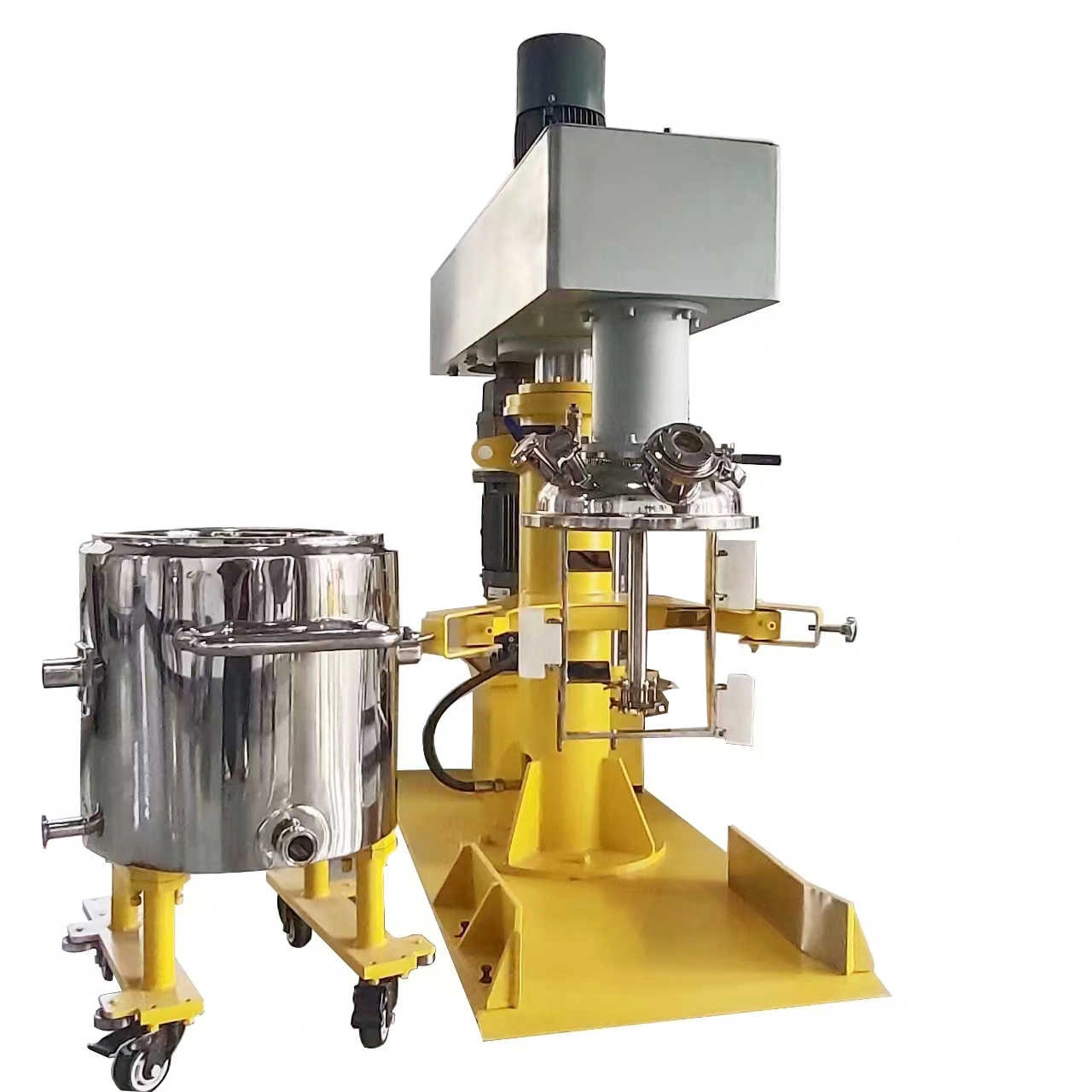
Anchor agitators operate close to the vessel wall and are frequently considered for viscous materials that require bulk movement. They can help reduce stagnant regions and improve material turnover near the wall, particularly when combined with an appropriate vessel geometry. An anchor agitator does not automatically provide sufficient shear for every powder-dispersion or deagglomeration task, so additional dispersing equipment may be required.
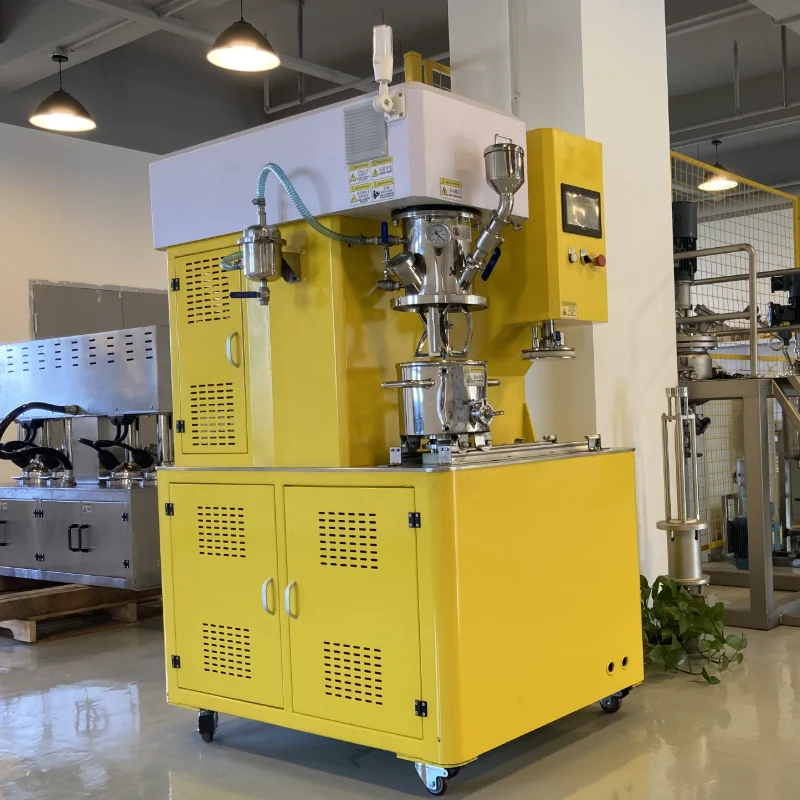
Planetary mixing systems move mixing elements through the vessel along planetary paths. Depending on the configuration, they can help process highly viscous pastes, sealants, and compounds containing substantial solid content. Some systems combine planetary motion with separate high-speed dispersers or vacuum equipment. Their suitability depends on formulation rheology, batch size, mixing time, and the required final product properties.
For many adhesives, the best solution is not simply the agitator with the highest speed. It is the configuration that provides the required circulation, shear, and material turnover without introducing excessive heat, entraining unnecessary air, or overloading the drive system.
Viscosity influences the resistance that the agitator must overcome. As a formulation thickens during processing, the drive may require substantially different torque from that needed during initial liquid blending.
Motor power and torque should therefore be evaluated together. A motor rating alone does not establish whether a mixer can start reliably under a heavy load or maintain stable operation as viscosity changes. Buyers should request information about the intended operating range, starting conditions, transmission design, and overload protection.
Variable-frequency drives can help adjust agitator speed to different processing stages. For example, a production process may require gentle circulation during initial charging and more intensive mixing during dispersion. The actual speed settings must be established through equipment design and process testing rather than copied from another adhesive application.
A properly selected drive system supports repeatable production while reducing unnecessary mechanical stress and energy consumption.
Temperature affects adhesive viscosity, reaction behavior, flow characteristics, and final performance. Excessive heat may damage temperature-sensitive ingredients, while insufficient heating can make some formulations difficult to mix or discharge.
A jacketed vessel can provide indirect heating or cooling through a suitable thermal medium. Depending on the design, buyers may consider hot water, thermal oil, or another compatible medium. The choice depends on the required operating temperature, heat-transfer duty, formulation, and available plant utilities.
Temperature control should account for more than the setpoint displayed on a control panel. Relevant factors include jacket design, heat-transfer area, vessel geometry, agitator-generated heat, sensor placement, and the temperature difference between the vessel wall and the material bulk.
For high-viscosity adhesives, heat transfer can become more difficult because internal circulation may be limited. A suitable agitator and a well-designed thermal system must therefore work together. Buyers should confirm the achievable temperature range and control accuracy against the actual formulation and equipment specification.
Material buildup on the tank wall can reduce effective heat transfer, complicate cleaning, and contribute to inconsistent processing. Scraper-equipped agitators can help remove material from selected vessel surfaces and improve contact between the product and the heated or cooled wall. Scraper materials must be compatible with the formulation, operating temperature, vessel finish, and cleaning method.
Sealing is equally important. The appropriate shaft seal depends on operating pressure, vacuum requirements, solvent compatibility, temperature, and the potential for leakage or contamination. Where flammable solvents are used, the complete equipment configuration must be assessed against applicable hazardous-area and process-safety requirements.
A reliable mixing tank integrates the vessel, agitator, drive, thermal system, seals, and controls into one process-oriented design. Evaluating these components separately without considering their interaction can result in equipment that appears suitable on paper but performs poorly in production.
Water-based adhesives often require effective liquid blending, controlled powder addition where applicable, and stable temperature management. Excessive agitation can introduce air or create unnecessary foam, while insufficient circulation may leave additives or solids incompletely dispersed.
The selection process should consider the formulation's viscosity profile, foaming tendency, solids content, and sensitivity to temperature. A conventional impeller may be appropriate for some fluid systems, whereas more viscous formulations may benefit from anchor or combined mixing arrangements.
Cleaning requirements also deserve attention, especially when a manufacturer changes between formulations or colors. Tank geometry, drainability, agitator access, and residue removal can affect changeover time and production flexibility.
Solvent-based formulations require careful consideration of chemical compatibility, vapor containment, and operating safety. Seals, gaskets, valves, and other wetted components must be suitable for the specific solvents involved.
The need for explosion-protected electrical components, ventilation, grounding, or other protective measures depends on the materials handled, process conditions, installation location, and applicable regulations. These requirements should be established during engineering review rather than treated as optional accessories added after the tank has been selected.
Mixing intensity must also suit the formulation. Excessive agitation can increase air entrainment or influence solvent evaporation under certain conditions, while inadequate mixing can produce uneven composition.
Hot melt adhesives generally require controlled heating to maintain a processable state. Their temperature requirements vary with polymer type, tackifier, wax, filler content, and the intended application.
For these systems, the heating arrangement, thermal uniformity, insulation, temperature monitoring, and discharge design are particularly important. Cold areas may cause localized increases in viscosity or obstruct material flow, while excessive temperatures may degrade heat-sensitive ingredients.
The agitator must handle the material's resistance at operating temperature and during relevant startup conditions. Buyers should confirm whether the equipment is designed for the actual thermal cycle, including heating, mixing, holding, and discharge.
High-viscosity adhesives can place demanding requirements on the drive, agitator, vessel geometry, and discharge system. Depending on the formulation, an anchor, planetary mixer, or combined mixing arrangement may be more suitable than a conventional high-speed impeller.
Some compounds also require vacuum processing to remove entrained air. However, vacuum capability must be considered alongside vessel design, sealing, vapor behavior, and the ability of the material to release bubbles under the selected mixing conditions.
For highly filled or shear-sensitive products, equipment trials are especially valuable. A configuration that works well for one compound may not produce the same results with a different filler loading or viscosity profile.
A well-designed adhesive mixing system must support the entire manufacturing process, not just the main mixing stage.
Raw material charging: The order of addition can influence wetting, dispersion, and agglomeration. Powder-feeding arrangements should match the material's flow characteristics and the process's dust-control requirements.
Powder dispersion: Some formulations need sufficient shear to disperse powders or break down agglomerates. Others are sensitive to excessive shear or heat. Buyers should distinguish between bulk mixing and high-shear dispersion when specifying the equipment.
Liquid blending: Impeller geometry, agitator position, vessel proportions, and operating speed affect circulation and mixing time. Uniformity should be verified against the formulation's actual quality criteria.
Temperature control: Heating or cooling should be designed around the required process window and the formulation's thermal sensitivity. A jacket alone does not guarantee uniform product temperature.
Vacuum deaeration: Vacuum can help remove entrained air from suitable formulations. It may be particularly valuable where bubbles affect appearance, bonding performance, density, or downstream dispensing. However, vacuum processing is not necessary for every adhesive and may require additional controls for volatile ingredients, foaming, or solvent handling.
Discharge and cleaning: High-viscosity materials may require a suitable bottom outlet, discharge valve, or other transfer arrangement. Drainability, dead zones, and access for cleaning should be reviewed before purchase. A tank that mixes effectively but leaves substantial residue may create avoidable cleaning and material-loss problems.
Nominal vessel volume should not be treated as the same as usable production capacity. The appropriate working volume depends on the formulation, required headspace, agitator geometry, thermal behavior, and whether vacuum processing is used.
Buyers should provide the expected batch size, production frequency, material density where known, viscosity range, and required output. The manufacturer can then evaluate the suitable vessel volume and effective filling range.
The drive system should be checked against the most demanding relevant operating condition, not only the average batch. Similarly, the temperature range, mixing speed, and processing time should be confirmed for the intended formulation instead of assumed from nominal tank capacity.
The price of an adhesive mixing tank reflects its engineering scope and configuration. Two tanks with similar nominal volumes may have substantially different specifications and manufacturing requirements.
Larger vessels generally require more material and may involve more demanding structural design, fabrication, lifting, and installation. The final cost also depends on the selected material grade, plate thickness, surface finish, and fabrication requirements.
Where corrosion resistance or product-contact cleanliness is critical, buyers should specify the required material and finish rather than relying on a generic description such as stainless steel construction.
Agitator type, motor and gearbox selection, torque requirements, variable-speed control, and the use of additional dispersing equipment all affect the quotation. A system designed for a high-viscosity compound may require a different mechanical arrangement from one intended for fluid adhesives.
The relevant comparison is whether each configuration meets the same processing requirements. Comparing motor power or tank volume alone can obscure important differences in mixing capability.
A jacketed vessel, temperature-control package, vacuum pump, vacuum-rated construction, and associated instrumentation add engineering and component requirements. Their value depends on the process.
For example, a heated vessel may be essential for a hot melt formulation but unnecessary for a temperature-insensitive, water-based product. Vacuum may be justified when air removal is a defined quality requirement, but it should not be selected solely because it is available as an option.
Manual controls, programmable process recipes, temperature feedback, speed regulation, and integration with upstream or downstream equipment can produce different investment levels.
Customization may include special vessel dimensions, material-contact requirements, feeding systems, discharge arrangements, safety features, and plant-interface specifications. Buyers should distinguish essential process requirements from optional features that do not improve the intended production outcome.
For this reason, a meaningful Adhesive Mixing Tank Price comparison requires a consistent technical scope. Each manufacturer should quote against the same batch requirements, material specifications, mixing functions, heating or cooling duty, vacuum requirements, controls, documentation, and delivery scope.
The supplier's engineering and quality-control capabilities can be as important as the equipment itself. A competitive quotation is not sufficient evidence that the proposed tank will perform reliably with the intended formulation.
Before selecting a supplier, buyers should assess the following areas:
Application knowledge: Can the manufacturer explain how viscosity, filler content, temperature sensitivity, and foaming behavior affect agitator selection?
Design capability: Can the supplier document the proposed vessel, drive, agitator, sealing arrangement, thermal system, and control configuration?
Material traceability: Can the manufacturer provide appropriate material documentation and clarify the specifications of wetted components?
Quality control: What inspections, fabrication checks, electrical tests, and functional tests are included?
Factory testing: Can the supplier demonstrate the agreed operating functions and document the test results?
Installation and support: Are installation guidance, commissioning, operating instructions, spare parts, and technical assistance included in the quotation?
Safety and compliance: Are the proposed equipment and documentation appropriate for the intended installation, materials, and applicable regulations?
Where practical, buyers should request a material trial using a representative formulation. The trial plan should define measurable acceptance criteria, such as dispersion quality, temperature behavior, air content where relevant, discharge performance, and batch-to-batch consistency.
Acceptance criteria must be agreed in advance. Terms such as “uniform mixing” or “high efficiency” are insufficient unless the parties define how the result will be evaluated.
A lower purchase price does not necessarily mean a lower long-term cost. Total cost of ownership (TCO) includes the initial investment and the operating expenses incurred throughout the equipment's service life.
Relevant factors include energy consumption, routine maintenance, seal and scraper replacement, cleaning time, production downtime, product retained in the vessel, and the cost of inconsistent batches or rework.
For example, a scraper-equipped vessel may be worth evaluating when wall buildup creates significant cleaning or heat-transfer problems. A more sophisticated mixing system may be justified when the existing process cannot achieve the required dispersion or consistency. Conversely, an elaborate vacuum and automation package may be unnecessary when the formulation and production workflow do not benefit from those functions.
The correct decision depends on documented production needs. Buyers should compare realistic operating scenarios, expected utilization, maintenance requirements, and measurable quality targets rather than assuming that the most advanced configuration is always the most economical.
Start with the formulation's viscosity range, ingredients, temperature requirements, batch size, and quality criteria. Then select the agitator, vessel material, thermal system, seals, and discharge arrangement to match those conditions. A representative material trial can help verify the proposed design.
The main factors typically include vessel capacity and material grade, agitator configuration, motor and gearbox requirements, heating or cooling, vacuum capability, automation, customization, and the scope of testing and support. A reliable comparison requires equivalent technical specifications.
No. Vacuum is useful when entrained air must be reduced to meet defined product or process requirements. Whether it is necessary depends on the formulation, the consequences of air inclusion, and the effectiveness of the existing mixing process.
No. Heating is important for formulations that require a controlled temperature to achieve the desired viscosity or processing behavior. For other adhesives, ambient-temperature mixing or a cooling arrangement may be more appropriate. The decision should follow the formulation's process requirements.
Possible measures include suitable agitator geometry, wall-scraping elements, appropriate surface finish, effective temperature control, and a cleaning arrangement matched to the adhesive. The most effective solution depends on the material's rheology and tendency to build up on the vessel surface.
Provide every supplier with the same process information and technical specification. Compare the proposed design, material compatibility, operating limits, test procedures, documentation, installation scope, and after-sales support—not just the quoted price.
Selecting an adhesive mixing tank is a process-engineering decision that affects product consistency, production efficiency, maintenance requirements, and long-term manufacturing costs. The appropriate solution depends on the interaction between the adhesive formulation, agitator design, vessel materials, temperature control, sealing, capacity, and discharge requirements.
When evaluating Adhesive Mixing Tank Manufacturers, buyers should prioritize demonstrated application knowledge, a clearly defined technical proposal, suitable quality-control procedures, and verifiable equipment testing. When assessing Adhesive Mixing Tank Price, they should compare equivalent configurations and consider total cost of ownership alongside the initial investment.
RUMI Technology has focused on fine chemical equipment and customized mixing and dosing solutions since launching its first self-developed high-precision dosing system and high-efficiency mixing equipment in 2018. The company serves industries including paints and inks, resins and new materials, new energy, and composites. Its approach emphasizes application-specific equipment development, quality assurance, and technical service. RUMI reports a quality assurance system that includes 72-hour factory testing and a 24-hour after-sales response, along with ISO 9001 and CE certifications.
For adhesive manufacturers, the next step is to provide the formulation characteristics, target batch size, processing temperature, mixing objectives, and any requirements for vacuum, cleaning, or automated control. With these details defined, equipment suppliers can develop a more relevant proposal and buyers can make a better-informed comparison of performance, configuration, and investment cost.