 en
en  vi
vi  it
it  es
es  tr
tr  ja
ja  pt
pt  nl
nl  ru
ru  fr
fr  de
de  pl
pl  ar
ar News
Latest news and events.




Mixing high-viscosity sealants is more demanding than blending ordinary liquids. Silicone sealants, polyurethane sealants, epoxy compounds, and other highly viscous pastes may contain polymers, mineral fillers, pigments, additives, and moisture-sensitive components. As viscosity increases, material circulation becomes more difficult, mixing resistance rises, and air introduced during powder feeding or agitation becomes harder to remove.
These challenges can lead to uneven filler distribution, local agglomeration, trapped bubbles, excessive temperature rise, and inconsistent product performance between batches. A conventional agitator may rotate successfully without creating sufficient movement throughout the entire vessel, particularly when the material has limited flow under its own weight.
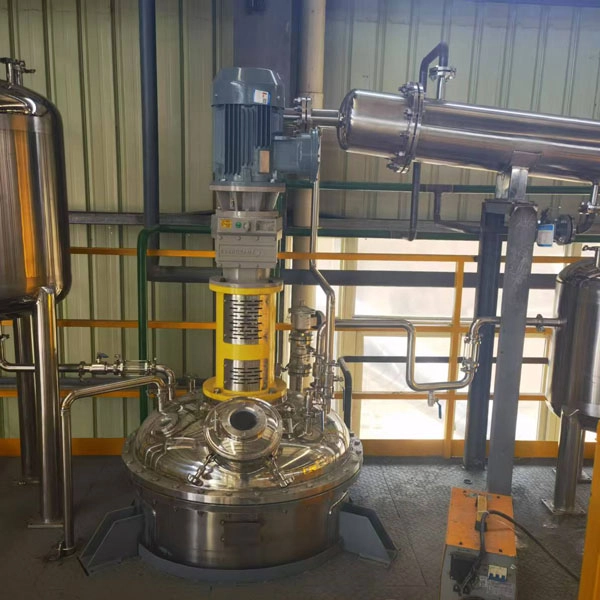
A properly selected High Viscosity Sealant Mixing Machine addresses these problems through an appropriate mixing mechanism, sufficient drive torque, controlled rotational speed, effective vessel geometry, and, where required, vacuum deaeration and temperature management. The objective is not simply to make the mixer more powerful. It is to achieve repeatable material circulation, dispersion, and air removal without damaging the formulation or compromising production efficiency.
For sealant manufacturers, selecting the right equipment starts with understanding the material and its process requirements rather than relying on a machine's advertised capacity alone.
Different mixing mechanisms create different flow patterns and shear conditions. Their suitability depends on the formulation, the required degree of dispersion, and the batch's resistance to movement.
Planetary mixing is widely considered for high-viscosity pastes because the mixing tools rotate on their own axes while moving around the vessel. This combined movement helps the tools reach different regions of the batch and reduces the risk of persistent unmixed zones. It is particularly relevant when materials are too viscous for effective circulation with a conventional central agitator.
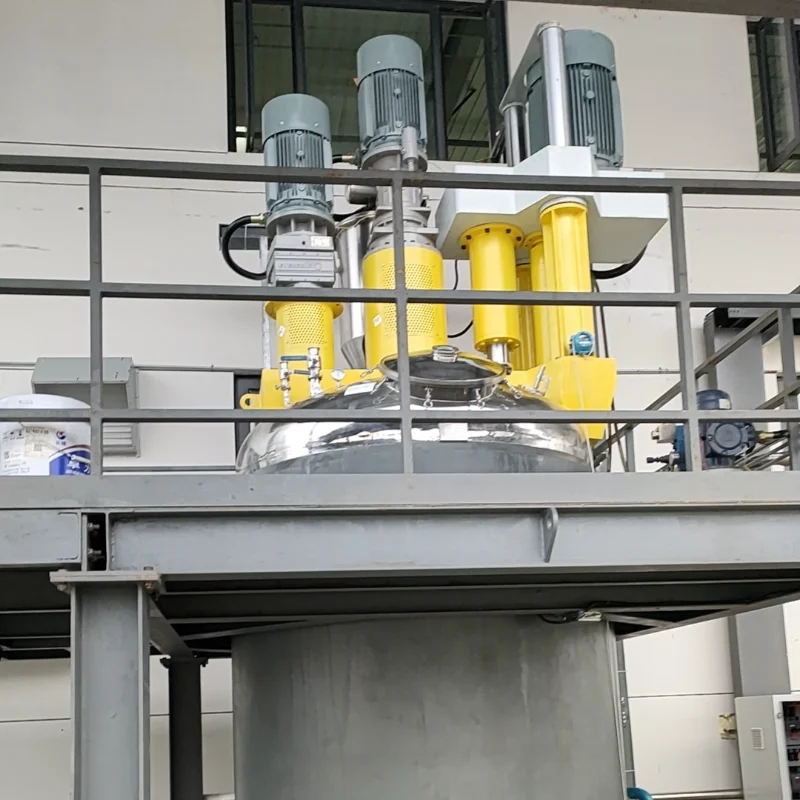
Double planetary mixing uses two mixing tools working within the same vessel. Depending on the tool geometry and machine configuration, this arrangement can improve material turnover and accommodate demanding paste-mixing applications. However, the additional tools do not automatically guarantee better results. Their spacing, trajectory, rotational relationship, and compatibility with the formulation must be evaluated.
High-shear mixing creates stronger local shear and may be useful when a formulation requires intensive dispersion of pigments, fillers, or other solid components. Its suitability depends on the material's rheology and sensitivity to heat. High shear is not always desirable for every sealant, particularly when excessive heating or unwanted changes in the formulation must be avoided.
Conventional agitators can be appropriate for lower-viscosity components, premixing, or formulations that circulate readily. They may become less effective when the material develops substantial resistance to flow and the agitator cannot move material consistently between the vessel center, walls, and bottom.
When evaluating the Best High Viscosity Sealant Mixer, manufacturers should compare the actual flow pattern and mixing results rather than treating one mixing technology as universally superior.
Drive torque determines the rotational force available to overcome resistance from the material. In high-viscosity applications, the required torque depends on the formulation's rheology, batch size, mixing tool geometry, speed, and operating conditions.
Motor power and torque are related but are not interchangeable specifications. A machine may have a substantial motor rating yet still be unsuitable if its transmission, shaft, gearbox, or mixing mechanism cannot deliver the necessary torque at the required operating speed.
Speed control is equally important. Starting too quickly can increase mechanical loading, introduce air, or produce unstable material movement. Operating too slowly may extend the mixing cycle or leave insufficient dispersion. The appropriate speed profile may therefore involve staged operation during powder incorporation, bulk mixing, dispersion, and vacuum deaeration.
For procurement, request the drive system's rated and available torque, permissible operating conditions, speed-adjustment range, and protection against overload. These details are more informative than motor power alone.
High-viscosity materials do not necessarily circulate freely from the vessel wall toward the center. Vessel diameter, bottom geometry, tool clearance, and scraper design all influence how effectively the batch is turned over.
Wall scrapers can help remove material adhering to the vessel surface and return it to the active mixing zone. This can reduce stagnant regions and improve heat transfer when the vessel has a suitable jacket. Scrapers must nevertheless be designed for the material and vessel construction; incorrect clearances or unsuitable materials can increase wear or create maintenance problems.
Temperature is another critical variable. Mechanical energy is converted partly into heat, and highly viscous materials can develop localized temperature increases during prolonged mixing. Excessive heating may change viscosity, shorten working time, accelerate curing reactions in reactive formulations, or affect final product consistency.
A jacketed vessel with heating or cooling provisions can help manage process temperature. The required configuration depends on the formulation, the initial material temperature, the heat generated during mixing, and any temperature-sensitive ingredients. Temperature sensors and documented operating limits support more repeatable batch control.
Many sealants contain mineral fillers that increase viscosity and influence mechanical properties, extrusion behavior, and cost. Introducing powders into a viscous liquid can be difficult because the powder may remain on the surface, form agglomerates, or become trapped in regions with insufficient circulation.
A suitable mixing process should provide controlled powder feeding, effective wetting, and enough material movement to distribute the solids throughout the batch. The sequence of ingredient addition matters: introducing all solids too quickly can create dry pockets or place excessive loads on the drive system.
Pigments and functional additives require similar attention. The equipment must disperse them sufficiently without creating unnecessary heat or damaging shear-sensitive ingredients. Where dispersion quality is critical, evaluate samples for visible agglomerates, color uniformity, and any formulation-specific performance indicators.
The ideal process sequence should be established through formulation trials rather than assumed from the mixer design alone.
Air can enter a sealant during powder feeding, liquid addition, agitation, and transfer. In a highly viscous material, bubbles may rise slowly because the surrounding compound offers substantial resistance to movement.
Vacuum deaeration lowers the pressure above the material, allowing entrained gas to expand and helping it escape from the batch. Its effectiveness depends on more than the vacuum pump. Material viscosity, bubble size, vessel filling level, mixing action, pressure reduction rate, and the formulation's tendency to foam all influence the result.
A properly designed vacuum mixing system combines an airtight vessel, a suitable vacuum pump, reliable seals, pressure monitoring, and a controlled operating sequence. The system must also account for possible foaming, material expansion, and carryover into the vacuum line.
Rapid pressure reduction is not necessarily the best approach. Some formulations can foam or overflow when exposed to vacuum too aggressively. A staged process may be more appropriate, with the pressure profile and mixing speed adjusted according to the material's behavior.
Vacuum mixing can reduce visible bubbles and improve consistency, but it cannot compensate for every source of defects. Poor ingredient wetting, inadequate dispersion, moisture contamination, or air introduced during downstream filling may still affect the finished product.
When evaluating equipment, ask the supplier to demonstrate deaeration using the actual formulation or a representative sample. Compare bubble content, surface appearance, density where relevant, and downstream product performance. Confirm the achievable vacuum level and cycle conditions from the specific machine's documented specifications and trial results.
The best equipment configuration depends on the chemistry and processing behavior of the sealant.
Silicone sealants: The process may need to control filler dispersion, air entrainment, and moisture exposure. For moisture-sensitive systems, ingredient handling and vessel sealing must be evaluated alongside mixing performance.
Polyurethane sealants: Moisture control can be particularly important because unwanted moisture may contribute to gas formation or other formulation defects. Material compatibility, controlled handling, and the required vacuum process should be assessed together.
Epoxy compounds: Viscosity, filler loading, and the formulation's reaction behavior influence mixing requirements. Temperature rise and working time deserve particular attention, especially where components react after combination.
These categories are not uniform. Two formulations within the same chemical family can behave differently because of their filler content, additives, temperature, and rheological properties. Equipment selection should therefore be based on the actual recipe and production process.
A successful mixing cycle must produce consistent results without unnecessary energy use, excessive processing time, or avoidable cleaning delays.
Manufacturers should define measurable acceptance criteria for each formulation. These may include dispersion quality, bubble content, batch temperature, density, viscosity at a specified test condition, and final sealant performance. Recording ingredient quantities, addition sequence, mixing speed, temperature, vacuum conditions, and cycle duration makes deviations easier to investigate.
Automation can improve repeatability by controlling these variables through recipes and recorded process steps. However, automation is most useful when the underlying mixing process has already been validated. A control system cannot correct an unsuitable mixing tool or inadequate drive capacity by itself.
The Best High Viscosity Sealant Mixer is the machine that meets the formulation's quality requirements at the required production scale, with manageable operating and maintenance costs. Buyers should compare the following factors:
| Selection factor | What buyers should verify |
|---|---|
| Mixing structure | Tool geometry, movement pattern, material circulation, and suitability for the formulation |
| Drive torque | Available torque under the intended operating conditions, transmission capacity, and overload protection |
| Speed control | Adjustable operating range and suitability for different stages of the mixing cycle |
| Working capacity | Recommended batch range, usable volume, filling limits, and headspace requirements |
| Vacuum system | Documented vacuum capability, vessel sealing, pressure control, and protection against foam carryover |
| Temperature control | Jacket configuration, heating or cooling provisions, sensor placement, and control accuracy |
| Wetted materials | Chemical compatibility, corrosion resistance, and suitability for the formulation and cleaning process |
| Sealing and maintenance | Seal design, wear components, access for inspection, and availability of replacement parts |
| Automation | Recipe control, process records, alarms, interlocks, and integration with upstream or downstream equipment |
Nominal vessel volume should not be confused with usable working capacity. Highly viscous formulations may require additional space for material movement, powder addition, and foam expansion during vacuum operation. The supplier should confirm the recommended loading range for the actual formulation.
The price of a High Viscosity Sealant Mixing Machine depends on its configuration rather than one specification in isolation.
Larger working capacities may require stronger structural components and higher drive loads. Specialized planetary mechanisms, higher-torque transmissions, vacuum-rated vessels, heating or cooling jackets, and advanced control systems can increase equipment complexity. Material-contact components, surface finishing, sealing arrangements, and customized discharge systems may also affect the quotation.
Automation requirements can add further cost, particularly when the project includes recipe management, data recording, safety interlocks, or integration with an existing production line.
For a meaningful comparison, buyers should request quotations based on the same batch size, formulation, process sequence, material-contact requirements, and acceptance criteria. A lower initial price does not necessarily mean lower total cost if the machine requires longer cycles, produces inconsistent batches, or creates more maintenance work.
Before purchasing, provide the supplier with representative material samples and as much formulation information as can be shared. Relevant details include viscosity and how it changes with temperature or shear, filler loading, ingredient addition sequence, moisture sensitivity, target batch size, and the required production output.
Ask for a trial using a representative formulation whenever possible. The trial should assess whether the machine can achieve the required dispersion, control temperature, remove air, and discharge the finished material reliably. Results should be documented under identifiable operating conditions.
Also confirm cleaning procedures, access to wear parts, maintenance requirements, operator training, installation needs, and technical support response arrangements. For overseas buyers, spare-parts availability, documentation quality, commissioning support, and communication across time zones can be important considerations.
Rumi is a professional supplier focused on chemical equipment and solutions, serving global customers with reliable products, quality control, and responsive service.
Since launching its first self-developed high-precision dosing system and high-efficiency mixing equipment in 2018, RUMI Technology has focused on fine chemical equipment development. Through repeated research and development iterations, the company has built technical expertise and obtained invention patents.
Its customized solutions serve paint and ink manufacturers, resin and new materials companies, and customers in the new energy and composites industries. This experience in mixing and dosing applications provides a foundation for discussing process requirements, equipment configuration, and production integration with industrial buyers.
RUMI Technology has established a quality assurance system that includes 72-hour factory testing and a 24-hour after-sales response commitment, and it holds ISO 9001 and CE certifications. Buyers should confirm the applicable certification scope and the testing arrangements for the specific equipment being considered.
For high-viscosity sealant production, the appropriate next step is to discuss the actual material, batch requirements, and process objectives with the supplier. Equipment configuration should follow the formulation and validated trial results, not a generic performance claim.
Planetary or double planetary mixers are worth evaluating when a formulation requires substantial material turnover and consistent mixing in a viscous paste. High-shear equipment may be appropriate when intensive dispersion is needed. The final choice depends on the recipe, required shear, batch size, and trial results.
Vacuum lowers the pressure above the material, encouraging entrained gas to expand and escape. Effective deaeration also depends on the formulation, mixing action, pressure-control sequence, vessel sealing, and prevention of excessive foaming.
Common causes include insufficient torque, unsuitable tool geometry, inadequate material circulation, incorrect loading, poor powder addition, inappropriate speed, and excessive or insufficient mixing. Temperature changes can also alter viscosity and affect the process.
Start with mixing structure, available drive torque, speed control, recommended working capacity, vacuum capability, and temperature management. Then assess material compatibility, cleaning, maintenance, automation, and supplier support against the intended production process.
Arrange a trial with representative material and define acceptance criteria in advance. Record the operating conditions and assess dispersion, bubble removal, temperature, batch consistency, and discharge performance. Use documented trial results to confirm the equipment configuration before finalizing the order.
Selecting a High Viscosity Sealant Mixing Machine requires more than comparing motor power or vessel volume. Mixing geometry, available torque, speed control, vacuum performance, temperature management, and formulation compatibility all influence the quality and repeatability of the finished sealant.
For manufacturers comparing the Best High Viscosity Sealant Mixer, the most reliable approach is to define the process requirements, compare verifiable technical specifications, and validate performance through representative material trials. This provides a stronger basis for achieving consistent batches, controlling production risks, and choosing equipment that supports long-term manufacturing needs.