 en
en  vi
vi  it
it  es
es  tr
tr  ja
ja  pt
pt  nl
nl  ru
ru  fr
fr  de
de  pl
pl  ar
ar News
Latest news and events.




A mixer that handles a 1,000-liter batch is not necessarily the right mixer for a 1,000-liter resin, paint, ink, or putty batch. In chemical production, the real challenge is often how effectively the equipment moves and processes the material throughout the vessel.
Traditional single-shaft mixers can struggle when powder must be incorporated into a viscous liquid or when a large batch becomes difficult to circulate. Typical problems include powder agglomeration, slow dissolution, stagnant zones, material sticking to the vessel wall, and insufficient circulation in high-viscosity formulations. These limitations become more noticeable as batch volume and viscosity increase.
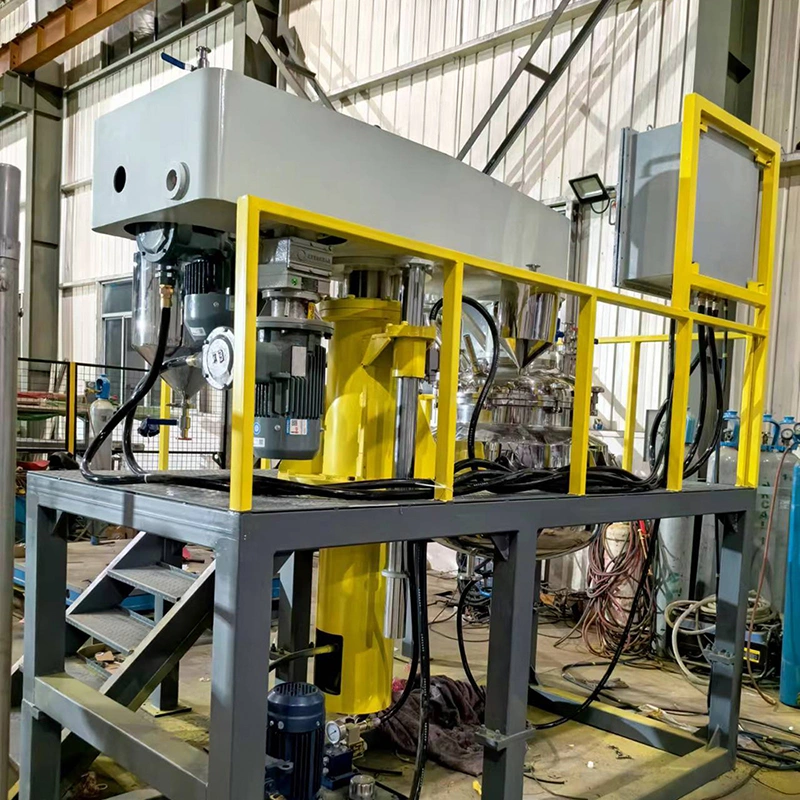
For manufacturers producing putty, paint, ink, pigment, gel, resin, and similar materials, a Chemical Double Shaft Mixer addresses these issues by combining two different mixing actions in one vessel: high-speed dispersion and low-speed bulk circulation.
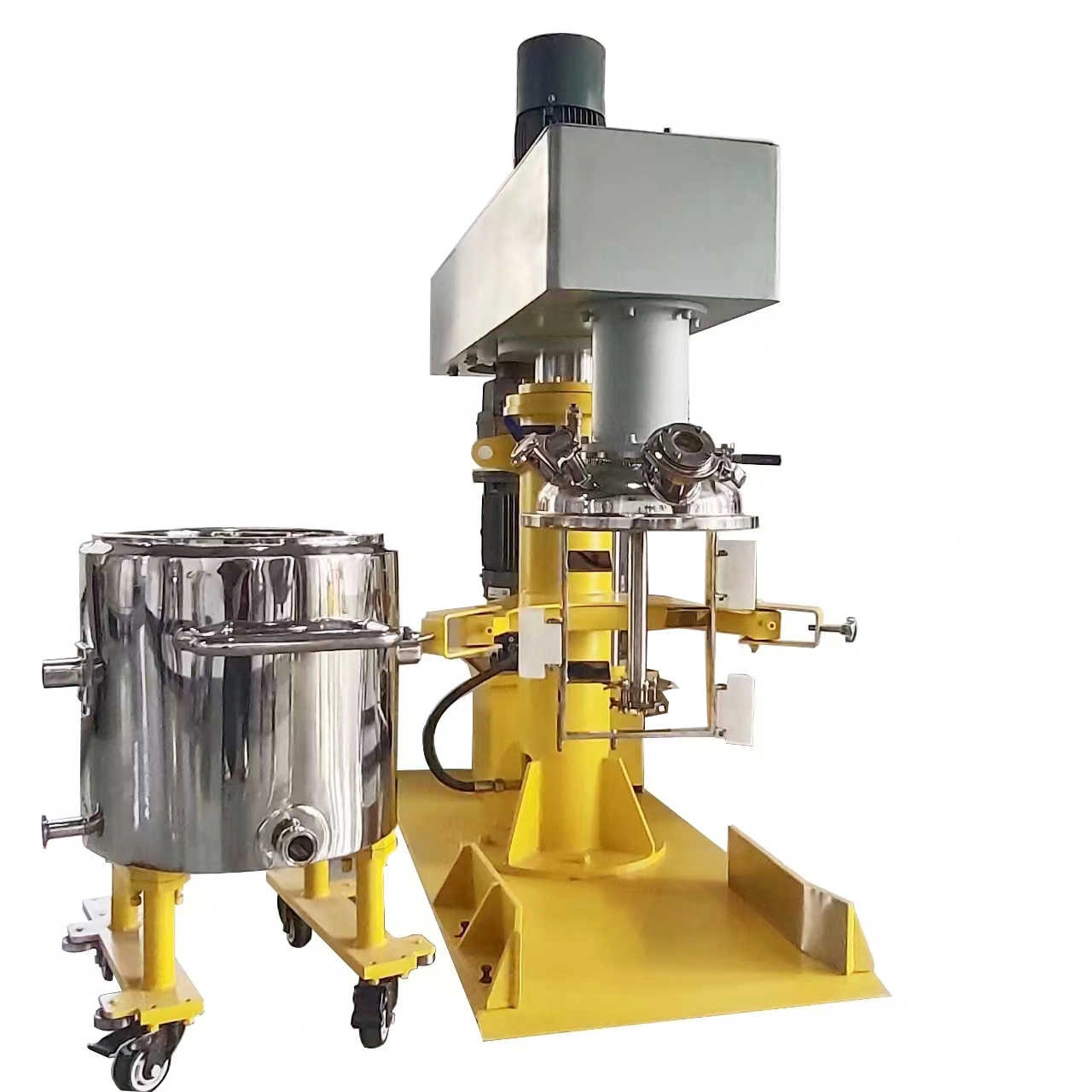
The main advantage is not simply having two shafts. It is the way the two independently driven agitators perform different jobs at the same time.
Rumi's Double Shaft Mixer uses a concentric shaft arrangement with a high-speed disperser positioned inside a low-speed anchor or frame agitator. The dispersing disc operates at high speed and generates high linear velocity around the disc. When powders are added to a liquid, this localized high-shear zone helps wet and break apart particles rapidly, reducing the tendency of powder to form persistent agglomerates.
The low-speed anchor performs a different function. Rather than relying on high shear throughout the entire vessel, it continuously pushes the bulk material around the tank and feeds material toward the high-speed disperser. This creates a circulation path between the outer region of the vessel and the dispersing zone.
That distinction is important for high-viscosity products. A single high-speed impeller may create strong local turbulence while leaving less mobile material near the vessel wall. Conversely, a single anchor mixer can provide good bulk movement but may not generate enough localized shear to disperse powders efficiently. Combining the two allows the equipment to provide both bulk circulation and localized high-speed dispersion.
The PTFE scrapers mounted on the anchor frame further improve this process. They continuously remove material from the interior vessel wall, reducing the amount of product left outside the main circulation pattern. This also improves heat transfer because the wall surface remains more actively exposed to moving material.
For medium to large batch production, this arrangement is particularly useful because increasing vessel volume usually makes circulation more difficult. The double-shaft system keeps material moving while maintaining a dedicated high-speed dispersion zone.
Different formulations require different mixing conditions. A resin system, for example, may become substantially more viscous as temperature falls. Paint and ink formulations may require effective pigment dispersion without excessive air entrainment. Putty and gel products may need strong bulk movement but relatively controlled shear.
Both agitators on the Rumi Double Shaft Mixer support variable-speed operation through frequency converter control. This allows the operator to adjust the high-speed disperser and low-speed anchor according to the formulation and production stage.
During powder incorporation, the disperser can operate at a higher speed to improve wetting, dissolution, and deagglomeration. Once the powder has been incorporated, the process may shift toward bulk homogenization, where controlled anchor movement becomes more important. The ability to adjust speed avoids treating every formulation as though it required the same mixing profile.
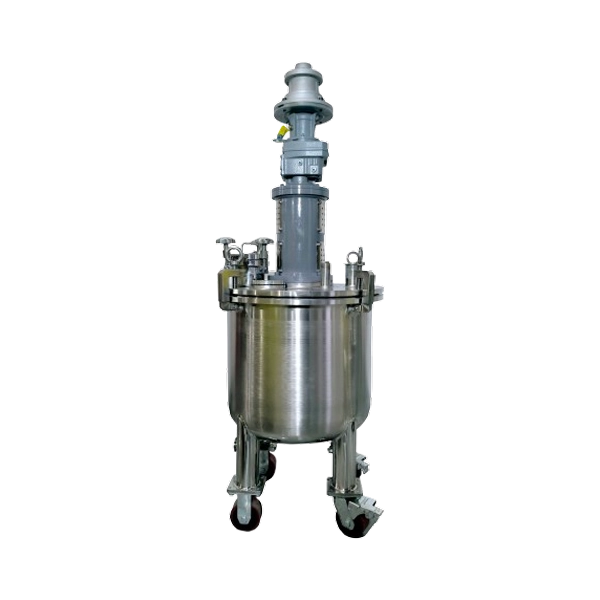
Temperature control is equally important. The jacketed tank can circulate a heating or cooling medium, using an external heater or chiller. For high-viscosity resin, paint, ink, and gel systems, temperature directly affects viscosity and therefore the power required to move the material. Heating can reduce viscosity and improve circulation, while cooling may be required to control formulation temperature after dispersion or during temperature-sensitive processing.
The vessel can also be operated under vacuum or protected with inert gas because the tank is designed for airtight operation. Vacuum processing can be useful when deaeration is required, while inert gas protection can help when the formulation needs a controlled atmosphere.
Hydraulic lifting adds another practical advantage. The mixing head can be raised and lowered steadily into the operating position, simplifying charging, cleaning, inspection, and maintenance. For production environments where equipment is used across different formulations, this mechanical access can be more valuable than simply adding motor power.
When comparing a Chemical double shaft mixer price, working volume is only one part of the specification. Two mixers with the same nominal capacity can have substantially different prices because their mechanical and process requirements are different.
The first major factor is material viscosity. A high-viscosity resin or gel may require greater drive capacity and torque than a low-viscosity liquid. The required high-speed disperser speed is another factor, particularly when intensive powder dispersion is part of the process.
The configuration of the mixing system also affects cost. Two independently driven agitators require more mechanical and control components than a single-shaft design. Hydraulic lifting, frequency converter control, digital speed indication, and optional PLC touch-screen control add further functionality.
Material selection is another important consideration. Rumi uses Stainless Steel 304 for wetted parts as standard, while SS316L is available as an option where greater corrosion resistance is required. The appropriate choice should be based on the chemical composition of the formulation rather than simply selecting the more expensive material.
The jacket, vacuum system, inert-gas protection, sealing arrangement, and automation level can also change the final equipment cost. Therefore, comparing suppliers only by vessel capacity or motor power can produce a misleading result.
When evaluating Chemical double shaft mixer manufacturers, buyers should look beyond a standard equipment quotation. The manufacturer's ability to understand the formulation and translate it into a suitable mechanical configuration is often more important than the lowest initial price.
A capable manufacturer should be able to discuss viscosity, batch size, powder loading, required dispersion intensity, operating temperature, heating or cooling requirements, vacuum conditions, and expected production cycle before confirming the final configuration.
Rumi is a professional supplier focused on chemical equipment and solutions, serving customers worldwide with reliable products, strict quality control, and efficient service. Since developing its first high-precision dosing system and high-efficiency mixing equipment in 2018, RUMI Technology has focused on fine chemical equipment and customized process solutions.
Its experience covers applications including paint and ink dosing, resin and new-material mixing, as well as equipment solutions for new energy and composite industries. After hundreds of R&D iterations, RUMI has developed proprietary technologies and invention patents around dosing and mixing equipment.
For production equipment, manufacturing quality also matters after installation. Rumi operates a quality assurance system that includes 72-hour factory testing, 24-hour after-sales response, and ISO9001 and CE certifications. These factors are relevant when the mixer is expected to operate repeatedly in continuous batch production rather than as occasional laboratory equipment.
The right Chemical Double Shaft Mixer should be selected from the formulation backward, not from the motor or vessel size forward.
For powder-intensive paint and pigment production, the high-speed disperser deserves particular attention. For high-viscosity resin, putty, and gel, anchor circulation, scraper geometry, drive torque, and jacket capacity become equally important. If temperature must be tightly controlled, the jacket and heating or cooling system should be evaluated together with the mixing cycle. If air removal or oxidation control is required, the airtight vessel and vacuum or inert-gas configuration should be included from the beginning.
For medium and large batches, the objective is not simply to make the agitator turn. The equipment must maintain circulation, dispersion, wall renewal, temperature control, and repeatable processing throughout the batch.
That is why selecting a Chemical Double Shaft Mixer should involve more than comparing Chemical double shaft mixer price. Dispersion efficiency, bulk circulation, PTFE scraping, independent speed control, jacket performance, vessel material, vacuum capability, and the engineering capability of the Chemical double shaft mixer manufacturers all influence the actual value of the equipment. For chemical producers, the best configuration is the one that consistently matches the viscosity, batch size, formulation, temperature requirements, and production cycle of the process.