 en
en  vi
vi  it
it  es
es  tr
tr  ja
ja  pt
pt  nl
nl  ru
ru  fr
fr  de
de  pl
pl  ar
ar News
Latest news and events.



In many chemical and manufacturing processes, accurate liquid additive dosing directly affects product quality, production consistency, and overall operating efficiency. However, many factories still rely on manual weighing and material addition methods, which can create problems during large-scale production. Small measurement deviations, incorrect feeding sequences, and differences between operators may cause inconsistent formulas, unstable product performance, and increased raw material waste.
These challenges become more serious in industries such as paints, inks, adhesives, composites, cosmetics, and specialty chemicals, where formulations often involve multiple additives with strict ratio requirements. When production volumes increase, manual dosing becomes difficult to manage and requires more labor involvement, inspection procedures, and adjustment time.
A high-accuracy Automatic Additives Dosing System provides a more reliable approach by combining weighing modules, intelligent valve control, and PLC-based formula management. The system can automatically complete material filling, measurement, and dosing according to predefined recipes, helping manufacturers reduce human errors and achieve consistent production results.
RUMI is a professional supplier focused on chemical equipment and solutions. We serve global customers with reliable products, strict quality control, and efficient service, building long-term partnerships worldwide.
Since launching our first self-developed high-precision dosing system and high-efficiency mixing equipment in 2018, RUMI Technology has remained committed to being a “professional fine chemical equipment service provider.” Today, RUMI Technology has developed into a global expert in fine chemical equipment solutions, providing customized dosing and mixing systems for industries requiring higher production accuracy.
For chemical manufacturers, dosing accuracy is not only related to material consumption but also directly influences final product performance. A professional automatic dosing system uses advanced weighing and metering structures to control the exact amount of additives introduced into the production process.
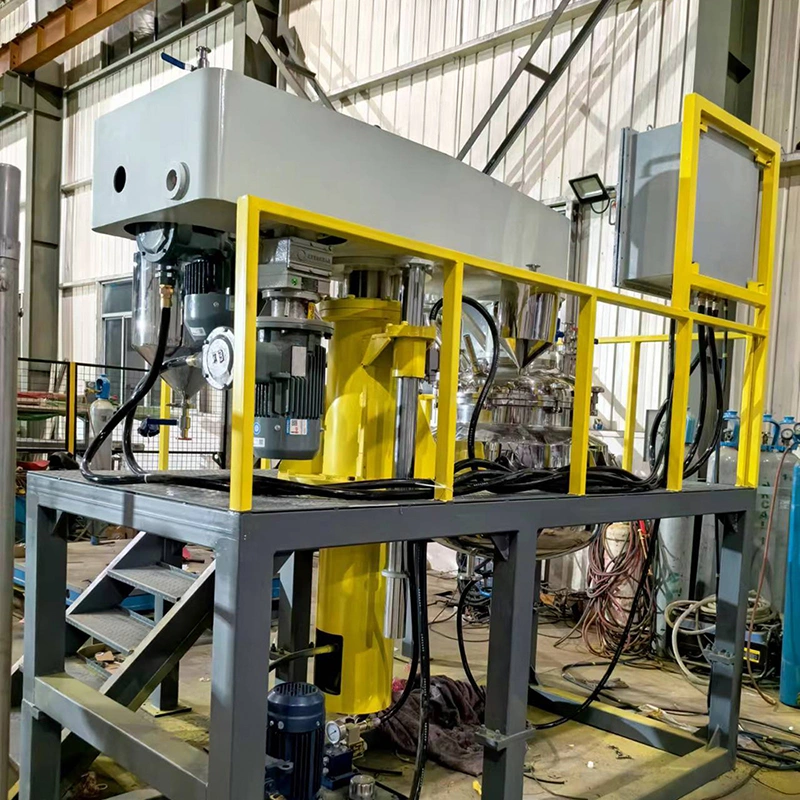
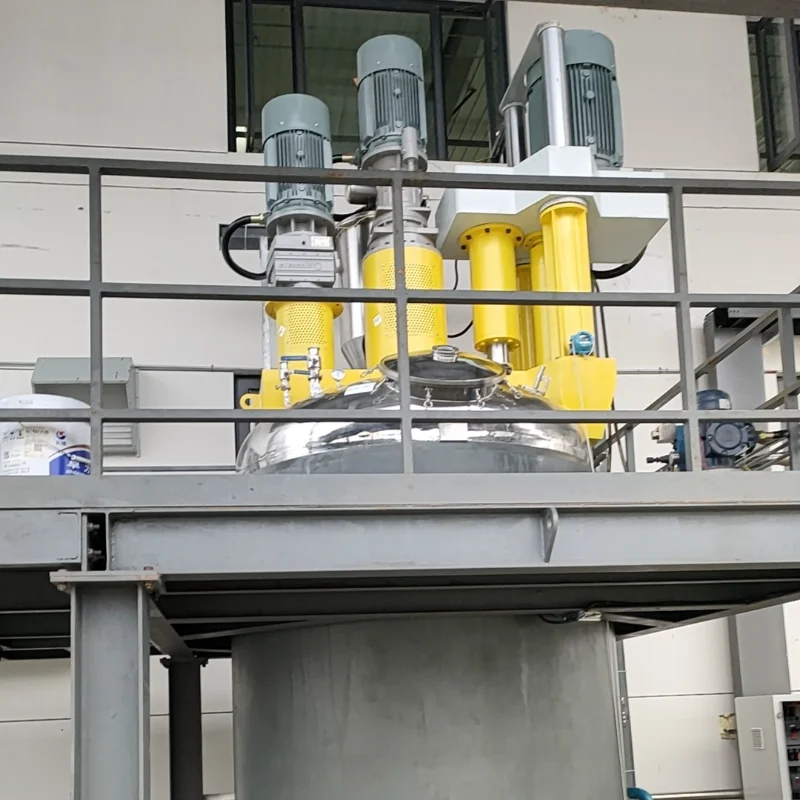
The High Accuracy Automatic Additives Dosing System developed by RUMI adopts a weighing module combined with valve or screw conveyor interlock control. This structure allows the system to monitor and control additive input more accurately compared with manual feeding methods.
During production, the PLC control system can automatically execute the material filling process according to the stored formula. The operator only needs to select the required recipe, and the system can complete the dosing procedure based on preset parameters.
This automated process provides several advantages:
Reduces measurement deviations caused by manual operation;
Maintains consistent additive ratios between production batches;
Minimizes material waste caused by over-dosing or incorrect feeding;
Improves production repeatability for complex formulations.
For example, in the paint and coating industry, even small variations in pigment additives, functional agents, or chemical components can affect color consistency, viscosity, drying performance, and coating quality. Automated dosing ensures that each batch receives the correct additive quantity, helping manufacturers maintain stable product performance.
In the ink printing industry, accurate additive control is essential for achieving consistent color, flow characteristics, and printing quality. The dosing system reduces dependence on operator experience and provides a standardized production process.
For composite material production, precise dosing of resin additives, curing agents, and functional components helps improve material properties and reduce defects caused by inaccurate mixing ratios.
Modern chemical production often requires multiple formulas for different products. Managing these recipes manually can increase operational complexity and create risks when switching between production batches.
A PLC-controlled automatic dosing system provides a more efficient solution by integrating formula storage, automatic batching, dosing control, and production data tracking.
The PLC software system controls automatic material filling according to the recorded formula. This allows manufacturers to manage different additive combinations while maintaining accurate process control.
Key functions include:
Formula memory for repeated production orders;
Automatic batching and dosing sequences;
Real-time process monitoring;
Production data traceability;
Reduced manual intervention during operation.
This capability is especially valuable for companies producing multiple product types within the same facility. Instead of manually adjusting each additive quantity, operators can use stored recipes to improve production efficiency and reduce setup time.
The system can also be customized according to specific production requirements. Different industries may require different storage tanks, feeding methods, control systems, or dosing accuracy levels. RUMI provides exclusive customized dispensing solutions based on each customer's application needs.
In industries such as:
Paints and coatings;
Textile auxiliaries;
Cosmetics;
Adhesives;
Construction chemicals;
Food ingredients;
Perfume and aroma production;
automatic dosing technology helps manufacturers achieve more stable and controlled production processes.
For cosmetic and food-related applications, where formulation accuracy and production records are particularly important, automated dosing provides better control over ingredient quantities while supporting more reliable quality management.
When companies evaluate Automatic Dosing System Price, they should not only compare the initial equipment cost. The final price depends on several technical factors, including system configuration, accuracy requirements, automation level, and customization needs.
One major factor is the level of automation. A basic dosing system may only provide automatic material delivery, while advanced systems equipped with PLC control, formula storage, data traceability, and production integration require more sophisticated components and software development.
Measurement accuracy is another important factor. Industries with strict formulation requirements may require higher-precision weighing modules, advanced sensors, and more stable control components, which influence the overall equipment investment.
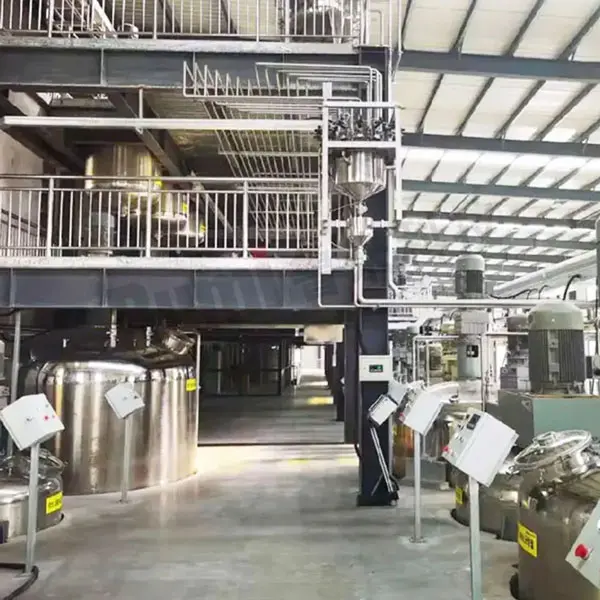
The number of materials and feeding channels also affects system configuration. A production line requiring multiple additives may need additional storage tanks, valves, pumps, pipelines, or feeding devices to achieve accurate control.
Customization requirements can further influence the final cost. Different factories have different layouts, production capacities, and material characteristics. For example, high-viscosity liquids, corrosive chemicals, or special production environments may require customized designs and specific equipment materials.
However, purchasing decisions should consider long-term value rather than only the equipment price. A reliable automatic dosing system can help companies reduce labor dependence, lower raw material losses, improve batch consistency, and decrease production risks over years of operation.
RUMI Technology focuses on providing customized fine chemical equipment solutions rather than standard products only. Through hundreds of research and development iterations, the RUMI Technology team has developed advanced dosing and mixing technologies, established numerous invention patents, and created a strong technological foundation in intelligent chemical equipment manufacturing.
The company has also established a strict quality assurance system featuring 72-hour factory testing and 24-hour after-sales response, with ISO9001 and CE certifications supporting its commitment to reliable equipment performance.
As chemical manufacturing becomes more precise and competitive, companies need production equipment that can deliver consistent results while reducing operational risks. Manual additive handling may still work for small-scale production, but it becomes increasingly difficult to maintain accuracy and efficiency as formulas become more complex and production volumes increase.
A high-performance Automatic Additives Dosing System provides manufacturers with a practical solution by combining precise weighing, automated control, and intelligent formula management. It helps companies improve product consistency, reduce human errors, and create a more traceable production process.
With customized solutions, advanced dosing technology, and deep experience in fine chemical equipment, RUMI Technology continues to support global customers in industries including paints, coatings, inks, composites, cosmetics, and specialty chemicals. By advancing intelligent dosing and mixing solutions, RUMI helps manufacturers build more efficient, stable, and future-ready production systems.