 en
en  vi
vi  it
it  es
es  tr
tr  ja
ja  pt
pt  nl
nl  ru
ru  fr
fr  de
de  pl
pl  ar
ar News
Latest news and events.




In industrial automation and fine chemical production systems, Precision liquid dosing machine price is not a simple reflection of mechanical configuration or output capacity. Instead, it is a direct representation of control system architecture complexity, feedback precision level, and fluid stability performance under dynamic production conditions.
Unlike general-purpose dispensing equipment, precision dosing systems are expected to maintain micro-level volumetric consistency across thousands or even millions of cycles. This means that even minor variations in pressure, viscosity, or mechanical response time can significantly impact final product quality, especially in industries such as electronics, pharmaceuticals, coatings, adhesives, and specialty chemicals.
Therefore, pricing must be understood as an engineering indicator rather than a commercial value alone.
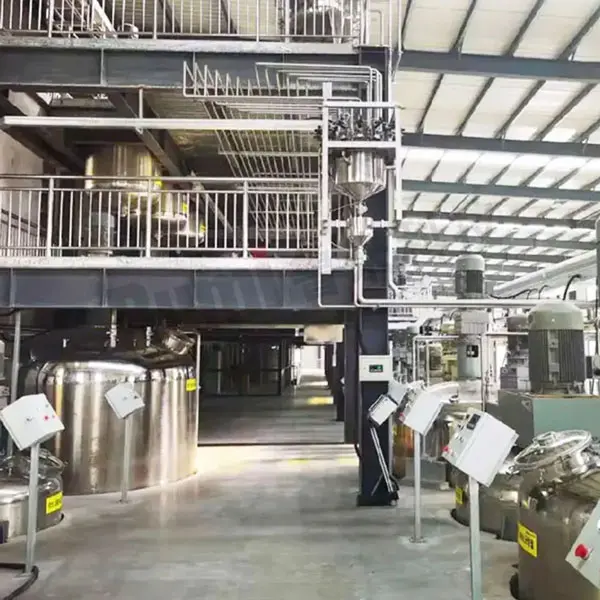
The foundation of high-end dosing systems is the Closed-Loop Precision Dosing Architecture, which continuously monitors actual output behavior and dynamically adjusts system parameters in real time to eliminate deviation between target and actual dispensing volume.
Real-time flow feedback correction for continuous volumetric stabilization
The system integrates inline flow sensors that continuously measure actual liquid output during each dosing cycle and compare it against preset target values. When deviations occur due to pressure fluctuations, viscosity changes, or micro-mechanical lag, the system immediately compensates through motor micro-adjustments. This real-time correction mechanism ensures that cumulative error does not propagate across production cycles, which is especially critical in high-volume manufacturing environments where even small deviations can scale into significant material loss or quality instability.
Micro-stepper motor displacement control for ultra-high resolution dosing accuracy
The use of micro-step motor technology allows each rotation to be divided into extremely small incremental movements, enabling highly precise displacement control of pumps or piston mechanisms. This fine resolution is essential for applications requiring microliter or sub-microliter accuracy, where conventional step control systems would introduce unacceptable quantization error and reduce overall process reliability.
Pressure-adaptive flow linearization across multi-viscosity fluid systems
Different industrial fluids exhibit nonlinear flow characteristics depending on viscosity, temperature, and pressure conditions. The system dynamically adjusts motor torque and speed curves based on real-time resistance feedback, ensuring that output remains linear and predictable even when switching between low-viscosity solvents and high-viscosity adhesives or resins within the same production system.
A major engineering challenge in precision dispensing systems is transient error generated during start-stop cycles. The Dynamic Pulse Compensation Dosing System is specifically designed to eliminate these inconsistencies by actively controlling system inertia and fluid momentum behavior.
Controlled acceleration profiling for start-phase overshoot elimination
During initial activation, sudden acceleration often causes fluid overshoot due to mechanical inertia and pressure buildup in the delivery line. The system addresses this by applying a controlled acceleration curve that gradually increases motor speed, allowing internal fluid dynamics to stabilize before full dispensing begins. This ensures that the first portion of every dosing cycle remains accurate and prevents systematic over-dosing in high-frequency production environments.
Reverse micro-compensation for stop-phase residual pressure neutralization
At the end of each dispensing cycle, residual pressure within tubing systems can cause unwanted dripping or delayed discharge. The system applies a precisely calculated reverse micro-step motion to neutralize internal pressure gradients, effectively stopping fluid movement exactly at the target volume and preventing both over-delivery and contamination at the nozzle tip.
Continuous error correction across high-frequency production cycles
In continuous manufacturing environments where dosing cycles occur at extremely short intervals, small mechanical or hydraulic errors can accumulate over time. The compensation system continuously analyzes previous cycle deviations and applies corrective adjustments in subsequent cycles, ensuring long-term stability and preventing drift in output accuracy across extended production runs.
The anti-drip mechanism plays a critical role in maintaining both dosing accuracy and production cleanliness, particularly in high-precision applications where contamination or excess material discharge can directly affect product quality and downstream processing efficiency.
Vacuum-assisted negative pressure control for droplet elimination
After each dosing cycle, the system generates a controlled negative pressure environment that actively retracts residual fluid back into the dispensing chamber. This prevents uncontrolled droplet formation at the nozzle tip, which is especially important in applications involving electronic coating, pharmaceutical filling, or precision chemical deposition where even microscopic contamination can lead to product failure.
Viscosity-dependent suction optimization for fluid stability consistency
Different fluids respond differently to suction forces depending on their viscosity and surface tension characteristics. The system dynamically adjusts backflow suction intensity to ensure that low-viscosity liquids are not over-retracted while high-viscosity materials are sufficiently stabilized, maintaining consistent cutoff behavior across a wide range of industrial fluids.
Extended maintenance cycle through contamination prevention engineering
By eliminating uncontrolled dripping and nozzle residue buildup, the system significantly reduces surface contamination risks and material accumulation in dispensing areas. This directly extends maintenance intervals, reduces cleaning downtime, and improves overall production line efficiency by maintaining a cleaner operating environment over extended production cycles.
Understanding how precision dosing systems maintain accuracy requires analysis from both fluid mechanics and automatic control theory perspectives.
Motor micro-step resolution as a fundamental limit of volumetric precision
The smallest controllable motor increment defines the theoretical minimum achievable dosing volume. Higher micro-stepping resolution reduces quantization error, allowing smoother and more continuous fluid displacement, which is essential for maintaining accuracy in ultra-low-volume applications.
Pressure variation impact on flow stability and output deviation
External pressure fluctuations within the fluid delivery system can significantly distort flow consistency, particularly in open-loop systems. Closed-loop compensation mechanisms continuously monitor and correct these fluctuations, ensuring that output remains stable regardless of upstream or downstream pressure changes.
Tubing elasticity effects on dynamic dosing response accuracy
Flexible tubing materials introduce elastic deformation under pressure, which can store and release energy unpredictably during dosing cycles. This effect can amplify errors in both start and stop phases. Advanced systems compensate for this behavior through dynamic modeling of fluid elasticity and mechanical delay factors, improving long-term repeatability.
From an industrial procurement perspective, Precision liquid dosing machine price is determined by multiple interrelated engineering factors rather than a single specification parameter.
Closed-loop control system integration level and feedback accuracy design
Systems equipped with real-time flow sensors, adaptive control algorithms, and continuous feedback loops are significantly more complex to design and manufacture. This integration directly enhances accuracy but also increases system cost due to sensor precision requirements and embedded control system complexity.
Pump architecture selection and mechanical precision class
Different pump systems such as gear pumps, piston pumps, and peristaltic pumps each offer different levels of precision, durability, and chemical compatibility. High-precision pump systems require tighter manufacturing tolerances and advanced material selection, which significantly impacts overall pricing structure.
Control algorithm sophistication and compensation intelligence
Advanced dosing systems incorporate dynamic pulse compensation, pressure adaptive control, and multi-variable correction algorithms. These require embedded computing capabilities and extensive calibration testing, which increases both development complexity and final equipment value.
Material compatibility and industrial-grade structural design
Equipment designed for corrosive chemicals, high-purity fluids, or food-grade applications requires specialized sealing systems, corrosion-resistant materials, and contamination-free structural design, all of which directly contribute to higher manufacturing costs.
The Precision liquid dosing machine manual is not simply an operational guide but an engineering calibration framework that defines system performance boundaries and long-term operational stability.
Standardized calibration procedures for maintaining long-term dosing accuracy across production shifts and operator changes, ensuring that system performance remains consistent regardless of environmental or human variation
Multi-parameter configuration mapping that allows precise replication of production recipes, enabling seamless switching between different fluid types and production batches without loss of accuracy or repeatability
Sensor validation and diagnostic procedures that ensure continuous reliability of flow measurement systems and prevent long-term drift in dosing accuracy due to wear or environmental factors
Preventive maintenance scheduling designed to minimize mechanical degradation and ensure long-term stability of critical system components under continuous industrial operation
RUMI Technology is a professional supplier specializing in high-precision dosing and mixing systems for global fine chemical and advanced manufacturing industries.
Since 2018, RUMI has continuously developed advanced dosing technologies for coatings, inks, resins, adhesives, and new energy material systems, focusing on improving accuracy, stability, and automation integration.
Core capabilities include closed-loop precision dosing architecture, dynamic pulse compensation systems, anti-drip control mechanisms, multi-viscosity adaptive flow control, and industrial-grade stainless steel construction compliant with ISO9001 and CE standards. Combined with 72-hour factory testing and 24-hour response support, these systems are designed for continuous industrial production environments requiring both high precision and long-term operational reliability.
From a production efficiency perspective, precision dosing systems deliver measurable improvements in material utilization, process stability, and product consistency.
By reducing over-dispensing, eliminating start-stop errors, and stabilizing flow behavior across variable fluid conditions, these systems significantly reduce raw material waste while improving final product quality and consistency across large-scale manufacturing operations.
The true meaning behind Precision liquid dosing machine price lies in the depth of its control architecture, fluid dynamic stability, and industrial automation intelligence.
Through closed-loop feedback control, dynamic pulse compensation, and anti-drip stabilization systems, modern precision dosing machines achieve highly reliable, repeatable, and scalable fluid handling performance across complex industrial environments.
For modern manufacturers, selecting a dosing system is ultimately a decision about control precision, production stability, and long-term manufacturing efficiency—not just equipment acquisition.