en
 vi
 it
 es
 tr
 ja
 pt
 nl
 ru
 fr
 de
 pl
 ar
News
Latest news and events.



In ink manufacturing, achieving consistent color strength, fine particle size, and stable product performance depends heavily on the grinding and dispersion process. Pigments that are poorly dispersed can cause color variations, reduced gloss, uneven printing, and instability during storage. At the same time, excessive grinding time, uncontrolled temperature rise, and frequent equipment cleaning can reduce production efficiency and increase operating costs.
Choosing an industrial ink grinding machine is therefore more than a question of selecting equipment with a high rotational speed or a small nominal grinding size. Ink manufacturers need to consider pigment characteristics, formulation viscosity, target fineness, production volume, and the stability required for repeated batches. The best ink grinding machine is one that achieves the required product quality under actual operating conditions while maintaining reliable throughput and manageable long-term costs.
An industrial ink grinding machine reduces pigment agglomerates and promotes uniform particle distribution through mechanical energy. In many bead-milling systems, the grinding chamber contains small grinding media that move under the action of a rotating agitator. As the media collide and move against one another, they generate impact, shear, and friction that help break down agglomerates and improve pigment dispersion.
The final result depends on several interacting factors rather than one isolated parameter.
Grinding media influence the energy transfer, contamination risk, and suitability of the process for different formulations. Media material, diameter, density, and wear resistance should be selected according to pigment hardness, required fineness, and the chemical compatibility of the ink. Smaller media can provide more contact points and may help achieve finer dispersion, but their effectiveness also depends on the agitator design, chamber geometry, and formulation. Media that are too small or unsuitable for the operating conditions may reduce processing efficiency or complicate separation.
Grinding chamber design determines how effectively the material and grinding media circulate through the active grinding zone. Chamber geometry, agitator configuration, internal flow paths, and media separation all influence residence time and energy distribution. Poor circulation may leave part of the material insufficiently processed, while excessive resistance can increase temperature and energy consumption.
Rotational speed affects the intensity of mechanical action. Increasing speed may accelerate dispersion, but it can also increase heat generation, mechanical stress, and energy demand. The appropriate operating range must be established through trials using the actual ink formulation rather than selected solely from the maximum available speed.
Temperature management is particularly important for heat-sensitive formulations. Excessive temperature rise can alter viscosity, affect formulation stability, and make consistent processing more difficult. A properly designed cooling system helps remove process heat, but its actual performance depends on cooling capacity, coolant conditions, chamber design, and the heat generated during operation.
Material circulation also matters. Recirculating systems can provide repeated passes through the grinding zone, while continuous processing can support more consistent production when feed rate, residence time, and process conditions are properly controlled. The appropriate arrangement depends on the formulation, batch size, required quality, and production schedule.
Not all inks respond to grinding in the same way. An industrial ink grinding machine should be selected according to the specific requirements of the intended product.
For solvent-based and water-based printing inks, pigment dispersion, viscosity control, and compatibility with the formulation are important considerations. Water-based systems may require particular attention to temperature, foaming, and formulation stability. Solvent-based systems require appropriate material compatibility and equipment design for the intended operating environment.
High-viscosity inks can present circulation and heat-removal challenges. The machine must provide sufficient processing capability without creating excessive pressure, unstable flow, or unnecessary energy consumption. Feed arrangements, pump selection, chamber configuration, and viscosity changes during processing should be evaluated together.
Specialty inks and formulations containing demanding pigments may require tighter control of particle size distribution and contamination. In these cases, grinding media wear, chamber materials, separation efficiency, and the ability to reproduce results across batches become important purchasing criteria.
Manufacturers should also distinguish between pigment particle size and pigment agglomerate size. A finer measured result does not automatically mean that the product has better dispersion, stronger color development, or improved printing performance. Particle size distribution, fineness measurements, color strength, gloss, and other application-specific properties should be evaluated using suitable test methods.
The best ink grinding machine is not necessarily the model with the highest speed or the smallest advertised particle size. It is the equipment that meets the buyer's process requirements consistently and economically.
Start with the formulation. Document the ink's viscosity range, pigment type, solids content, solvent or water system, and any temperature-sensitive components. These characteristics help establish the required grinding mechanism, chamber configuration, media selection, and cooling requirements.
Next, define the target product specifications. These may include fineness, particle size distribution, color strength, gloss, viscosity after processing, and batch-to-batch consistency. The measurement method and acceptance criteria should be agreed upon before equipment testing. Without a consistent testing procedure, comparisons between different machines can be misleading.
Production requirements are equally important. Buyers should distinguish between nominal machine capacity and actual output that meets the required quality standard. A machine may process material quickly but still require additional passes, cooling time, or corrective adjustments. The relevant performance measure is the amount of conforming product produced per unit of time under representative operating conditions.
Batch production may favor equipment that offers flexible operation, convenient cleaning, and repeatable settings across different formulations. Continuous production places greater emphasis on stable feeding, consistent discharge quality, process monitoring, and reliable operation over extended periods. A plant producing several ink colors may also need to consider changeover time and the risk of cross-contamination.
Before purchasing, request a trial using representative raw materials and the intended formulation wherever possible. A meaningful test should record the initial material condition, operating settings, processing time, temperature behavior, and final product results.
Assess whether the machine reaches the specified fineness and dispersion quality without excessive processing. Check whether the material remains within the acceptable temperature range and whether the resulting ink meets the agreed quality criteria. If multiple passes are necessary, include them in the total processing time and energy calculation.
For production-scale evaluation, examine repeatability rather than relying on a single successful sample. Repeated trials can reveal variations in particle size, color strength, viscosity, throughput, and temperature. Buyers should also verify cleaning procedures, media separation, discharge behavior, and the time needed to prepare the equipment for the next formulation.
A manufacturer that can explain its equipment configuration, testing procedure, and process limitations provides a stronger basis for purchasing decisions than one that relies only on general performance claims.
The purchase price is only one component of the total cost of owning an industrial ink grinding machine. Electricity consumption, grinding media replacement, cleaning labor, downtime, maintenance parts, and rejected batches can materially affect the cost of production over time.
Grinding efficiency should be evaluated against the required output quality. A useful comparison is the energy consumed per unit of acceptable finished ink, measured under comparable conditions. Motor power alone does not establish energy efficiency, and a shorter grinding cycle does not necessarily indicate lower total energy use if the machine requires additional passes or extended cooling.
Maintenance accessibility is another practical consideration. Buyers should examine how easily the grinding chamber can be opened, how grinding media are loaded and separated, and how frequently wear components require inspection. The availability of replacement parts, the clarity of maintenance procedures, and the accessibility of technical support can affect production continuity.
Cleaning requirements deserve particular attention when a plant switches frequently between colors or formulations. Residual pigments can contaminate subsequent batches, while complicated disassembly increases labor and downtime. During equipment evaluation, measure the actual cleaning time and assess whether the design supports the factory's hygiene, contamination-control, and changeover requirements.
Long-term reliability should be assessed through the quality of construction, the suitability of wetted materials, the stability of the drive system, and the manufacturer's approach to testing and after-sales service. Rather than assuming a particular service life, ask for maintenance recommendations, wear-part specifications, operating limitations, and documented support arrangements.
A practical purchasing comparison should therefore consider the initial investment alongside expected energy use, consumables, maintenance labor, downtime, and quality-related losses. The lowest-priced machine may not deliver the lowest cost per ton of conforming ink.
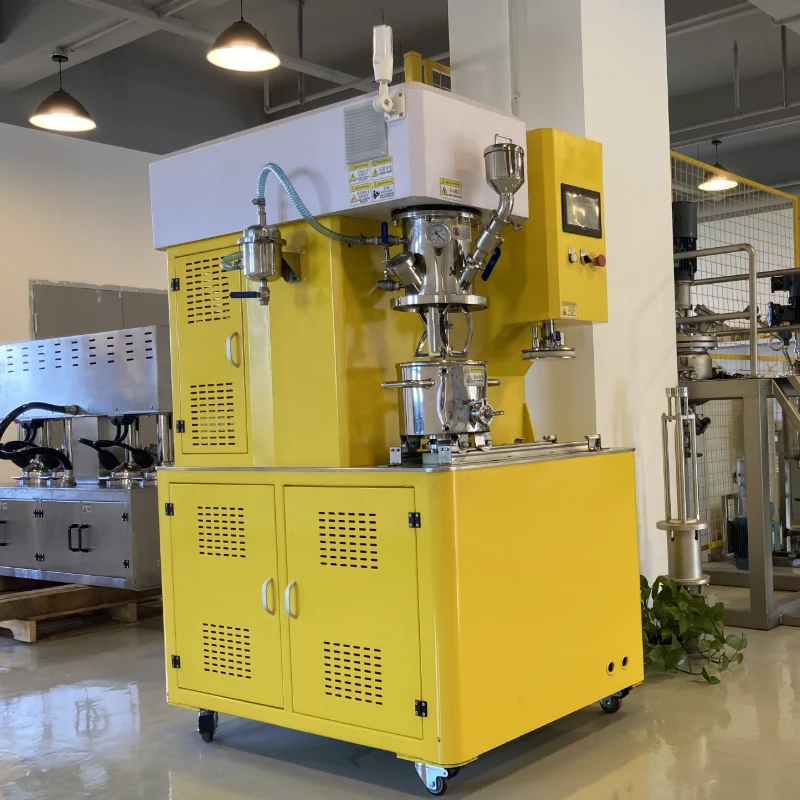
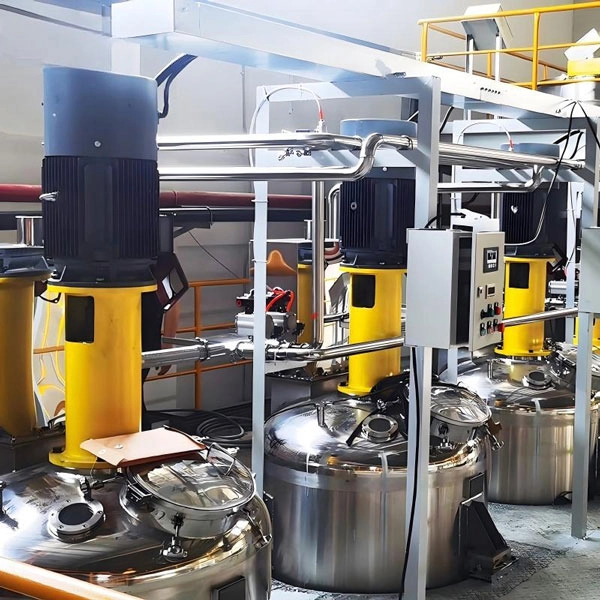
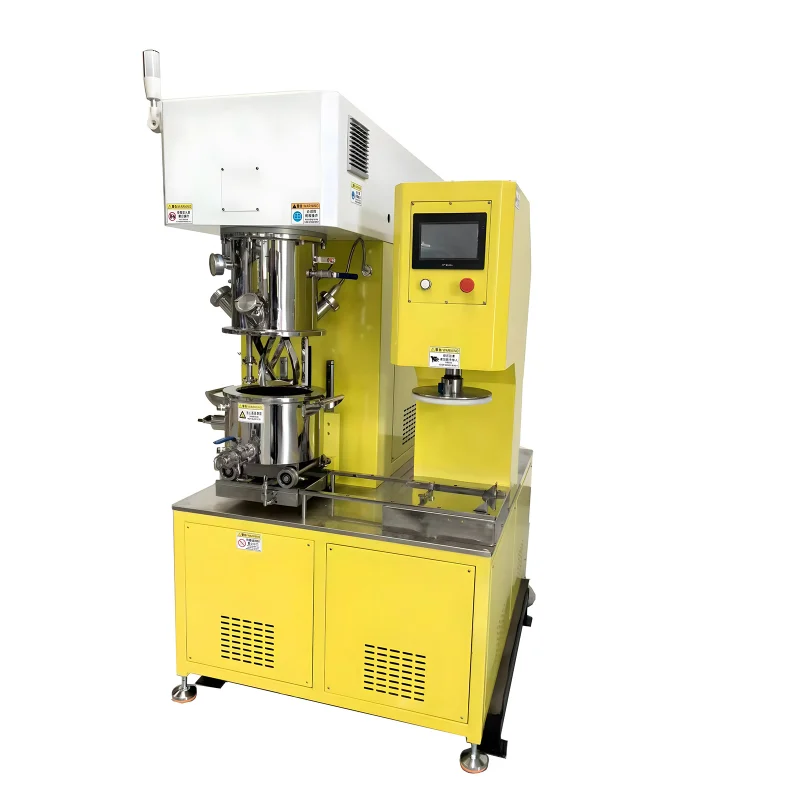
RUMI Technology focuses on fine chemical equipment and customized process solutions for industrial customers. Since introducing its first self-developed high-precision dosing system and high-efficiency mixing equipment in 2018, the company has continued to develop technologies for applications across the paint, ink, resin, new materials, new energy, and composites industries.
For ink manufacturers, this background is relevant because grinding performance must be considered alongside formulation preparation, material dosing, mixing, and the wider production process. Accurate dosing and appropriate upstream mixing can support repeatable feed conditions, while the grinding stage must be configured to meet the specific dispersion requirements of the finished product.
RUMI Technology reports that its development work has involved extensive research and development iterations and multiple invention patents. The company also describes a quality assurance system featuring 72-hour factory testing and a 24-hour after-sales response commitment, along with ISO 9001 and CE certifications. Buyers should confirm which certifications and testing records apply to the specific equipment model and intended application.
For customized projects, discussions should cover the ink formulation, required fineness, batch size, expected production schedule, cleaning frequency, and integration with existing equipment. These details provide a more useful starting point for equipment configuration than choosing a machine based on a general product description.
Selecting an industrial ink grinding machine requires a balanced assessment of grinding media, chamber design, rotational speed, cooling, material circulation, and production capacity. These factors influence dispersion quality, particle size distribution, temperature stability, throughput, and operating cost.
For buyers searching for the best ink grinding machine, the most reliable approach is to define measurable product requirements, test representative formulations, compare energy use and acceptable output, and evaluate cleaning, maintenance, and long-term service support.
Before placing an order, ask the manufacturer to confirm the proposed configuration, applicable technical parameters, testing method, and acceptance criteria. A machine that is validated against the actual ink formulation and production process is more likely to deliver consistent quality, efficient operation, and sustainable long-term value.