en
 vi
 it
 es
 tr
 ja
 pt
 nl
 ru
 fr
 de
 pl
 ar
News
Latest news and events.




For small and medium-sized paint manufacturers, selecting a suitable production machine is a balance between dispersion quality, batch flexibility, installation space, and investment cost. An undersized machine may struggle with demanding formulations, while an oversized system can increase initial expenditure and occupy valuable workshop space. Poor powder wetting, uneven pigment distribution, excessive air entrainment, and inadequate temperature control can also affect product consistency and complicate production.
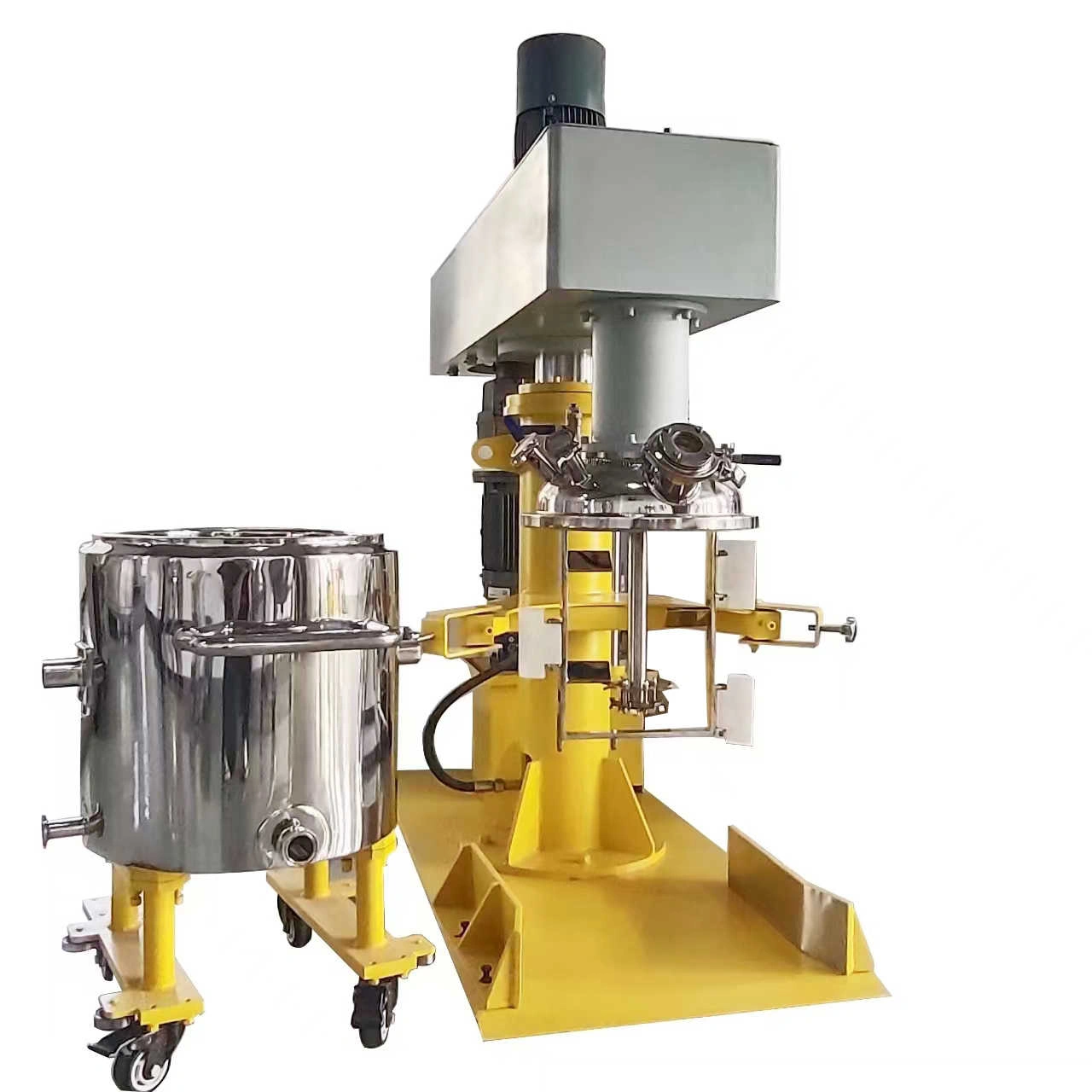
A Small paint manufacturing machine equipped with a high-speed disperser can provide a practical solution for manufacturers producing moderate batches of coatings, inks, and adhesives. However, the right equipment depends on the formulation, material viscosity, solid content, and required processing conditions. Understanding these factors also helps buyers evaluate Paint manufacturing machine price more accurately and avoid paying for configurations their production process does not need.
A high-speed disperser uses a motor-driven shaft to rotate a saw-tooth disc inside a mixing vessel. As the disc rotates, it generates high-velocity flow and shear around its edges. The resulting circulation draws material through the dispersing zone, helping wet and distribute powders, break down agglomerates, and disperse pigments throughout the liquid phase.
This process is useful for latex paint, industrial coatings, water-based inks, and compatible adhesive formulations. The actual dispersion result depends on the formulation, powder characteristics, operating speed, batch volume, and processing time. A high-speed disperser is not automatically a substitute for every type of grinding or fine-dispersion equipment; formulations requiring a specific particle-size distribution may need additional processing or testing.
RUMI Technology focuses on fine chemical equipment and dosing solutions. Since introducing its first self-developed high-precision dosing system and high-efficiency mixing equipment in 2018, the company has developed customized solutions for paint and ink manufacturers, resin producers, and other process industries. Its equipment offering includes high-speed dispersers designed around different material and production requirements.
Motor power must be matched to the material's resistance to mixing and the intended batch size. Higher-viscosity materials generally require more torque to maintain the desired operating conditions. Selecting a motor solely by its rated power, without considering viscosity and vessel geometry, can lead to poor process suitability or unnecessary investment.
The RUMI high-speed disperser described for this application can reach a maximum rotational speed of approximately 1,440 rpm, with a disc linear velocity of about 20 m/s. These figures indicate the available operating range under the specified equipment configuration; they do not guarantee the same dispersion quality for every formulation.
Disc diameter, rotational speed, and disc geometry jointly determine linear velocity and the shear conditions around the blade. A suitable disc design helps establish effective circulation and powder incorporation, but its performance also depends on disc position, liquid depth, vessel diameter, and batch volume.
For buyers comparing a Small paint manufacturing machine, the key question is not simply how fast the disc rotates. It is whether the machine can maintain suitable circulation and dispersion conditions for the actual formulation throughout the batch.
The specified RUMI high-speed disperser is intended for liquid materials and slurries with viscosity below 20,000 cps and solid content below 60%, subject to the applicable operating conditions. These are equipment suitability boundaries, not a guarantee that every material within those limits can be processed at maximum speed.
Low-viscosity water-based paint may circulate readily, while a more concentrated coating can impose greater resistance on the mixing system. High solid content can also change powder wetting behavior and increase the importance of how ingredients are introduced.
Batch volume matters because the liquid level must be compatible with the disc diameter, immersion depth, and vessel geometry. A vessel that is too large for a small batch may not provide suitable circulation, while an overloaded vessel can restrict effective mixing and increase the risk of splashing or air entrainment.
Before ordering, manufacturers should provide representative formulation details and confirm the proposed operating range with the equipment supplier. Laboratory formulation scale-up should also account for changes in vessel dimensions, circulation patterns, and heat transfer rather than relying on rotational speed alone.
Frequency-converter control allows operators to adjust rotational speed to suit different stages of a process. A lower speed may be appropriate during initial liquid charging or controlled powder addition, while a higher speed may be used when the formulation requires more intensive dispersion.
This flexibility is valuable for small-batch production, customized colors, and manufacturers handling several formulations on one machine. It also helps operators avoid treating maximum speed as the default setting for every product.
An optional jacketed vessel can circulate oil or water as the heating or cooling medium, depending on the system design. Temperature control may be important when viscosity changes with temperature, when a formulation has a defined processing window, or when heat generated during mixing needs to be managed.
A jacket is worth considering when temperature variation affects product consistency or downstream processing. For formulations that do not require active temperature management, the additional jacket structure and associated connections may not justify the extra purchase cost.
Buyers should confirm the required temperature range, heating or cooling medium, and relevant vessel design before requesting a quotation. Actual temperature-control performance depends on the heat-transfer arrangement, batch properties, and operating conditions.
The described machine uses SS304 stainless steel for wetted parts, with SS316L available as an option. SS304 can be suitable for many compatible coating and water-based formulations. SS316L may be preferable where the formulation or cleaning chemicals create greater corrosion concerns.
The choice should be based on chemical compatibility, cleaning procedures, and expected service conditions. SS316L is not automatically necessary for every paint, nor does selecting it eliminate the need to verify compatibility with all ingredients.
Air entrainment can create bubbles that affect appearance, filling, or subsequent processing. A vacuum-capable configuration can help remove entrained gas under suitable conditions, potentially improving the smoothness of the finished material. However, vacuum operation does not guarantee complete deaeration for every formulation.
Vacuum is worth evaluating when trapped air is a recurring quality concern and the product benefits from controlled deaeration. Buyers should confirm vessel sealing, vacuum-system requirements, and whether the formulation is suitable for the proposed operating procedure.
Inert gas protection serves a different purpose: it can help limit contact with oxygen when required by material chemistry or process safety considerations. It should be specified according to the formulation and a documented process assessment, rather than added by default.
For flammable solvents or potentially hazardous production environments, explosion-protected equipment may be necessary. The required motor, electrical components, and other protection measures depend on the actual hazard classification and applicable local regulations. Buyers should provide solvent information and installation-site requirements so the manufacturer can confirm an appropriate configuration.
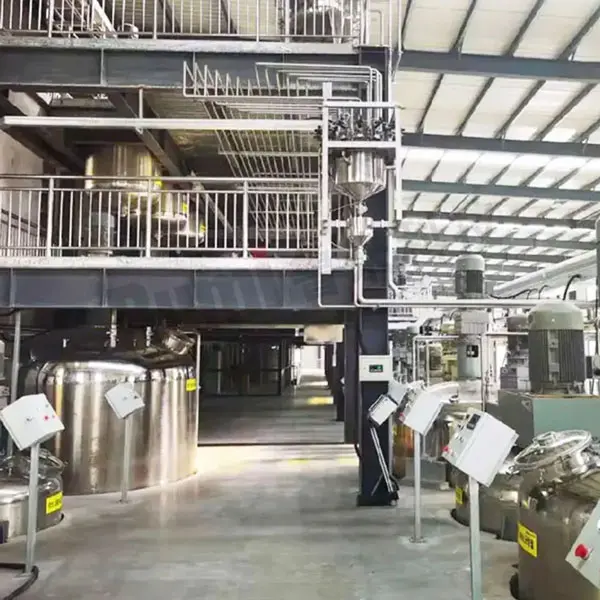
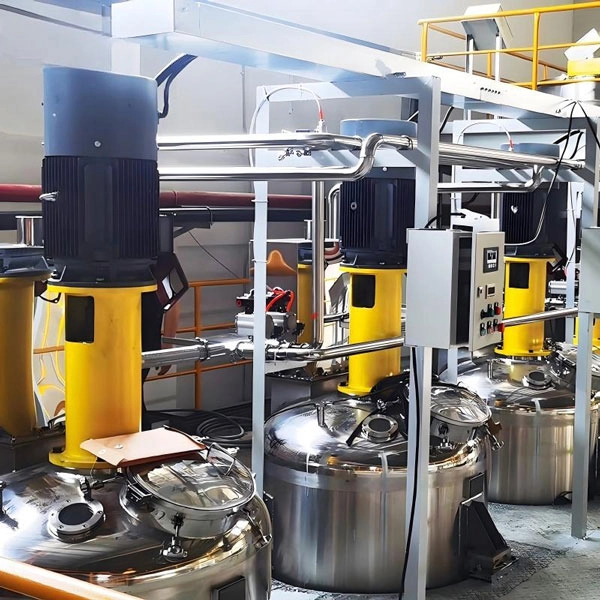
A floor-mounted machine can be practical where sufficient floor area is available and the vessel needs straightforward access. A platform-installed design may suit a production layout where equipment elevation, material transfer, or integration with other process equipment is important. The final choice should account for structural loading, maintenance access, operator safety, and available headroom.
The Paint manufacturing machine price depends on the complete equipment configuration rather than a single specification. Without confirmed motor power, vessel capacity, material requirements, and optional systems, a reliable quotation cannot be established.
The main cost factors include:
Motor and speed control: Motor power, drive selection, and variable-frequency control affect the machine specification and its suitability for different formulations.
Vessel capacity and construction: Tank size, geometry, fabrication requirements, and optional jacket structures influence the equipment design.
Wetted materials: SS304 and SS316L have different material costs. The appropriate selection depends on corrosion resistance and process compatibility.
Vacuum and gas-protection systems: Sealed-vessel construction, vacuum equipment, and inert gas provisions add design and integration requirements.
Explosion protection: Required protection levels and certified components depend on the installation environment and applicable regulations.
Customization and installation: Special dimensions, platform mounting, process connections, and integration with existing production equipment may affect the final quotation.
These factors explain why two machines described as small paint manufacturing machines can have substantially different prices. Buyers should compare equivalent configurations and clarify what is included in each offer rather than choosing solely by the lowest initial quotation.
The initial purchase price is only one part of the investment. A suitable machine should also support the intended batch size, provide maintainable components, and fit the production workflow.
A machine that is too small for the required batch may need more processing cycles, while an oversized machine may be inefficient for the manufacturer's typical production volume. Neither outcome can be evaluated accurately without knowing the formulation and production schedule.
Energy consumption should be assessed against the selected motor, actual operating load, processing time, and frequency of use. Cleaning requirements also matter, especially for manufacturers switching between colors or formulations. Accessible components and an appropriate vessel design can simplify cleaning, although actual maintenance effort depends on the materials processed and the cleaning procedure.
Future expansion is another consideration. Buyers expecting to increase batch volume should discuss whether the proposed configuration can accommodate their anticipated process requirements or whether a larger vessel or different machine arrangement would be more appropriate.
To obtain a useful Paint manufacturing machine price, prepare the following information:
Batch size: State the required working batch volume and expected production frequency.
Material properties: Identify the coating or ink type, viscosity, solid content, and relevant chemical or solvent characteristics.
Processing requirements: Describe powder incorporation, dispersion stages, temperature limits, and any deaeration requirements.
Material compatibility: Confirm whether SS304 is suitable or whether SS316L or another material assessment is needed.
Site conditions: Specify available floor space, installation height, utilities, and any hazardous-area requirements.
Future needs: Explain anticipated changes in formulations, batch size, or production layout.
RUMI Technology positions itself as a professional supplier of fine chemical equipment and customized process solutions. The company reports a quality assurance system that includes 72-hour factory testing and 24-hour after-sales response, along with ISO 9001 and CE certifications. Buyers should confirm the specific certification scope and the testing and service terms applicable to the machine being quoted.
The best Small paint manufacturing machine is one whose motor, dispersing disc, vessel, and optional systems match the material and the intended batch process. Maximum speed, stainless steel grade, vacuum capability, and explosion protection should all be evaluated in context.
For manufacturers comparing Paint manufacturing machine price, the most useful next step is to provide the supplier with batch volume, viscosity, solid content, temperature requirements, material compatibility concerns, and installation conditions. With those details, RUMI Technology can assess the appropriate high-speed disperser configuration and prepare a quotation based on the actual production requirements rather than assumptions.