 en
 vi
 it
 es
 tr
 ja
 pt
 nl
 ru
 fr
 de
 pl
 ar
News
Latest news and events.




Producing epoxy resin consistently requires more than a suitable reactor. Raw materials must be accurately dosed, mixed under appropriate conditions, heated or cooled according to the formulation, and transferred without compromising product quality. Inadequate temperature control can affect reaction behavior, while unsuitable agitation may lead to uneven mixing, localized overheating, or difficulties handling increasingly viscous materials. Entrained air can also create bubbles that affect the appearance and performance of the finished product.
For small and medium-sized chemical manufacturers, these challenges become more significant when production involves small batches, experimental formulations, or frequent product changes. Investing in oversized equipment can increase capital expenditure, energy consumption, and cleaning requirements, while undersized or poorly configured systems may limit throughput and process control.
Small epoxy resin production equipment should therefore be selected according to the actual resin formulation, process stages, batch size, and production objectives—not reactor capacity alone.
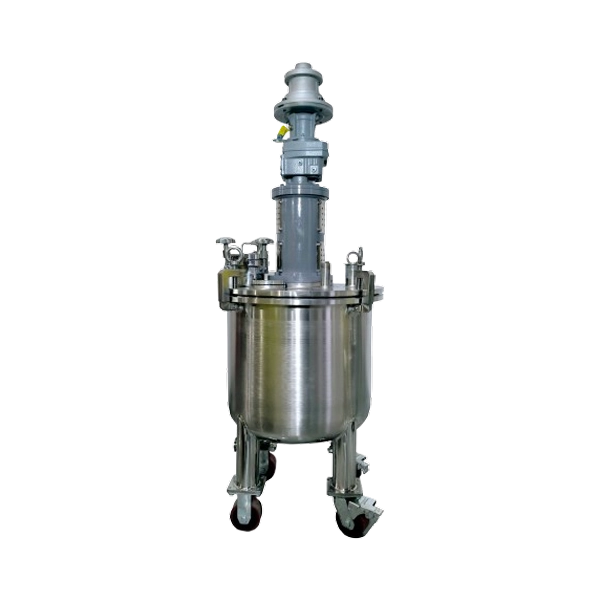
A small-scale production system may include raw-material dosing, a mixing or reaction vessel, heating and cooling equipment, an agitation system, vacuum degassing, transfer pumps, instrumentation, and a control cabinet. The appropriate configuration depends on whether the process involves blending formulated ingredients, carrying out a chemical reaction, or performing both operations.
Reactor selection should begin with the intended batch size and the volume occupied by the materials during processing. The nominal vessel capacity is not the same as its usable working volume. Space may be required for agitation, thermal expansion, foam formation, or vacuum operation, depending on the process.
A reactor that is too large for the normal batch may operate inefficiently at low fill levels. Conversely, a vessel that is too small can restrict production or create operating difficulties when the material expands or becomes aerated.
Manufacturers should evaluate the minimum and maximum batch sizes, expected production frequency, and potential future formulations before determining vessel dimensions. For businesses developing new products, a flexible working-volume range may be more valuable than maximizing the capacity of a single batch.
Heating and cooling design directly influence reaction stability and production scheduling. Depending on the formulation, the process may require controlled heating to reduce viscosity, maintain a suitable mixing condition, or support a defined reaction profile. Cooling may be necessary to remove reaction heat or bring the material to a suitable temperature for subsequent processing.
The required heat-transfer capacity depends on the batch mass, material properties, vessel geometry, heat-transfer surface, insulation, and temperature difference between the material and heating or cooling medium. A heating system that works well for a low-viscosity blend may not provide the same response when processing a more viscous formulation.
Temperature-control performance also depends on sensor placement, measurement response, controller configuration, and the uniformity of mixing. Buyers should request evidence of temperature measurement and control performance under representative operating conditions rather than relying solely on a controller's displayed precision.
Epoxy formulations can vary considerably in viscosity, particularly when different resins, modifiers, fillers, or other additives are involved. The agitation system must be matched to the material's rheology, required mixing intensity, vessel dimensions, and process stage.
An agitator suitable for a relatively fluid formulation may be ineffective when the material becomes highly viscous. Conversely, excessive agitation can introduce unwanted air, increase mechanical loading, or create unnecessary energy consumption.
When evaluating a mixer, buyers should consider impeller geometry, rotational speed, motor and gearbox sizing, shaft design, and the ability to maintain circulation throughout the working volume. Where viscosity changes substantially during processing, the manufacturer should explain how the selected arrangement accommodates those changes.
Vacuum degassing can help remove entrained air, but its effectiveness depends on material viscosity, temperature, foaming tendency, vessel design, vacuum-system capacity, and processing time. Lower pressure alone does not guarantee successful degassing. Some formulations may foam or expand significantly under vacuum, requiring adequate vessel headspace and a suitable operating sequence.
Material transfer deserves similar attention. Pump selection should account for viscosity, flow requirements, material compatibility, and the risk of air entrainment. Pipe diameter, line length, valves, and fittings can also affect pressure losses and cleanability.
For manufacturers producing multiple formulations, transfer lines and vessel outlets should be designed to minimize retained material and facilitate cleaning between batches.
Small epoxy resin production equipment is particularly relevant to pilot production, formulation development, specialty resin manufacturing, and businesses supplying several product grades. However, flexibility must be engineered into the system.
Start by defining the typical batch size, minimum trial batch, target output, and number of batches required per shift. Also identify whether the equipment will be used for laboratory-scale development, pilot validation, or routine commercial production.
These operating patterns lead to different equipment priorities. A formulation-development line may benefit from adjustable mixing parameters, accessible sampling points, and straightforward cleaning. A small commercial production line may place greater emphasis on repeatable dosing, reliable temperature control, transfer efficiency, and reduced operator intervention.
The correct configuration should accommodate current requirements without unnecessarily increasing the initial investment.
Different resin systems may require different heating profiles, mixing sequences, degassing conditions, or material-handling arrangements. Fillers and modifiers can change viscosity and heat-transfer behavior, while formulation changes may introduce new compatibility or contamination concerns.
Before purchasing, prepare a process matrix listing each intended formulation, its raw materials, expected viscosity changes, processing temperatures, mixing stages, degassing requirements, and discharge conditions.
This information helps determine whether one common production line can handle all products or whether dedicated vessels, interchangeable components, or separate transfer circuits are more appropriate. Product changeover should be assessed in terms of cleaning time, retained material, contamination risk, and the repeatability of the next batch.
Automation can improve dosing repeatability and help operators follow defined process sequences. Useful functions may include recipe storage, temperature monitoring, variable-speed mixing, process alarms, and recording of critical operating parameters. The required level depends on process complexity and the consequences of batch variation.
However, more automation is not automatically better. A small facility may obtain greater value from a well-designed, maintainable control system than from a complex installation that exceeds its operational needs.
Total ownership cost should include the purchase price, installation, utilities, routine maintenance, cleaning, spare parts, operator requirements, and potential losses caused by inconsistent batches or extended downtime. Equipment layout also matters: a compact system must still provide sufficient access for inspection, cleaning, maintenance, and safe material handling.
The best investment is the configuration that supports the required production process reliably, rather than the system with the most features or the lowest initial quotation.
Selecting the right supplier requires evaluating engineering capability as well as equipment specifications. Two manufacturers may quote similar reactor volumes while offering substantially different heating arrangements, agitation systems, instrumentation, or levels of integration.
A capable manufacturer should ask detailed questions about the resin system, raw-material properties, process sequence, batch size, temperature requirements, viscosity range, and final product specifications before recommending a configuration.
Customization may involve vessel dimensions, agitator design, heating and cooling arrangements, vacuum equipment, dosing systems, piping, instrumentation, and control logic. Buyers should distinguish between meaningful process engineering and superficial changes to standard equipment.
Ask the supplier to explain the reasons behind its proposed configuration, identify the assumptions used in sizing critical components, and clarify which performance requirements can be verified during factory acceptance testing.
Material selection should account for chemical compatibility, operating temperature, cleaning agents, and the characteristics of the actual formulation. Wetted components, vessel surfaces, gaskets, mechanical seals, and transfer hoses all deserve review. Material compatibility should be confirmed rather than assumed from a general stainless-steel designation.
Buyers should also examine the quality and maintainability of motors, gearboxes, pumps, vacuum components, sensors, and control equipment. Accessible spare parts, clear documentation, and practical maintenance procedures can significantly affect long-term availability.
For the control system, clarify which parameters are monitored, which functions are automated, how alarms are handled, and whether critical batch records can be retained. These details are especially important when production consistency and traceability matter.
Before requesting quotations, provide each manufacturer with the same technical brief. Include:
Intended resin formulations and relevant raw-material properties.
Minimum, typical, and maximum batch sizes.
Required process stages and operating sequence.
Temperature-control and heating/cooling requirements.
Expected viscosity range and discharge conditions.
Vacuum degassing requirements, if applicable.
Available floor space, utilities, and installation constraints.
Desired automation, documentation, testing, and service arrangements.
Compare the resulting proposals against these requirements rather than ranking suppliers by price alone. Ask how the manufacturer will verify mixing performance, temperature behavior, vacuum operation, dosing repeatability, and discharge capability under conditions representative of the intended process.
Installation, commissioning, operator training, spare-parts availability, and remote or on-site technical support should also be agreed upon before the purchase.
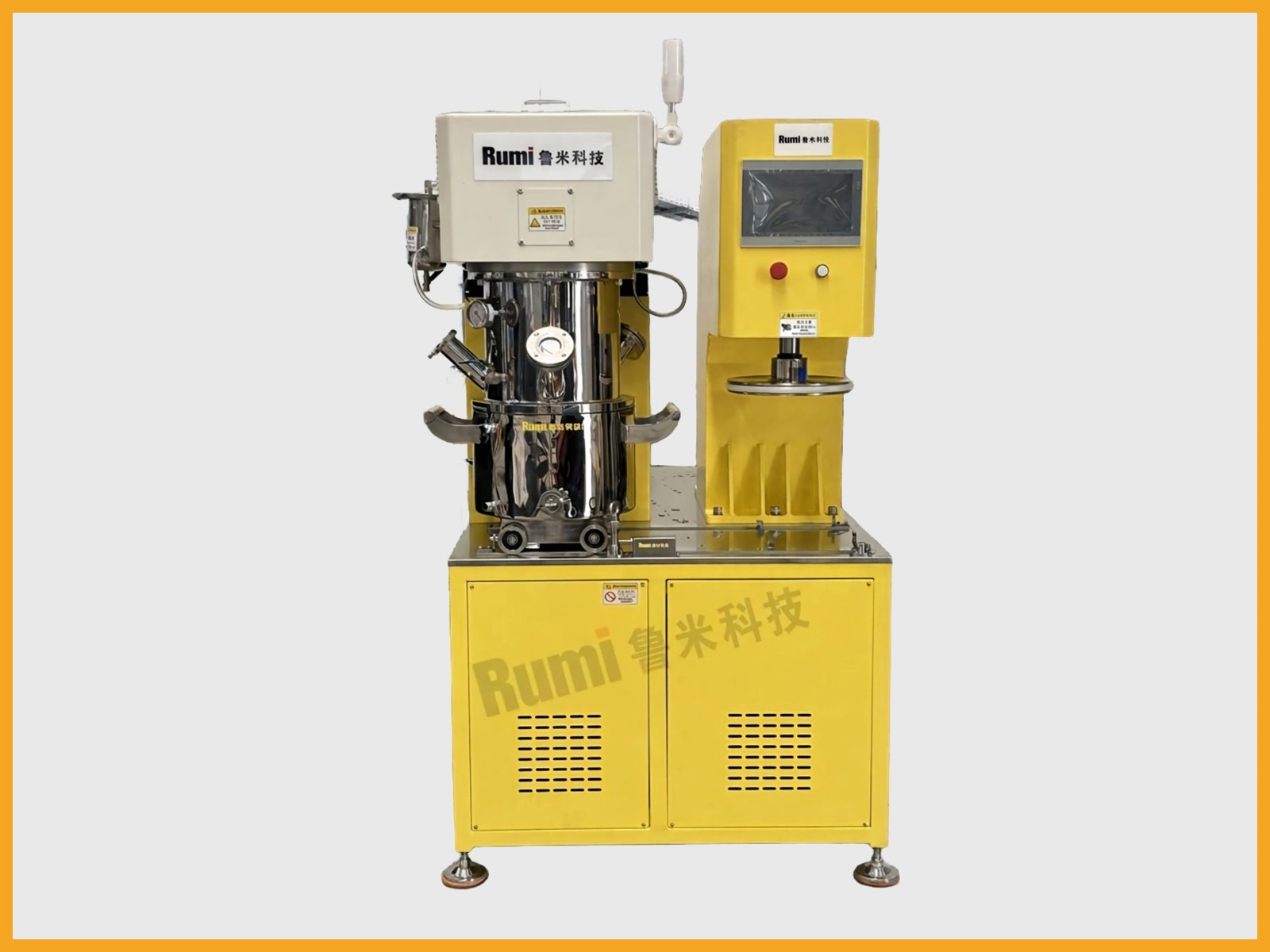
RUMI Technology has focused on fine chemical equipment since launching its self-developed high-precision dosing system and high-efficiency mixing equipment in 2018. Its work includes customized solutions for resin and new-material companies, alongside dosing solutions for paint and ink manufacturers and system solutions for the new energy and composites industries.
For buyers evaluating small epoxy resin production equipment, this background is relevant when discussing how dosing, mixing, temperature management, and material transfer should work together as an integrated process. Rather than treating each component as an isolated purchase, the engineering discussion should begin with the formulation and production sequence, then determine the appropriate equipment configuration.
RUMI Technology describes a quality assurance system that includes 72-hour factory testing and a 24-hour after-sales response commitment, and reports ISO 9001 and CE certifications. Buyers should confirm the scope of applicable certifications, the precise factory testing procedure, and the service terms for the specific equipment being purchased.
A supplier's value ultimately depends on whether its engineering proposal addresses the buyer's real process requirements and whether its support continues through installation, commissioning, and routine operation.
Choosing small epoxy resin production equipment is a process-engineering decision as much as a capacity decision. Reactor volume, agitation, heating and cooling, temperature measurement, vacuum degassing, and material transfer must work together to support the intended formulation and production schedule.
For companies comparing epoxy resin production equipment manufacturers, the most useful questions concern process suitability, verifiable performance, customization, maintainability, and long-term support. Define the operating requirements first, compare technically aligned proposals, and confirm critical performance criteria before ordering.
With a clearly specified process and a manufacturer capable of translating it into an integrated system, small and medium-sized producers can make more informed equipment investments while improving operational consistency and retaining the flexibility needed for future formulations.