 en
en  vi
vi  it
it  es
es  tr
tr  ja
ja  pt
pt  nl
nl  ru
ru  fr
fr  de
de  pl
pl  ar
ar News
Latest news and events.




In modern chemical manufacturing, Mixing reactor tank price is no longer evaluated as a simple capital expenditure metric. It is fundamentally a reflection of process engineering capability, especially in high-viscosity, multi-phase, and strongly exothermic reaction systems.
For procurement engineers and plant designers, the real evaluation criteria are not limited to tank volume, material grade, or motor power. Instead, the critical focus lies in reaction uniformity, heat transfer efficiency, mixing-driven mass transport behavior, and scale-up consistency from laboratory to industrial production.
Inadequate reactor design often leads to localized overheating, incomplete conversion, excessive by-product formation, and unstable batch quality. These issues are not simply operational inefficiencies—they are direct consequences of poor flow field organization and insufficient coupling between mixing and reaction kinetics.
Advanced Mixing reactor tank manufacturers solve these challenges by designing integrated systems that combine hydrodynamic control with thermodynamic optimization.
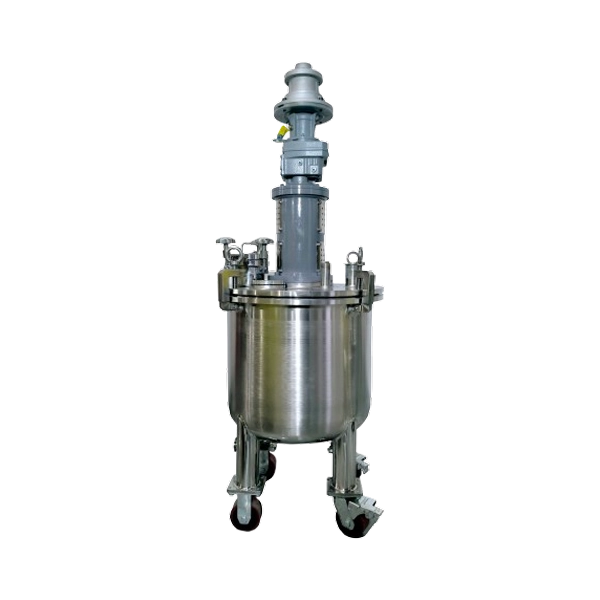
The core architecture of modern reactor design is the Integrated Mixing Reactor Tank System, which organizes internal flow into coordinated axial and radial circulation fields.
Unlike conventional reactors that rely on simple stirring motion, this system actively controls how reactants move, collide, and exchange energy within the vessel.
Axial flow circulation for deep vessel turnover and bulk renewal
Axial flow generated by pitched-blade or anchor-type impellers ensures vertical movement of materials from bottom to top within the reactor. This circulation pattern is critical for preventing stratification in high-viscosity systems where density differences can lead to phase separation. By continuously renewing the bulk fluid, axial flow ensures that fresh reactants are constantly exposed to reaction zones, improving overall conversion efficiency and reducing reaction stagnation regions.
Radial flow dispersion for localized mixing intensity control
Radial flow generated by turbine-type impellers creates high-energy shear zones that enhance micromixing at the molecular interaction level. This is particularly important in fast reaction systems such as neutralization, polymerization, or emulsification, where reaction kinetics depend heavily on instantaneous concentration uniformity. Proper radial flow control ensures that reactants are evenly distributed before local depletion or oversaturation can occur.
Baffle-assisted turbulence stabilization for dead zone elimination
Internal baffles are engineered to disrupt vortex formation and convert rotational energy into controlled turbulence. Without baffles, fluid tends to rotate as a solid body, reducing mixing efficiency and creating stagnant zones. Proper baffle configuration ensures that energy is effectively transferred into chaotic flow structures, maximizing contact frequency between reactants.
This engineered flow organization is the foundation of industrial-scale reaction stability.
One of the most critical innovations implemented by advanced Mixing reactor tank manufacturers is the Enhanced Mass-Heat Transfer Coupled Reactor Design.
This system integrates mixing dynamics with thermal regulation mechanisms to ensure stable reaction conditions even in highly exothermic processes.
Prevention of localized hot spot formation in exothermic reactions
In chemical reactions such as polymerization or sulfonation, heat is generated rapidly within localized zones. Without efficient mixing, these zones develop into thermal hotspots that accelerate side reactions and degrade product quality. The coupled design ensures that reaction heat is immediately distributed throughout the vessel via forced circulation, preventing temperature spikes and maintaining reaction stability across the entire volume.
Synchronized heat transfer between jacket system and internal flow field
The reactor jacket system provides external heating or cooling, but its effectiveness depends heavily on internal fluid movement. The integrated design ensures that internal circulation continuously brings bulk material into contact with heat exchange surfaces, significantly improving overall heat transfer coefficient (U-value). This synchronization between mechanical mixing and thermal exchange is essential for maintaining precise temperature control during sensitive chemical reactions.
Improved reaction uniformity and batch consistency
By eliminating temperature and concentration gradients, the system ensures that all reactants experience identical reaction conditions. This directly improves batch-to-batch consistency, reduces product variation, and enhances overall process reliability in industrial production environments.
A frequently asked technical question is:
How does mixing reactor tank structure affect reaction rate and yield?
The answer lies in reaction engineering principles involving mass transfer resistance, mixing time scale, and energy dissipation rate.
Reynolds number determines flow regime and mixing efficiency
In reactor systems, Reynolds number defines whether the flow is laminar or turbulent. High-viscosity systems typically operate in low Reynolds regimes where mixing is diffusion-limited. Proper impeller design increases localized turbulence, effectively reducing mass transfer resistance and accelerating reaction kinetics.
Power number determines energy input efficiency
The Power Number (Np) reflects how efficiently mechanical energy is converted into fluid motion. Optimized impeller geometry ensures that energy input is not wasted as heat but instead used to generate effective mixing structures that enhance molecular interaction frequency.
Mixing time scale influences reaction completion rate
If mixing time is slower than reaction time, local concentration imbalances occur, leading to incomplete conversion or unwanted side reactions. Proper reactor design ensures that mixing time is shorter than or comparable to intrinsic reaction time, maintaining kinetic control over the process.
These parameters define the fundamental engineering basis of reactor performance.
A common procurement question is:
What factors determine Mixing reactor tank price?
The answer is directly linked to engineering complexity and process capability.
Impeller configuration complexity affects fabrication cost
Reactors equipped with multi-impeller systems such as anchor, turbine, and combined disperser designs require higher manufacturing precision and mechanical integration complexity. This directly increases production cost due to additional machining, balancing, and assembly requirements.
Heat transfer system integration level determines system value
Jacketed systems with precise thermal control capability require advanced welding, pressure testing, and insulation design. The more precise the temperature control requirement, the higher the engineering and material cost involved.
Material selection and corrosion resistance requirements
Stainless steel grades such as SS316L or special alloy coatings are required for corrosive or high-purity chemical processes. Material upgrades significantly influence both durability and pricing structure.
Scale-up capability and process reproducibility engineering
Reactors designed for reliable scale-up from pilot to industrial scale require advanced CFD simulation, structural optimization, and validation testing. This engineering effort directly impacts final system pricing.
Therefore, price is not a static value—it is a reflection of process engineering depth.
Selecting reliable Mixing reactor tank manufacturers is a critical decision that directly affects production stability and long-term operational cost.
Engineering capability determines reaction stability
Manufacturers with strong process engineering backgrounds can design reactors that maintain stable hydrodynamics across different viscosities and reaction types.
Quality control systems ensure long-term operational reliability
ISO9001 and CE-certified production systems, combined with factory testing protocols, ensure that each reactor performs consistently under industrial conditions.
Customization capability enables process optimization
Different chemical processes require different flow patterns, temperature profiles, and mixing intensities. Manufacturers capable of customizing impeller design and vessel geometry provide significantly better process performance.
RUMI Technology, a professional chemical equipment supplier, focuses on high-efficiency mixing and dosing systems for global fine chemical industries.
Since 2018, RUMI has developed advanced reactor systems for coatings, inks, resins, and new energy materials industries, supported by multiple invention patents and continuous R&D optimization.
Key engineering features include:
Integrated mixing reactor systems combining multi-stage impeller configurations for optimized flow field control
Jacketed thermal regulation systems enabling precise heating and cooling control during exothermic reactions
High-precision material dosing integration for improved reaction accuracy and reduced batch variation
Vacuum and inert gas compatibility for oxygen-sensitive or volatile chemical processes
Stainless steel 304 and SS316L material options for corrosion-resistant industrial applications
72-hour factory testing and 24-hour global response system ensuring reliable production support
These capabilities ensure stable operation in complex chemical production environments.
From a process economics perspective, advanced reactor systems deliver measurable industrial value.
Improved reaction yield reduces raw material waste
Stable temperature control reduces side reaction formation
Efficient mixing reduces energy consumption per batch
Consistent hydrodynamics improve product quality stability
These improvements directly translate into lower operational costs and higher production efficiency.
The Mixing reactor tank price reflects far more than equipment size or material grade—it represents the engineering depth behind reaction control, heat transfer optimization, and industrial-scale process stability.
Through integrated mixing reactor architecture, enhanced mass-heat transfer coupling, and advanced flow field engineering, modern reactor systems enable stable chemical reactions, improved yield efficiency, and reduced operational risk.
For industrial chemical production, selecting the right system is ultimately a decision about controlling reaction physics at scale, not just purchasing a container with agitation capability.