 en
en  vi
vi  it
it  es
es  tr
tr  ja
ja  pt
pt  nl
nl  ru
ru  fr
fr  de
de  pl
pl  ar
ar News
Latest news and events.




In industrial mixing systems, the challenge is rarely about whether materials can be blended—it is about whether the mixing process can remain stable, repeatable, and controllable under high-viscosity, multi-phase, and thermally sensitive conditions. For manufacturers working in coatings, inks, adhesives, resins, and advanced functional materials, small deviations in dispersion efficiency or temperature control can lead to batch inconsistency, particle agglomeration, or complete formulation failure.
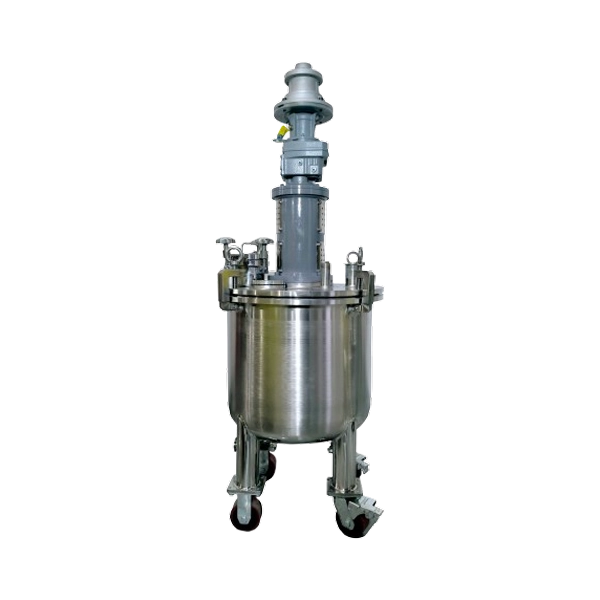
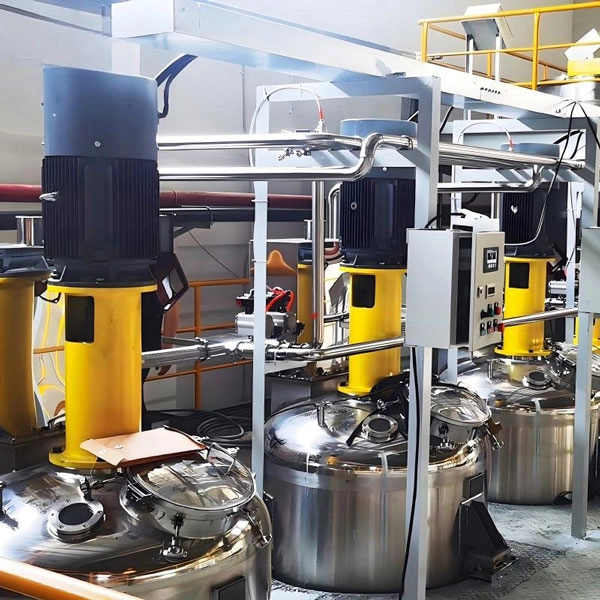
This is why procurement teams increasingly search for triple shaft mixer for sale and triple shaft mixer machine instead of generic mixing equipment. The requirement has shifted from basic agitation to engineered process control systems capable of handling complex rheology, multi-stage dispersion, and long-duration continuous operation.
Modern fine chemical production demands equipment that integrates mechanical shear, axial circulation, and wall-scraping behavior into a single controlled system. A properly engineered triple shaft mixer is not just a machine—it is a process stability platform.
RUMI Technology, a professional chemical equipment supplier focused on global fine chemical solutions, has developed high-efficiency mixing systems since 2018, specializing in precision dosing systems and advanced mixing technologies. With ISO9001 and CE certification, multiple invention patents, and a 72-hour factory testing system, Rumi focuses on delivering stable and scalable mixing solutions for coatings, new materials, energy storage slurries, and adhesive industries worldwide.
High-viscosity materials behave fundamentally differently from low-viscosity liquids. Their internal resistance to flow creates uneven shear distribution, meaning standard single-shaft or dual-shaft systems often fail to eliminate dead zones or achieve uniform dispersion.
In real production environments, this leads to:
Undispersed pigment clusters in coatings
Inconsistent particle size distribution in resin systems
Poor wetting of powder additives in adhesives
Thermal hotspots due to uneven flow circulation
Batch variation across long production cycles
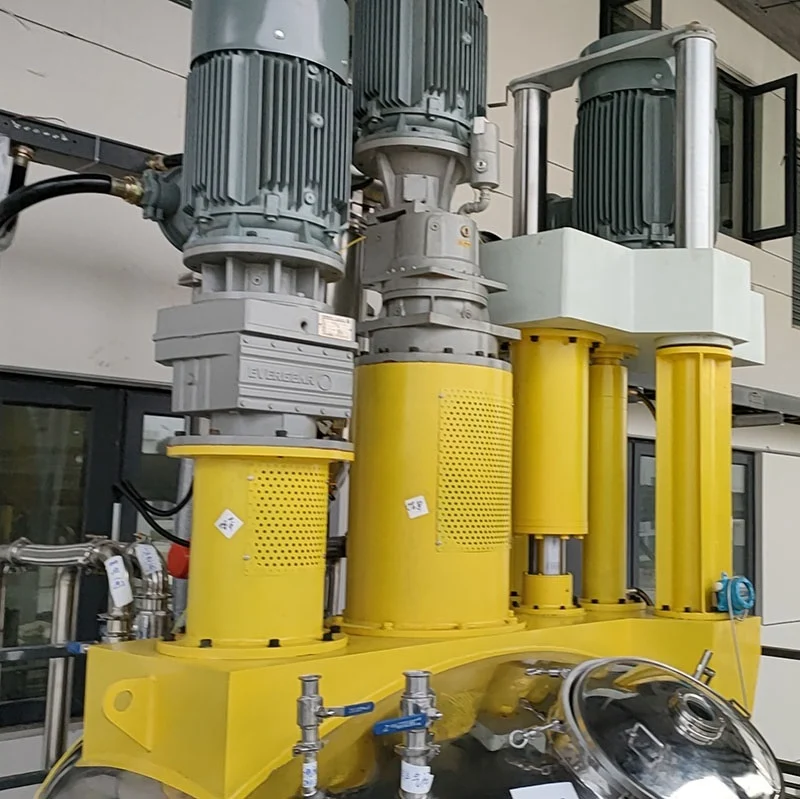
A triple shaft mixer machine solves these issues by introducing three independently controlled mechanical systems that work simultaneously but perform different functional roles.
These typically include:
High-speed dispersion for particle breakup
Low-speed helical or spiral agitation for axial circulation
Anchor-type wall scraping for boundary layer control
Each system addresses a specific limitation of conventional mixing technology, ensuring that high-viscosity materials behave in a controlled and predictable flow state.
The core engineering advantage of a triple shaft mixer for sale lies in its ability to decouple different mixing forces instead of relying on a single rotational system.
This separation of mechanical functions creates a multi-zone mixing environment where shear, flow, and surface renewal occur simultaneously but independently controlled.
Key functional advantages include:
Independent shear generation across multiple zones: The high-speed disperser generates localized high shear zones that efficiently break down agglomerated particles, while the secondary rotor or homogenizer system refines particle size distribution further. This dual-stage shear control allows manufacturers to achieve more consistent dispersion results even when handling materials with fluctuating viscosity or multi-phase composition, reducing dependency on operator adjustment during production cycles.
Controlled axial circulation for uniform material turnover: The helical or spiral blade system ensures continuous vertical movement of materials within the tank. This prevents sedimentation of heavy particles and avoids stratification in high-solid-content systems, which is critical in formulations such as coatings, ceramic slurries, and battery electrode pastes where uniform composition directly affects product performance.
Boundary layer elimination through wall scraping: The anchor-type scraper continuously removes material adhered to the tank wall, ensuring that no stagnant zones develop during operation. This not only improves thermal transfer efficiency in jacketed systems but also ensures that all material participates in the mixing process, reducing batch inconsistency caused by localized overheating or under-mixed regions.
One of the most critical engineering parameters in a triple shaft mixer machine is the interaction between different rotational speeds.
Unlike single-speed mixers, triple shaft systems rely on coordinated speed control to achieve optimal rheological behavior.
This includes:
High-speed dispersion shaft typically operating at high RPM for particle breakdown
Medium-speed circulation shaft maintaining continuous axial flow
Low-speed anchor shaft ensuring structural mixing and wall contact
When properly synchronized, this combination produces a stable shear environment that improves particle size distribution and reduces mixing time.
Incorrect speed matching, however, can lead to:
Excessive shear overheating
Incomplete dispersion of fine powders
Uneven viscosity distribution across the tank
Reduced product stability after discharge
This is why industrial systems increasingly rely on frequency converter-based control systems, allowing precise adjustment of each shaft independently.
RUMI Technology integrates frequency-controlled independent drive systems across all three shafts, enabling operators to fine-tune mixing performance based on material rheology rather than fixed mechanical limitations.
In high-viscosity mixing processes, wall adhesion is not a minor inefficiency—it is a structural problem.
Without wall scraping:
Material near tank surfaces experiences lower shear exposure
Heat transfer becomes uneven in jacketed vessels
Product quality varies between batches
Cleaning time increases significantly between production cycles
The anchor blade with scraper in a triple shaft mixer for sale eliminates these issues by continuously renewing the boundary layer between material and vessel wall.
This creates two major process improvements:
Thermal consistency in jacketed systems: In heating or cooling applications, uniform wall contact ensures that temperature transfer is evenly distributed throughout the batch. This prevents localized overheating in reactive systems such as resins or adhesives, where thermal stability directly affects chemical structure.
Improved batch repeatability: By eliminating stagnant zones, every portion of material undergoes identical shear and circulation cycles, resulting in more consistent final product properties across multiple production runs.
A high-performance triple shaft mixer machine must be designed not only for mechanical mixing but also for chemical compatibility and process integration.
Rumi systems offer:
SUS304 or SUS316L contact materials for corrosion-resistant processing
Jacketed tank designs for heating or cooling integration
Vacuum sealing capability for air-sensitive or volatile formulations
Inert gas protection systems for oxidation-sensitive materials
These configurations allow the equipment to be used across a wide range of industries including inks, sealants, adhesives, magnetic slurries, cosmetics, and advanced polymer systems.
The ability to integrate vacuum or inert environments is particularly important for high-end chemical formulations where oxygen exposure or moisture contamination can significantly alter product performance.
The practical value of a triple shaft mixer for sale becomes most evident when applied to real production environments.
Common industrial use cases include:
Coating and ink production: Precise pigment dispersion and viscosity control are essential for color stability and print performance. Triple shaft systems ensure uniform particle distribution while preventing sedimentation during storage and transport.
Adhesives and sealants: High-viscosity polymer systems require strong shear input combined with controlled circulation to ensure full material activation and consistent bonding performance across batches.
Battery slurry manufacturing: Electrode materials demand strict particle size distribution and homogeneity. Triple shaft mixing improves slurry uniformity, directly impacting battery efficiency and cycle stability.
Cosmetic and pharmaceutical creams: Sensitive emulsions require low-temperature, high-uniformity mixing to maintain stability and texture consistency without damaging active ingredients.
Since its establishment in 2018, RUMI Technology has focused on high-precision dosing systems and high-efficiency mixing equipment for global fine chemical industries.
Rather than producing generic mixers, Rumi develops application-specific systems optimized for material behavior, process stability, and production efficiency.
The company’s engineering philosophy focuses on:
High-efficiency, low-energy mixing architecture
Multi-patent precision dosing integration
72-hour full-load factory testing validation
24-hour global after-sales response capability
ISO9001 and CE-certified manufacturing systems
This allows Rumi to support industries ranging from coatings and resins to new energy materials and composite systems, where consistency and precision are non-negotiable.
By integrating independently driven triple shaft architecture with advanced process control, Rumi ensures that each triple shaft mixer machine operates not as isolated equipment, but as part of a complete chemical processing system.
The increasing demand for triple shaft mixer for sale reflects a structural shift in the chemical and materials industry—from basic blending operations toward fully controlled, multi-variable process engineering.
A properly designed triple shaft system provides more than mixing capability. It delivers controlled shear distribution, stable axial circulation, and continuous boundary layer renewal, ensuring that high-viscosity and multi-phase materials remain uniform throughout production cycles.
When integrated with advanced speed control, jacketed thermal systems, and chemically compatible construction, the triple shaft mixer machine becomes a core production asset for industries requiring high repeatability and strict quality control.
For manufacturers seeking scalable, stable, and process-driven mixing solutions, RUMI Technology provides engineered systems designed to transform complex material processing into predictable industrial output.