en
 vi
 it
 es
 tr
 ja
 pt
 nl
 ru
 fr
 de
 pl
 ar
News
Latest news and events.



01 First, What Exactly Is a Planetary Mixer?
When many people first hear “planetary mixing,” they assume it is simply the name of an ordinary mixing machine. In fact, it refers to a special type of motion.
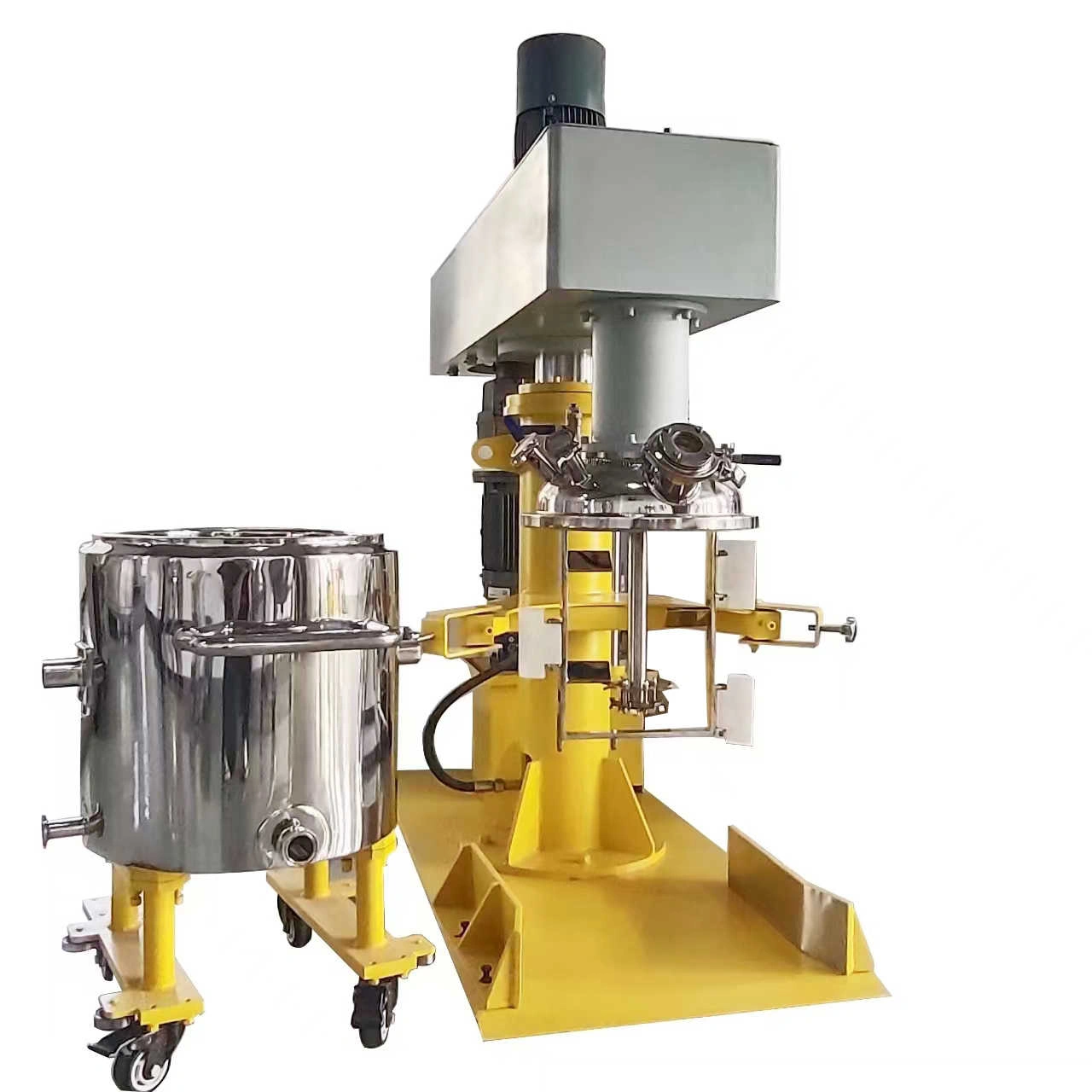
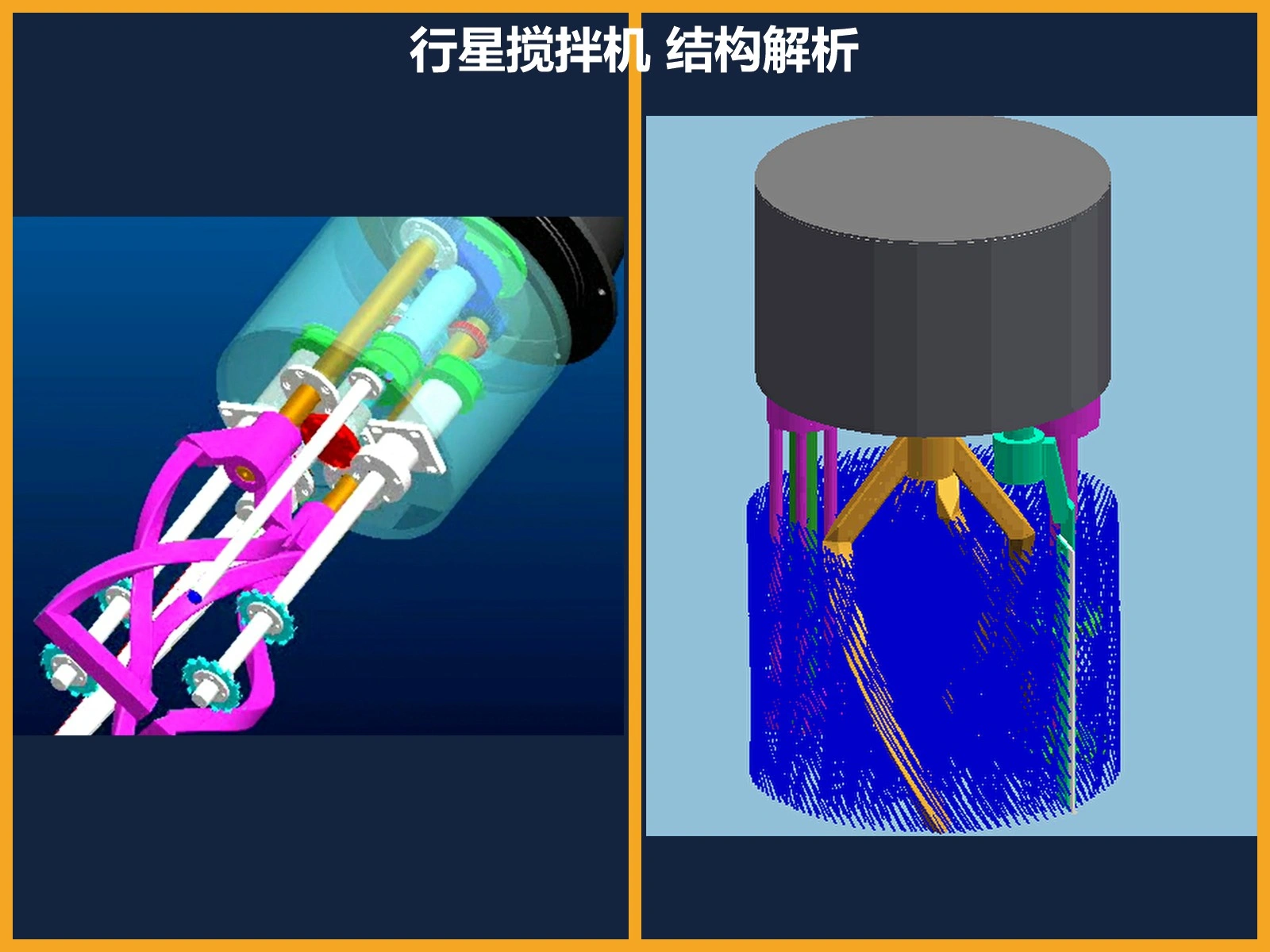
Simply put, the mixing blade of a planetary mixer rotates around its own axis while also revolving around the center of the mixing vessel—just like the Earth rotating on its axis while orbiting the sun.
What does this mean? It means the mixing blade continuously sweeps every position along the inner wall of the vessel, leaving no dead zones. Combined with a wall scraper designed with a very small clearance to the vessel wall, viscous materials will not remain stuck to the wall—the entire batch is continuously turned and mixed.
It is not a conventional propeller mixer, nor is it simply a matter of installing a more powerful motor. It is designed to solve one core challenge: how to mix high-viscosity, high-solids materials evenly.
02 Why Are Planetary Mixers Essential for High-Viscosity Materials?
Conventional mixing equipment typically runs into three problems when handling high-viscosity materials.
First, the mixing blade cannot move the material. As viscosity increases, resistance on the blades rises dramatically. A conventional mixer may stall, or the blade may simply spin without moving the batch.
Second, materials separate. Material near the center of the vessel is moved, while material near the vessel wall and bottom barely moves, creating dead zones and preventing uniform mixing.
Third, material sticks to the vessel wall. Viscous material adheres firmly to the wall, cannot be mixed back into the batch, and is not scraped off—ultimately affecting the consistency of the entire batch.
The planetary mixer’s combination of revolution and rotation directly addresses these issues: the blade path covers the entire vessel, low-speed high-torque operation can drive viscous materials, and an optional wall scraper continuously scrapes material from the wall back into the mixing process. For viscous and high-value materials such as adhesives, sealants, lithium battery slurries, inks, and polymer resins, this step directly determines final product quality.
Internal Structure Analysis
03 From Laboratory to Pilot Production: RUMI’s Product Matrix
RUMI Technology’s planetary mixers cover the following typical stages to meet the needs of different users.
Laboratory Type (0.5L–5L Benchtop):
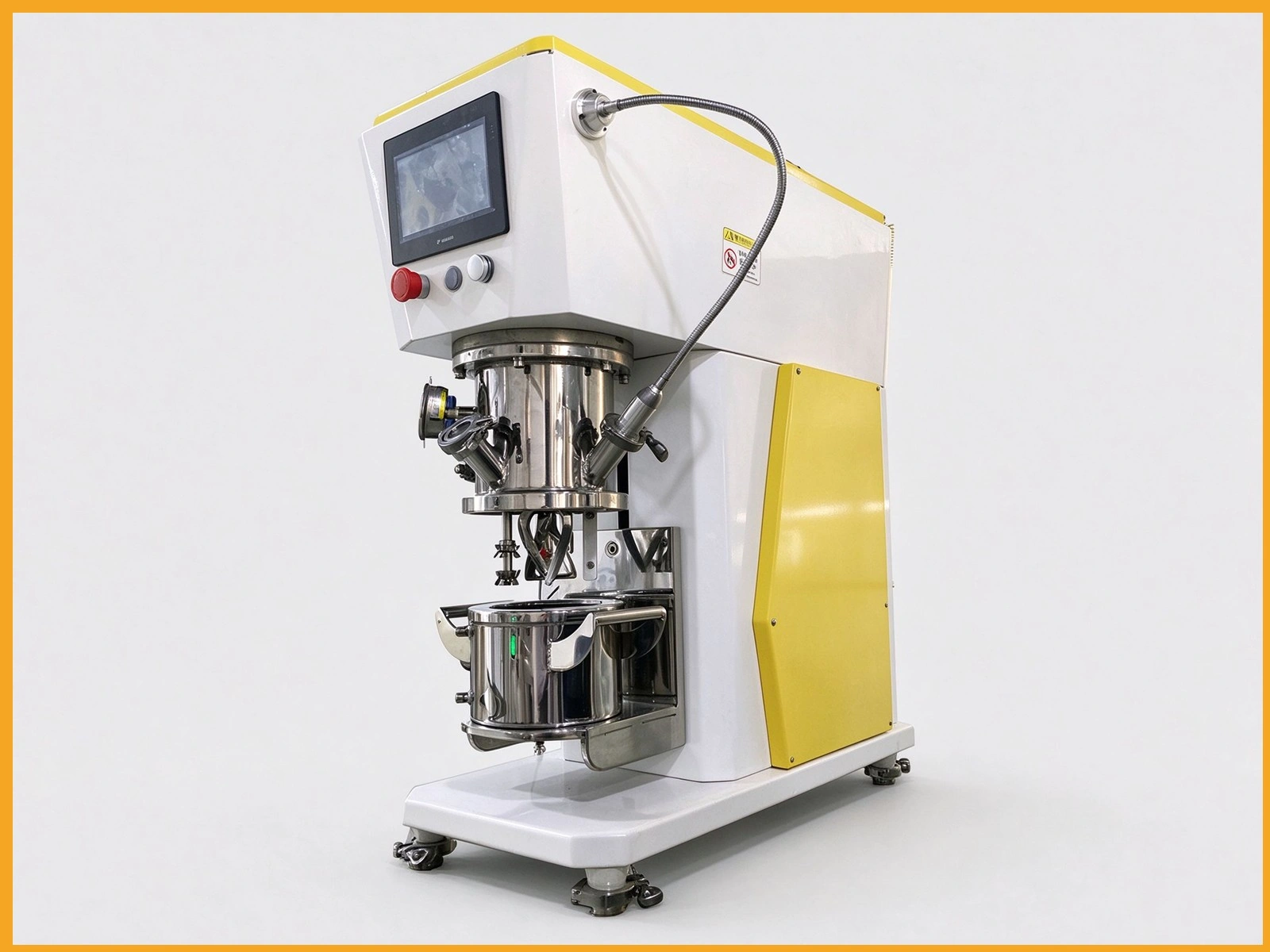
Suitable for laboratories, small-scale trials, and formulation R&D. It uses a combination of a planetary blade and a dispersion disc to improve mixing efficiency; the mixing vessel can be made of SUS304/316 stainless steel; vacuum and explosion-proof functions are optional; an extruder is also optional; the jacketed vessel can be heated or cooled; PLC touchscreen operation is available, and colors can be customized according to customer requirements. For research institutes and new material companies, it is a tool for establishing reliable process data from the very beginning of small-scale trials.
Pilot Production Type (20L Dual Planetary Mixer):
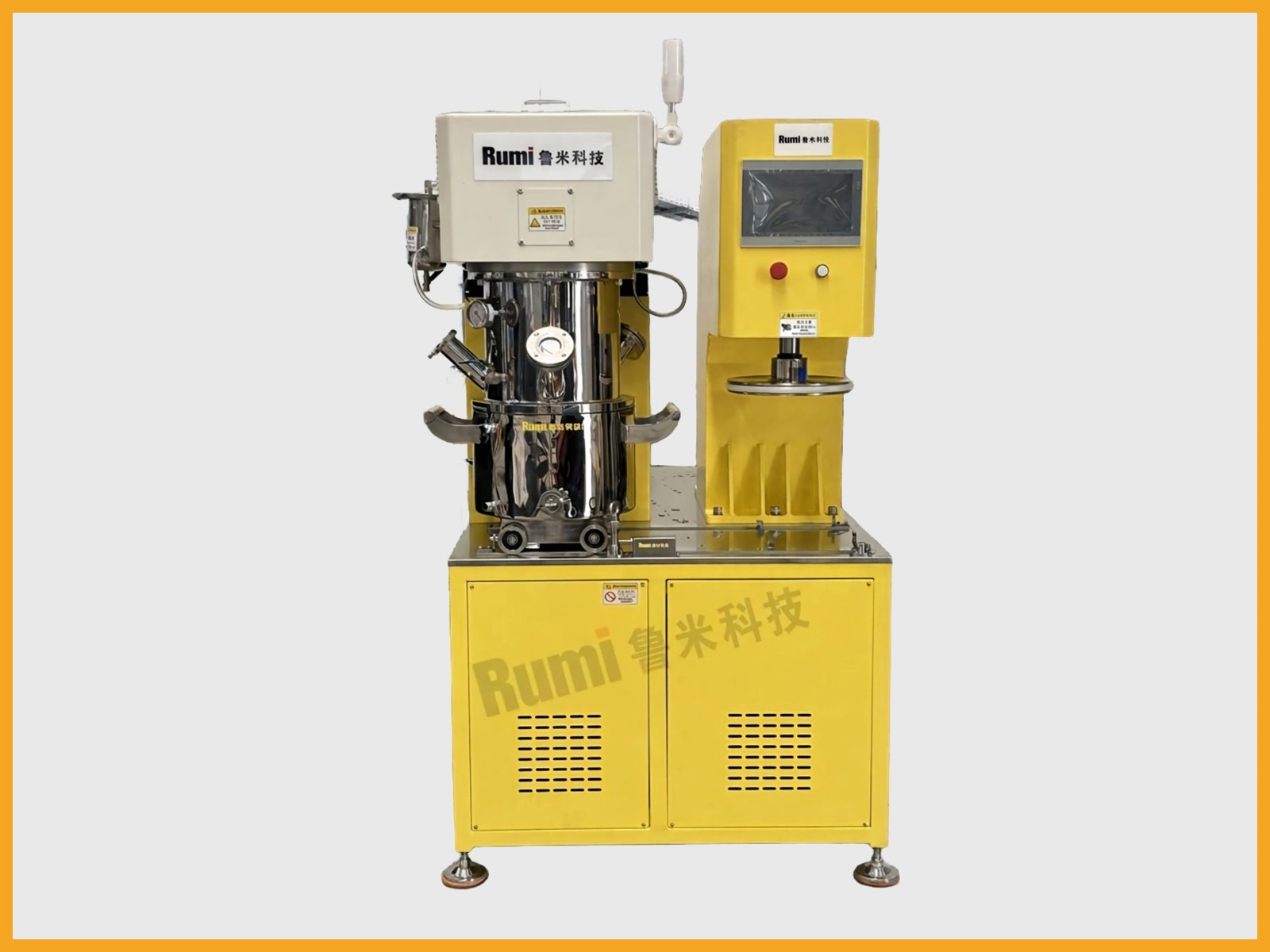
A bridge from laboratory formulations to small-batch production—compact but fully equipped. Jacketed temperature control, vacuum, and explosion-proof features are all optional. It is suitable for new product trial production and multi-variety, small-batch production, enabling smooth transition of process parameters to larger capacity.
Large-Batch Production Type (50L–100L):
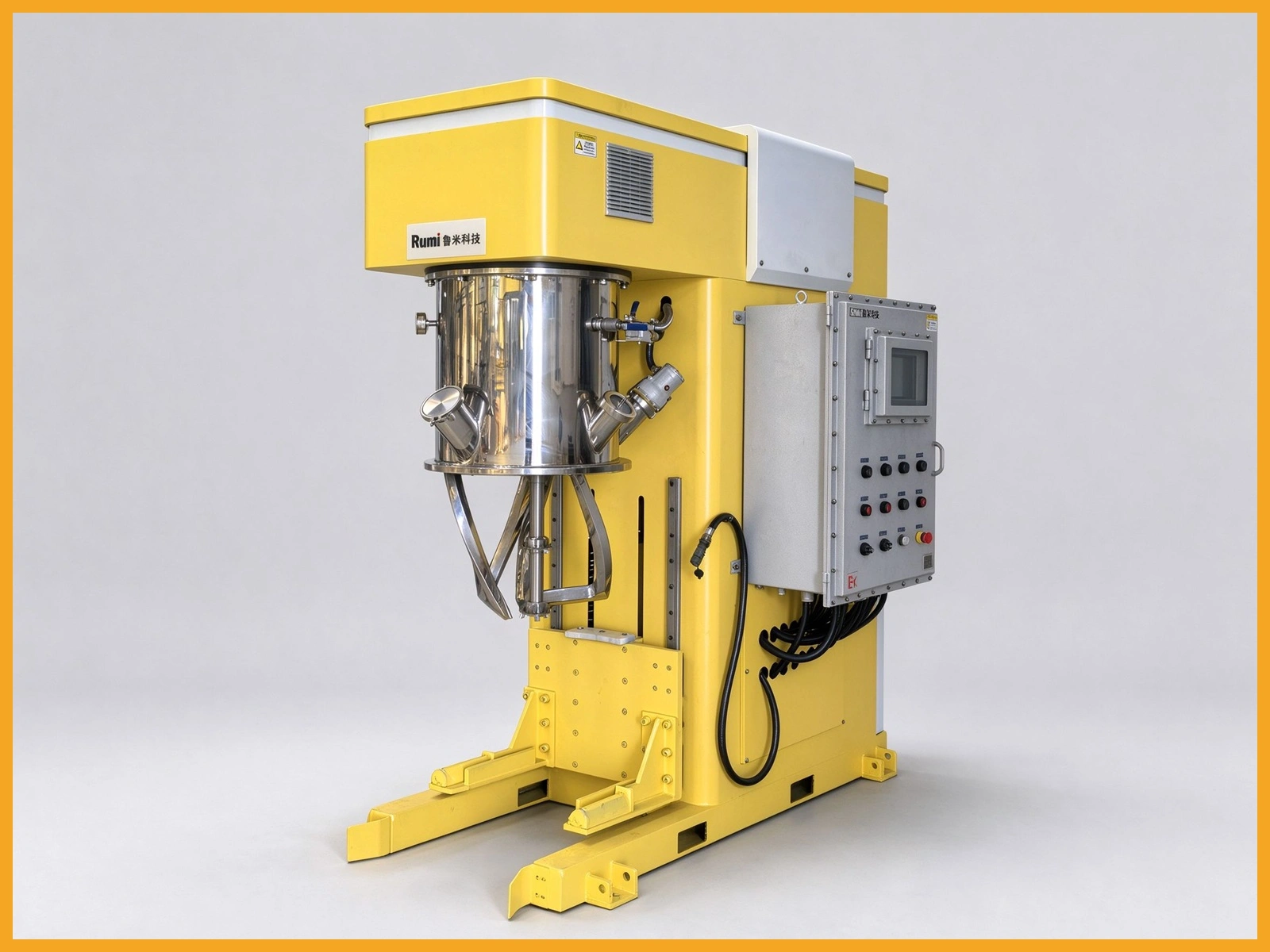
The main model for pilot and scaled production. The mixing blade type can be selected according to the material; the vessel can be equipped with a jacket for heating/cooling; vacuum deaeration and PLC automation are supported. One machine can handle multi-variety, multi-batch switching of high-viscosity materials.
Large-Batch Production Type (300L–500L):
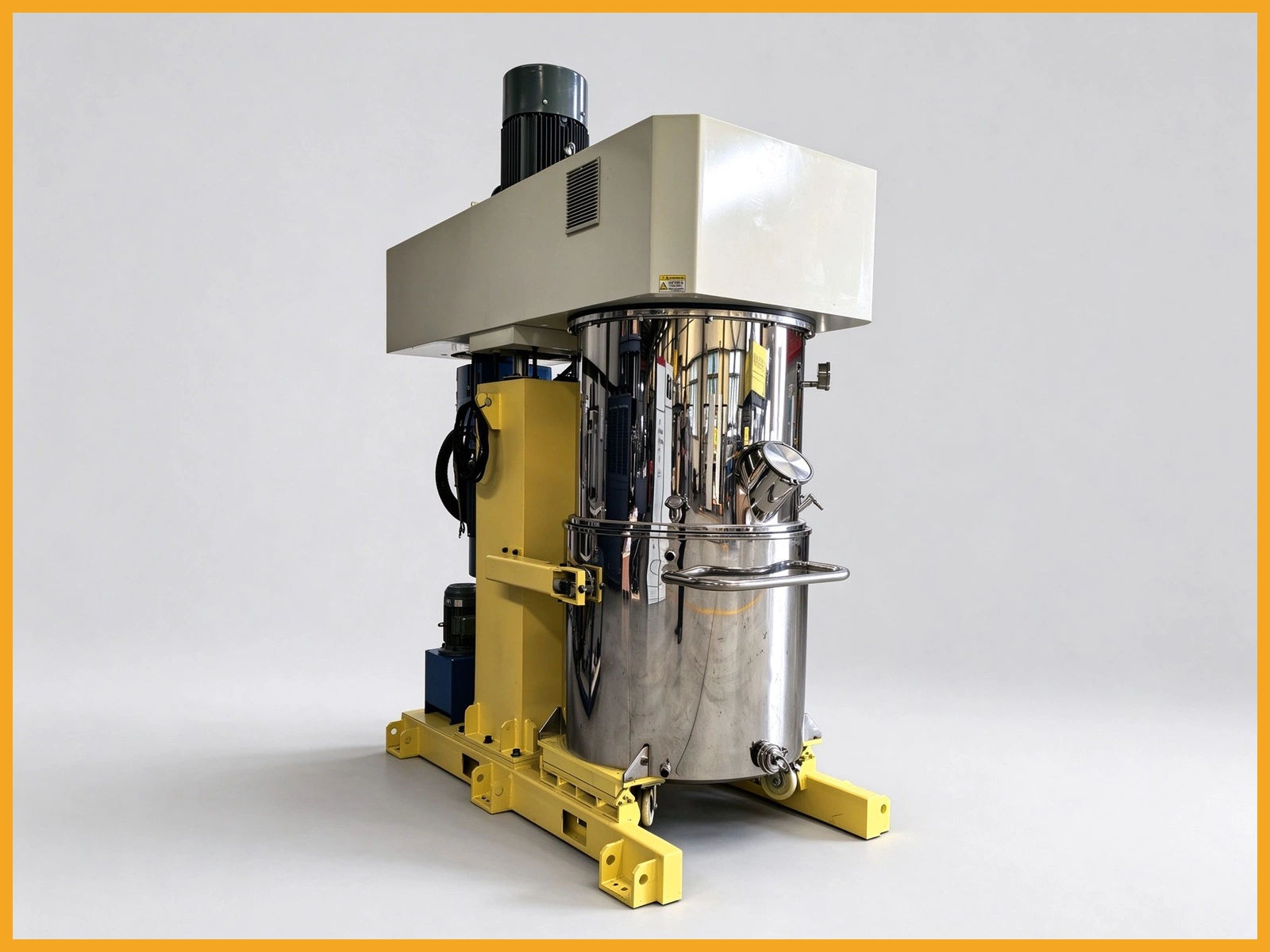
Designed for stable large-batch production of high-viscosity materials. High-torque, low-speed drive, combined with powerful wall scraping and multiple blade combinations, ensures uniform consistency across the entire batch. It is core equipment for capacity expansion in production lines for adhesives, inks, lithium battery slurries, and similar materials.
Large-Batch Production Type (1000L):
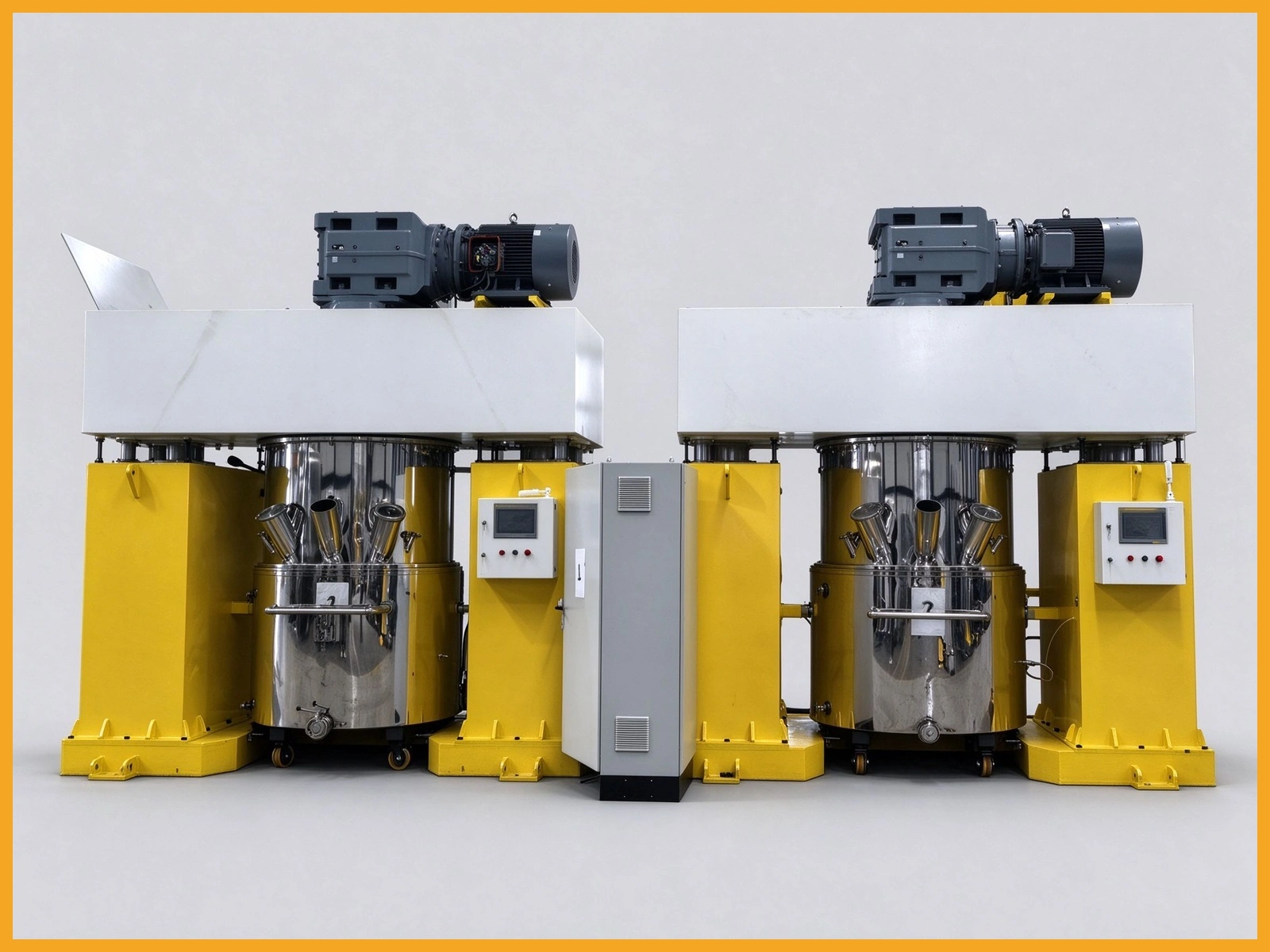
The 1000L capacity is designed for production of higher-viscosity, higher-solids materials. The mixer can be selected in different forms—such as paddle type, hook type, or frame type—according to material characteristics; the vessel can be equipped with a jacket for heating or cooling; vacuum and explosion-proof functions are optional; a PLC control system can be configured for automated operation; and the structure is designed for easy cleaning and maintenance.
In terms of quality, RUMI planetary mixers consistently use high-strength gears, integrally cast blades, high machining accuracy, and premium steel and components. Product-contact surfaces can be treated to food- and pharmaceutical-grade standards, ensuring long-term stable operation of the equipment.
04 Which Industries Use Them?
Currently, RUMI’s mixing and batching equipment mainly serves the following industries:
Adhesives and sealants: structural adhesives, waterproof adhesives, sealants, and other high-viscosity gels
Inks and coatings: dispersion and paint blending of high-solids inks, waterborne industrial coatings, and architectural coatings
New energy and new materials: lithium battery slurries, graphene, and composites
Resins and catalysts: waterborne polyurethane, resins, catalysts, and additives
Daily chemicals, food, and pharmaceuticals: paste materials with hygiene-grade requirements
05 Four Key Points for Choosing a Planetary Mixer
As a user, how do you judge whether a planetary mixer is reliable? Based on RUMI’s product design, focus on four things.
First, whether the mixing configuration matches the material. Different materials require different blade types. Twisted/helical, paddle, hook, and frame types each have their own suitable applications—one machine cannot do everything.
Second, material and surface treatment. The steel grade (304/316L), welding, and surface treatment of product-contact parts directly determine equipment life and hygiene level.
Third, whether the supporting functions are complete. Jacket temperature control, vacuum deaeration, explosion-proof features, PLC automatic control, and wall scrapers—whether these are fully configured according to process requirements.
Fourth, long-term service capability. Buying the equipment is only the beginning. Whether design, manufacturing, installation, commissioning, and after-sales service can keep up is equally important.
A planetary mixer may look like just a piece of equipment, but behind it is a complete mixing process solution for high-viscosity materials.
RUMI Technology is a National High-Tech Enterprise and a Shanghai “Specialized, Refined, Differentiated and Innovative” Enterprise. It holds ISO9001, EU CE, AAA credit, and other certifications, and has an intelligent manufacturing center in Changshu, Jiangsu. RUMI can provide overall services ranging from standalone equipment and high-precision batching systems to automation production line EPC turnkey contracting.
If your products are also troubled by “cannot mix” or “cannot mix evenly” problems, you are welcome to contact RUMI Technology and let our engineers recommend the right solution based on your materials and process.
Learn more at our official website:
www.rumichina.com