 en
 vi
 it
 es
 tr
 ja
 pt
 nl
 ru
 fr
 de
 pl
 ar
News
Latest news and events.




High-viscosity materials present challenges that conventional mixing equipment may struggle to address. Adhesives, sealants, resins, printing inks, and heavy coatings often have poor flowability, making it difficult to achieve uniform circulation throughout the mixing vessel. Powder ingredients may remain incompletely wetted, agglomerates can resist breakdown, and material near the vessel walls or bottom may receive insufficient mixing. These problems can increase processing time and lead to inconsistent product quality.
A High Viscosity Triple Shaft Mixer is designed to address these challenges through the coordinated operation of multiple mixing mechanisms. By combining bulk agitation with high-speed dispersion and additional mixing functions, it can support material circulation, particle dispersion, and overall batch uniformity. However, its actual performance depends on shaft configuration, agitator geometry, drive capacity, and the rheological properties of the processed material.
For manufacturers handling complex formulations, selecting the right high viscosity triple shaft mixing machine requires more than comparing motor power or vessel capacity. Understanding how its mixing mechanisms work together is essential.
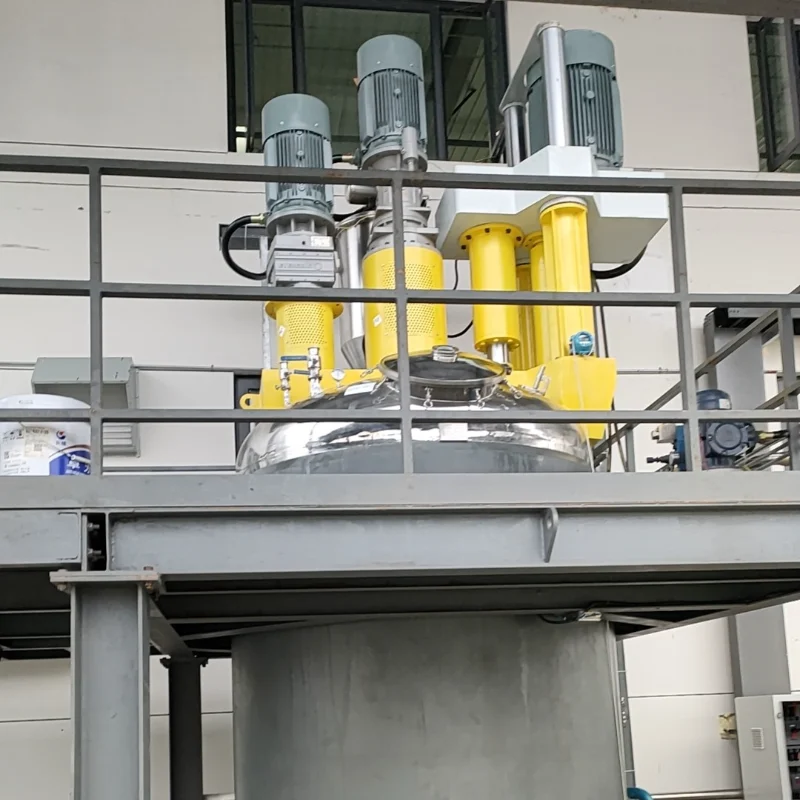
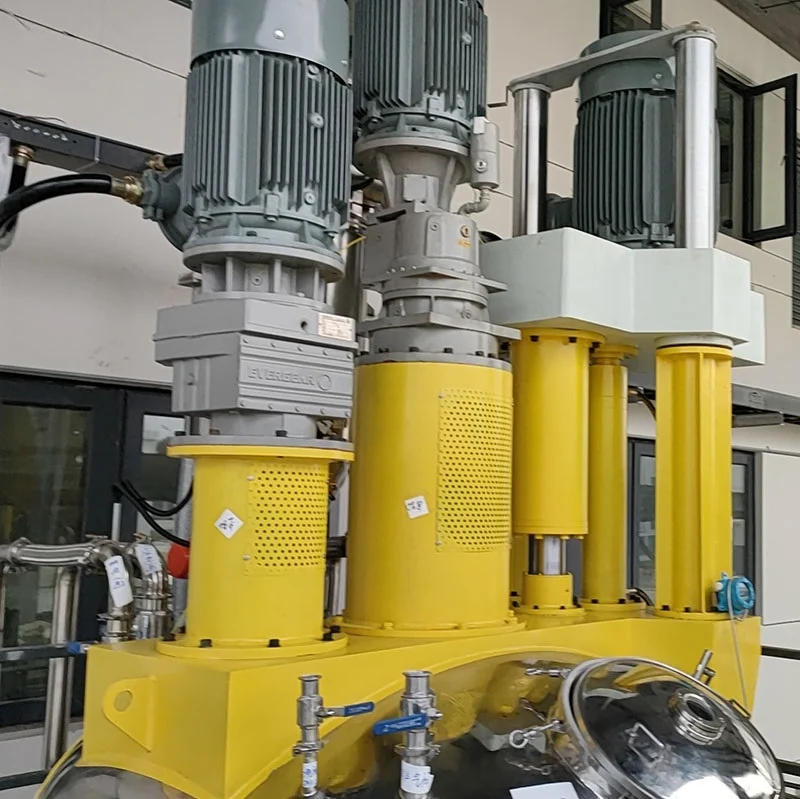
Unlike conventional mixers that rely on a single agitator or a limited combination of mixing elements, triple shaft equipment uses three independently arranged or coordinated mixing mechanisms, depending on the machine design. Each mechanism can perform a different function within the same processing vessel.
A typical configuration may include the following components:
Low-speed main mixing shaft
The main agitator, often designed as an anchor or frame-type structure, supports bulk material movement. Its relatively low-speed operation helps move viscous material through the vessel and reduce poorly circulated areas.
For adhesives, sealants, and resin compounds, this function is particularly important because high-viscosity materials cannot circulate as easily as low-viscosity liquids. The agitator geometry and clearance between the blades and vessel walls influence how effectively material moves through the batch.
High-speed dispersion shaft
The dispersion shaft generates localized shear forces to break down agglomerates and distribute solid ingredients throughout the liquid or paste phase. Its rotating disc or other dispersion element creates intensive local movement around the working area.
This mechanism is valuable when processing pigments, fillers, powders, and other ingredients that require effective wetting and dispersion. However, dispersion is not identical to bulk mixing: a high-speed disc can break down agglomerates without necessarily ensuring uniform circulation throughout a large batch.
Third auxiliary mixing mechanism
The third shaft provides an additional mixing function determined by the equipment configuration. Depending on the design, it may use a different agitator geometry to support circulation, improve material exchange between mixing zones, or address specific processing requirements.
Not every triple shaft mixer uses an identical arrangement. Buyers should examine the actual shaft layout, agitator type, and movement pattern rather than assuming that all three-shaft machines offer the same functions.
The effectiveness of a triple shaft system comes from combining different mixing actions.
The low-speed agitator helps move the bulk material, while the high-speed dispersion mechanism applies localized shear to powders and agglomerates. The auxiliary mechanism can further support circulation or processing in areas that require additional mixing action.
This combination helps address two different problems: insufficient overall material movement and inadequate localized dispersion.
It is also important to distinguish three process objectives:
Mixing: Distributing different ingredients throughout the batch to achieve consistent composition.
Dispersion: Breaking down agglomerates and distributing solid particles more evenly within the surrounding medium.
Homogenization: Reducing variations in composition or physical properties across the product, according to the required process specification.
Agitator design, shaft positioning, rotational speed, and vessel geometry all influence these results. The correct combination must be evaluated against the actual formulation rather than selected by equipment category alone.
A high viscosity triple shaft mixing machine can be applied to several industrial processes, but different materials require different combinations of agitation and dispersion.
Adhesives and sealants
These products may contain polymers, fillers, resins, and functional additives. Their viscosity can increase significantly as solid ingredients are introduced. Low-speed bulk agitation helps maintain material movement, while high-speed dispersion supports filler distribution and agglomerate breakdown.
For formulations sensitive to entrapped air, a vacuum system may be specified to support deaeration. Its effectiveness depends on formulation characteristics, process conditions, and the equipment's sealing and vacuum design.
Paints and printing inks
Pigments and fillers require appropriate wetting and dispersion to achieve the desired color consistency and product performance. High-speed dispersion is particularly relevant during pigment incorporation, while the main agitator helps maintain batch circulation.
The required shear level depends on pigment characteristics, formulation viscosity, and the intended product quality. Excessive shear or unsuitable processing conditions may create unnecessary heat or affect sensitive ingredients.
Resins and composite materials
Resin production may involve combining liquid components, powders, fillers, and additives. A triple shaft configuration can support both bulk mixing and localized dispersion, making it useful for formulations with demanding processing requirements.
Cosmetics and other pastes
Creams, gels, and concentrated cosmetic formulations may require controlled material circulation and careful temperature management. The equipment configuration should reflect the desired texture, ingredient sensitivity, and final product specifications. Where a specific degree of homogenization is required, additional processing equipment or a dedicated homogenizing mechanism may still be necessary.
A High Viscosity Triple Shaft Mixer Equipment package can incorporate different auxiliary systems according to the process.
Wall-scraping devices: Help remove material adhering to vessel walls and improve heat transfer when properly designed and installed.
Vacuum deaeration: Helps remove entrapped air from suitable formulations, particularly adhesives, sealants, and certain resin products.
Heating and cooling jackets: Support temperature control during processes involving temperature-sensitive ingredients or viscosity changes.
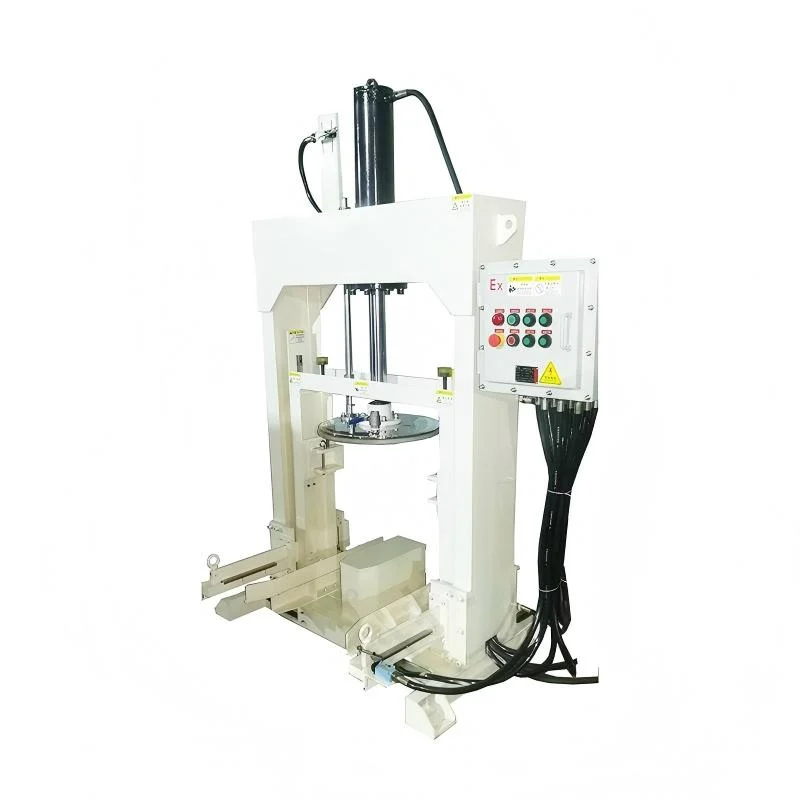
Hydraulic lifting systems: Facilitate access to the vessel and support equipment operation during loading, unloading, or maintenance.
Variable-frequency drives: Allow operators to adjust shaft speeds according to different processing stages.
Automation systems: Can coordinate operating sequences and monitor selected process parameters, depending on the control system specification.
These features should not automatically be assumed to be standard equipment. Their inclusion depends on the production process and the manufacturer's design.
Selecting suitable equipment requires an evaluation of material properties, production targets, and operating conditions.
Viscosity is an important starting point, but it should not be considered in isolation. Some materials exhibit shear-thinning behavior, meaning their apparent viscosity decreases as the shear rate increases. Others may have different flow characteristics depending on temperature, solid content, or processing history.
Buyers should provide the manufacturer with viscosity measurements, test conditions, solid content, and formulation information wherever possible.
The effective working volume must accommodate the intended batch size while leaving sufficient space for mixing movement and process operation.
Motor power should be evaluated alongside material viscosity, agitator geometry, rotational speed, and transmission design. A larger motor does not automatically guarantee better mixing. The drive system must deliver appropriate torque and operating stability under actual process loads.
Different production stages may require different mixing conditions. Powder incorporation, initial wetting, intensive dispersion, and final blending do not necessarily need the same rotational speed.
The number and arrangement of shafts, blade geometry, and their positions within the vessel determine how effectively the machine handles these stages.
For temperature-sensitive formulations, heating or cooling requirements should be considered during equipment design. Vacuum processing requires suitable vessel sealing, shaft sealing, and vacuum-system compatibility.
Buyers should also evaluate cleaning access, agitator removal, maintenance requirements, and the availability of replacement components. These factors influence long-term production efficiency.
To develop an appropriate equipment solution, manufacturers need more than a requested vessel capacity. A useful technical inquiry should include:
Material types and formulation characteristics.
Viscosity range and measurement conditions.
Solid content and powder characteristics.
Required batch volume and production output.
Mixing, dispersion, and deaeration requirements.
Processing temperature and temperature-control needs.
Target product consistency and quality specifications.
Available factory space and operating conditions.
Equipment pricing may vary according to vessel material, working capacity, motor and transmission systems, shaft configuration, automation level, vacuum equipment, temperature-control systems, and customization requirements.
A qualified supplier should be able to evaluate these factors, recommend a suitable structure, and explain how the proposed configuration addresses the customer's actual production challenges.
A triple shaft mixer is not simply a vessel fitted with three motors. Its performance depends on the engineering relationship between the drive system, agitator geometry, shaft arrangement, vessel structure, and process requirements.
RUMI Technology has focused on chemical equipment and solutions since launching its first self-developed high-precision dosing system and high-efficiency mixing equipment in 2018. Through hundreds of R&D iterations, the company has developed its technical capabilities and obtained multiple invention patents.
Serving industries including paints, inks, resins, new materials, new energy, and composites, RUMI focuses on customized mixing and dosing solutions. Its quality assurance system includes 72-hour factory testing and a 24-hour after-sales response commitment. The company also holds ISO 9001 and CE certifications.
For buyers evaluating High Viscosity Triple Shaft Mixer Equipment, this engineering and manufacturing experience is relevant when discussing non-standard shaft configurations, drive selection, vessel design, and process-specific auxiliary systems.
A high viscosity triple shaft mixing machine offers a practical approach to processing demanding industrial formulations by combining bulk agitation, localized dispersion, and additional mixing functions within one system.
Its real value depends on how effectively these mechanisms work together under actual production conditions. Material viscosity, solid content, batch size, agitator geometry, motor capacity, temperature control, and sealing requirements must all be considered during equipment selection.
Rather than choosing a machine based only on its name or rated power, manufacturers should work with an experienced equipment supplier to evaluate their formulation and production process. RUMI Technology provides customized fine chemical equipment solutions for industrial manufacturers seeking mixing systems aligned with their specific processing requirements.
Contact RUMI to discuss your material characteristics, production targets, and technical requirements for a customized high viscosity triple shaft mixing solution.