 en
en  vi
vi  it
it  es
es  tr
tr  ja
ja  pt
pt  nl
nl  ru
ru  fr
fr  de
de  pl
pl  ar
ar News
Latest news and events.



Traditional manual powder addition often looks simple on paper, but it creates problems once production volume increases. Operators must open bags, transfer material, weigh batches and clean spills, leaving room for weighing errors, unstable feeding and cross-contamination. Open conveying can also release fine powder into the production area. For manufacturers in food, chemicals, plastics, lithium batteries, new materials, paints, inks, adhesives and construction chemicals, these issues directly affect batch consistency and operating conditions. A properly designed powder dosing system replaces these separate manual steps with a controlled route from feeding to final dosing.
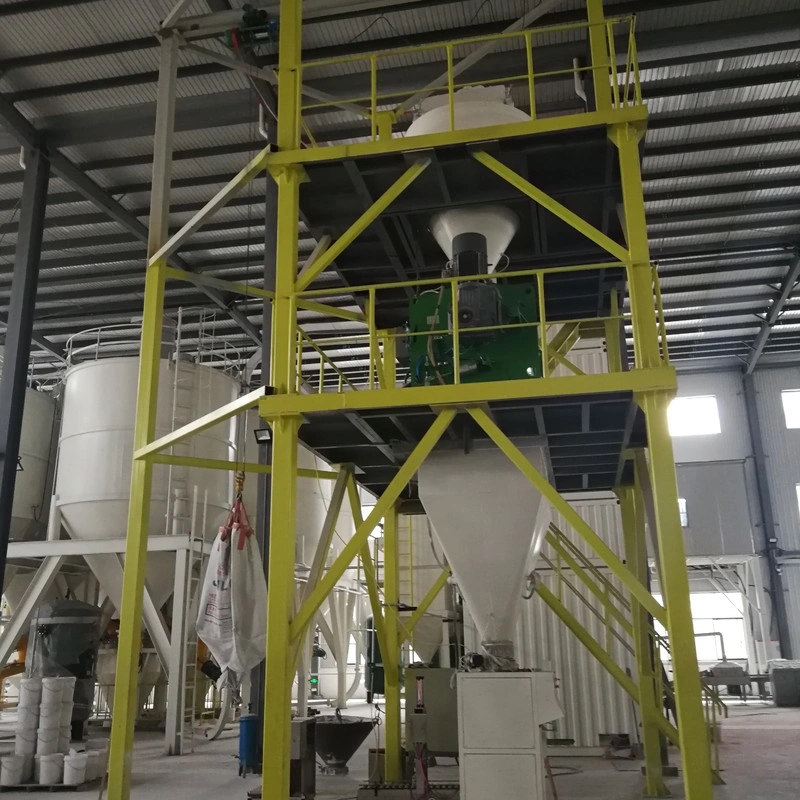
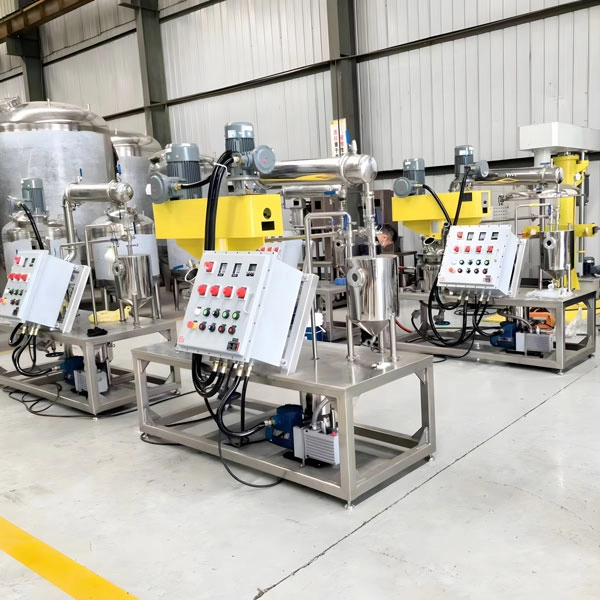
A complete Industrial Powder Dosing Equipment system can be arranged as:
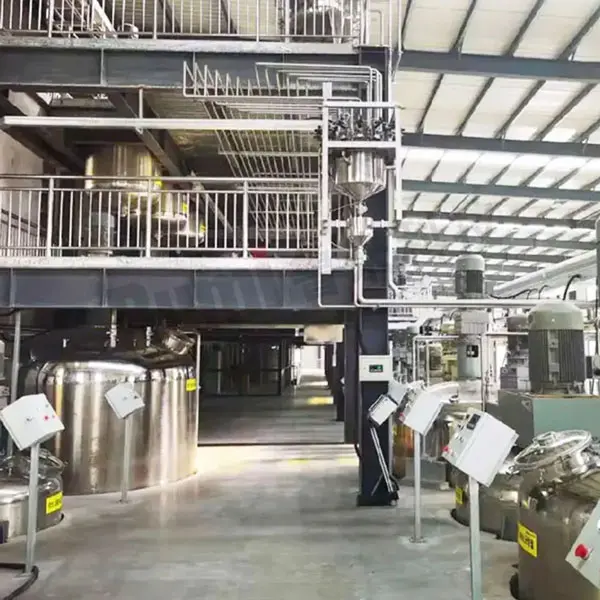
Ton bag/small bag feeding → vacuum feeder → powder storage tank → dosing tank with weighing → pipeline conveying → downstream usage point.
The first stage is the combined feeding station. A ton bag can be lifted to the feeding inlet using an electric hoist or forklift. After the bag is compressed and its discharge outlet is opened, beating and vibrating devices help release material into the lower hopper. This is particularly useful for powders that bridge or discharge unevenly from large bags. Small-bag feeding can be incorporated into the same material-handling route.
The feeding station also provides a controlled point for dust collection instead of leaving operators to empty bags directly into an open hopper. This matters when handling fine powders, pigments, additives or other materials that become airborne easily.
Material then enters the powder vacuum feeder. RUMI's configuration uses a Roots blower as the negative-pressure source. The suction nozzle and conveying pipeline remain under a controlled vacuum, drawing powder together with air into the conveying line. The resulting air-material flow travels to the feeder chamber, where powder is separated from conveying air and discharged into the receiving equipment.
This approach is not simply about moving powder from A to B. Conveying stability depends on maintaining suitable negative pressure, air velocity and material flow for the powder being handled. A free-flowing granular additive behaves differently from a fine, cohesive pigment or a powder with a high tendency to adhere to surfaces. The conveying system therefore needs to be selected according to particle size, bulk density, flowability and accumulation behavior.
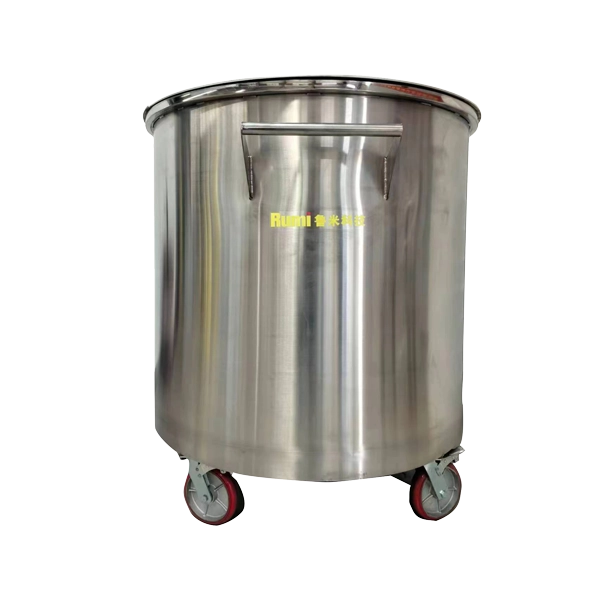
The powder storage tank provides a buffer between feeding and dosing. This separates the intermittent task of emptying bags from the downstream requirement for a stable material supply. The dosing tank then weighs the required quantity before controlled discharge. Instead of relying on an operator to repeatedly measure powder, the system can use the weighing signal to control each dosing cycle.
This is how a powder dosing system reduces manual dosing errors: the material quantity is determined by the weighing system rather than by visual judgment or repeated manual measurement. For multi-material formulations, separate dosing units can also be coordinated through the control system so that each ingredient follows a defined recipe.
A vacuum conveying system is especially useful where dust control and stable material transfer are both important. Because the conveying route operates under negative pressure, powder is drawn into the pipeline rather than pushed out through potential leakage points. The entire transfer path can remain enclosed from the feeding station to the receiving equipment.
The Roots blower provides the vacuum source, while the pipeline establishes the controlled conveying route. At the feeder chamber, powder-air separation prevents the material from continuing toward the blower. Filters retain fine powder, while multiple pulse-backblowing units periodically remove powder accumulated on the filter surfaces.
The backblowing process is important for continuous operation. As powder accumulates on a filter, airflow resistance increases and conveying performance can deteriorate. Pulsed compressed air dislodges the accumulated material, allowing the filter to continue working. Multiple backblowing units operating cyclically help prevent a single filter-cleaning event from interrupting the entire feeding process.
For production facilities handling fine powders, the enclosed route also reduces the number of points where operators are exposed to airborne material. Compared with manually transferring powder through open containers, the combination of enclosed feeding, vacuum conveying, air-material separation and filtration provides better control over dust migration and material contact.
The weighing section is equally important. A dosing tank is not simply a storage vessel with a load cell attached. Its effective performance depends on tank capacity, load-cell configuration, discharge design and the stability of material entering and leaving the vessel. If powder flow is irregular, the measured weight can fluctuate and make precise dosing more difficult.
Storage capacity must also match the production rate. An undersized tank may require frequent refilling and interrupt downstream production, while excessive capacity can increase equipment footprint and unnecessary material residence time. For continuous production, the storage and dosing sections should therefore be sized according to actual consumption, batch size and replenishment frequency.
Integration with upstream and downstream equipment is another key factor. Feeding, vacuum conveying, storage, weighing, dosing and the final process equipment should exchange operating signals so that material supply follows actual demand. This allows the dosing system to become part of the production line rather than functioning as an isolated powder-handling machine.
When buyers search for Powder Dosing Equipment Price, comparing two quotations by the headline equipment price alone can be misleading. A basic dosing machine and a complete automated powder-handling system may both be described as “powder dosing equipment” while having very different configurations.
Processing capacity is one of the first factors. A system designed for small-batch laboratory or specialty production does not require the same feeder, storage volume or conveying capacity as a continuous industrial line.
Weighing accuracy is another major cost driver. Higher dosing precision may require more suitable load cells, mechanical design, control algorithms and stable material discharge. The required accuracy should therefore be defined according to the formulation rather than selected simply because a higher specification sounds better.
The vacuum feeding system also affects the quotation. Roots blower capacity, conveying distance, pipeline configuration, feeder size and filtration requirements all influence the final configuration. A short conveying route for a free-flowing powder is fundamentally different from a long route handling fine or cohesive material.
Other important factors include:
Ton-bag or small-bag feeding configuration
Powder storage tank capacity
Dosing range and weighing accuracy
Filter area and pulse-backblowing configuration
Contact material and surface finish
Manual, semi-automatic or fully automatic operation
PLC and HMI control
Number of dosing points
Explosion-proof or special safety requirements where applicable
Integration with mixers, reactors, packaging lines or other process equipment
RUMI Technology approaches these requirements as a complete system rather than treating dosing as a standalone machine. Since developing its first self-developed high-precision dosing system and high-efficiency mixing equipment in 2018, RUMI has focused on fine chemical equipment and customized process solutions. Its experience covers dosing requirements for paint and ink producers, mixing applications for resin and new-material companies, and system solutions for new energy and composite-material production.
RUMI's quality system includes 72-hour factory testing, 24-hour after-sales response, ISO9001 and CE certifications. These details are relevant when evaluating equipment cost because commissioning, reliability verification and after-sales support can have a significant effect on the actual lifecycle cost of an automated powder-handling system.
The right Industrial Powder Dosing Equipment should be selected according to both the material and the process.
Food powders may require hygienic contact surfaces and controlled contamination risks. Paints and inks often involve pigments and fine additives where dust containment and repeatable dosing are important. Adhesives and construction chemicals may contain powders with different flowability or moisture sensitivity. Lithium battery and new-material applications can place greater demands on material compatibility, contamination control and dosing consistency.
For free-flowing powders, the primary concern may be maintaining a stable feed rate. Fine or cohesive powders may require additional consideration of hopper geometry, vibration, material loosening and discharge design. Abrasive materials can require suitable wear-resistant contact components, while moisture-sensitive powders may need tighter environmental and conveying controls.
There is therefore no universal “best” dosing configuration. The appropriate system is determined by powder characteristics, required dosing range, production capacity, weighing accuracy, conveying distance and downstream process requirements.
For manufacturers comparing systems, the most useful approach is to evaluate the complete material path: how the powder enters the system, how it is conveyed, where it is stored, how it is weighed, how it is discharged and how each stage communicates with the next. This gives a much clearer basis for comparing equipment than looking only at the machine price.
For industrial powder processing, the lowest Powder Dosing Equipment Price is not necessarily the lowest-cost solution. Feeding stability, weighing accuracy, dust containment, storage capacity, filtration, automation, material compatibility and integration all influence long-term operating performance. A well-configured system should reduce manual handling while maintaining controlled powder flow and repeatable dosing from the first bag-opening step to the final production point. For companies with demanding powder-processing requirements, these factors provide a more practical basis for selecting Industrial Powder Dosing Equipment that fits the process rather than simply fitting the budget.