 en
en  vi
vi  it
it  es
es  tr
tr  ja
ja  pt
pt  nl
nl  ru
ru  fr
fr  de
de  pl
pl  ar
ar News
Latest news and events.



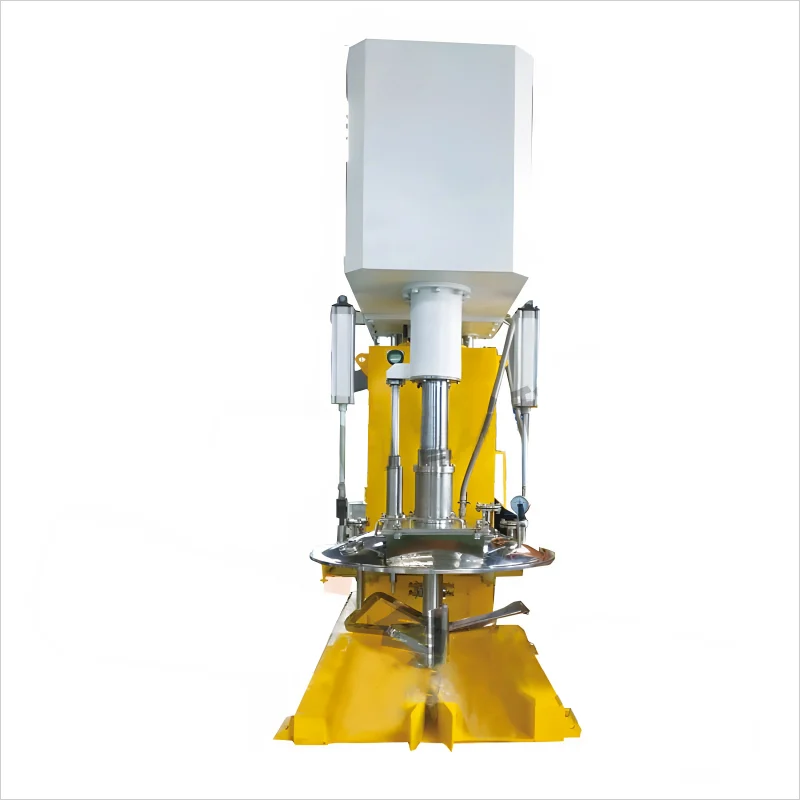
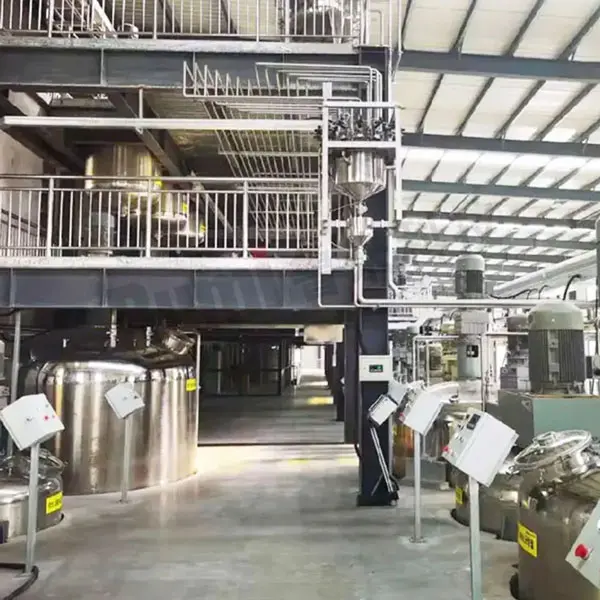
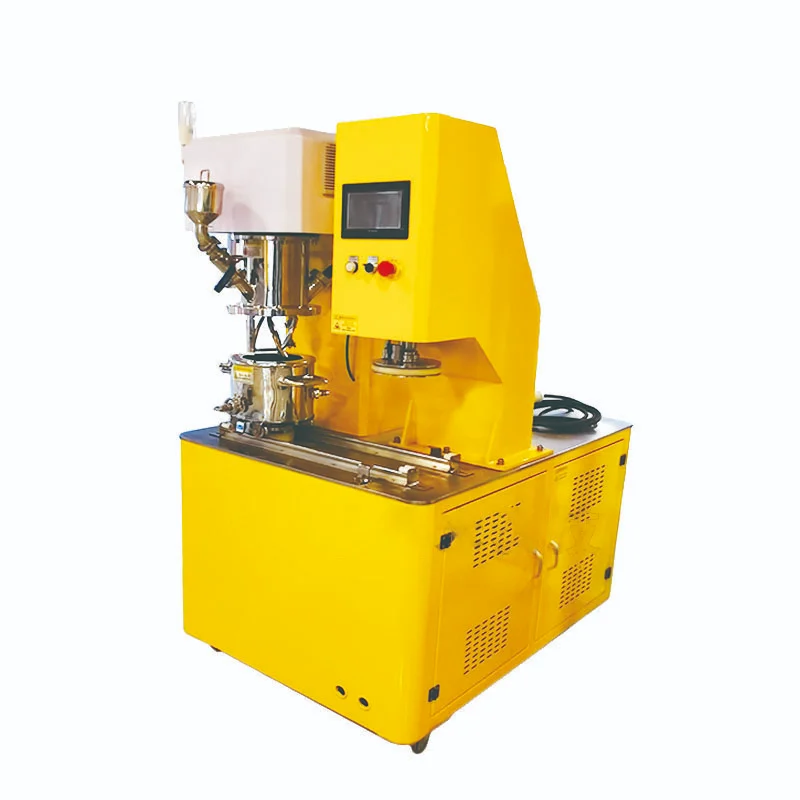
An ordinary storage tank is not necessarily a suitable mixing vessel. When the vessel geometry, agitator, liquid level, or power configuration does not match the process, operators may encounter uneven concentration, stagnant zones, solids settling, excessive vortex formation, unstable temperature distribution, or unnecessary energy consumption. An Industrial Mixing Vessel is therefore a process vessel rather than simply a tank with a motor installed on top.
For chemical, pharmaceutical, food and beverage, coating, adhesive, and water treatment production, the vessel must be designed around the actual material and process objective. Capacity, working volume, agitator geometry, impeller diameter, rotational speed, shaft design, baffles, material selection, temperature control, and sealing all influence the final mixing result. This is also why an Industrial mixing vessel price can vary considerably between equipment with the same nominal capacity.
The first design consideration is the relationship between vessel capacity and working volume. A 2,000 L vessel, for example, does not normally mean that the process should operate with 2,000 L of material at all times. The required headspace depends on foaming, thermal expansion, powder addition, gas entrainment, and the intensity of agitation. Operating volume also affects the position and immersion depth of the impeller, which directly influences circulation.
Vessel diameter-to-height ratio is another important variable. A relatively tall vessel may require multiple impellers or a different circulation pattern, while a wider vessel can require sufficient radial or axial flow to prevent poorly mixed areas near the bottom and walls. The correct geometry should be established from the required mixing duty rather than selected only from standard tank dimensions.
Agitator selection follows the same principle. Propellers are commonly suited to relatively low-viscosity liquids where strong axial circulation is required. Turbine impellers can provide more radial flow and are often considered for gas dispersion, liquid blending, or processes requiring greater local turbulence. Paddle designs provide broader flow coverage at moderate speeds, while anchor agitators are particularly relevant to viscous products that tend to remain near the vessel wall.
Rotational speed cannot be considered independently of impeller diameter. Increasing speed can increase circulation and shear, but excessive speed may introduce unwanted vortexing, air entrainment, or product damage. A larger impeller operating at a lower speed can produce a different flow pattern from a small impeller running at high speed. Motor power must therefore be selected according to viscosity, density, solids concentration, impeller geometry, target mixing time, and starting conditions.
Baffles are equally important. Without appropriate baffling, the liquid can rotate with the agitator instead of developing useful circulation throughout the vessel. This can create a deep vortex while leaving other regions poorly mixed. Baffles interrupt this bulk rotational movement and redirect energy into circulation. Their number, width, clearance, and configuration should still be determined according to vessel geometry and process requirements rather than copied as a universal standard.
Shaft diameter, shaft length, bearing arrangement where applicable, and drive configuration also require engineering consideration. A long shaft with a large impeller can experience significant mechanical loading, particularly when processing viscous materials or starting with a settled slurry. The drive system must account for operating torque as well as transient starting conditions.
There is no single agitator configuration that performs equally well with every material.
For low-viscosity liquids such as water-like solutions, axial-flow propellers or appropriately selected turbine impellers can generate circulation through a relatively large volume without requiring extremely high motor power. The design objective is often rapid bulk turnover and uniform concentration rather than maximum shear.
High-viscosity materials behave differently. Paints, adhesives, resins, creams, and other viscous products can resist circulation and create regions that move slowly near the vessel wall. Anchor agitators or other close-clearance designs can improve wall sweeping and bulk movement. Depending on the formulation, a scraper arrangement may also be considered when heat transfer through the vessel wall is important.
For solid-liquid mixing, density difference and particle size become critical. A slurry containing heavy particles requires sufficient bottom circulation to prevent sedimentation. An agitator that works well for a homogeneous liquid may not provide enough near-bottom velocity to keep solids suspended. Impeller position, diameter, speed, and vessel bottom geometry therefore need to be considered together.
High-shear dispersion is another distinct duty. When powders must be dispersed into a liquid, or when particle size reduction and deagglomeration are required, a conventional low-speed agitator may not provide the localized shear needed. A high-shear rotor-stator system or a dedicated dispersing impeller may be incorporated alongside the primary circulation system.
Material properties should be specified before final equipment selection. Viscosity, density, solids content, particle size, corrosiveness, operating temperature, shear sensitivity, and required batch time provide the basis for selecting the agitator and motor. For this reason, a supplier should request process data rather than quote an agitator solely from vessel capacity.
Material selection affects both service life and Industrial mixing vessel price. Stainless steel 304 is commonly considered for applications where corrosion resistance requirements are moderate. 316 and 316L provide greater resistance in many chloride-containing or chemically demanding environments, while 316L is frequently selected where low carbon content is desirable, particularly for fabricated equipment requiring welded stainless-steel construction.
The correct choice still depends on the actual medium, concentration, temperature, cleaning chemicals, and exposure conditions. Selecting 316L simply because it is more expensive does not automatically make it appropriate for every process.
Temperature control can be integrated through a jacket around the vessel. A single-wall vessel may be sufficient when no heating or cooling duty is required. A jacketed configuration can support controlled heating or cooling, while insulation can reduce heat loss and improve temperature stability when the process operates at elevated or reduced temperatures.
Mechanical seals also deserve attention because the shaft penetration is a critical interface between the product and the external drive system. Seal selection should consider pressure, temperature, shaft speed, material compatibility, cleaning requirements, and whether the process needs a higher level of containment.
Additional configurations may include sanitary or process-oriented inlet and outlet connections, powder charging ports, sampling points, temperature sensors, level measurement, CIP connections, SIP provisions, sight glasses, pressure instrumentation, and customized flanges. PLC-based control can further coordinate mixing speed, temperature, liquid level, dosing, and batch sequences when the vessel forms part of an automated production line.
For pharmaceutical and food applications, surface finish, weld quality, cleanability, drainage, and hygienic connection design can become just as important as the nominal tank volume.
When comparing Industrial mixing vessel price, buyers should avoid comparing capacity alone. Two 2,000 L vessels can have substantially different prices because their construction and process requirements are different.
The main cost factors normally include vessel material and thickness, vessel geometry, working pressure, operating temperature, agitator type, impeller diameter, motor power, shaft design, mechanical seal, jacket configuration, insulation, instrumentation, automation, surface treatment, and customized nozzles or flanges. A pressure-rated vessel, for example, requires substantially different fabrication and inspection requirements from an atmospheric tank.
Automation can also change the project cost. A basic motor starter and manual temperature reading represent a very different control scope from a PLC system that manages mixing speed, temperature, liquid level, dosing sequences, alarms, and recipe-based operation.
The more useful purchasing approach is to compare the total equipment scope. Initial equipment cost should be considered together with installation, commissioning, maintenance, spare parts, cleaning requirements, energy consumption, and expected operating conditions. A lower equipment quotation may not remain economical if the agitator is poorly matched to the product or if the vessel requires extensive modification after installation.
Choosing among Industrial mixing vessel manufacturers requires a similar engineering assessment. A capable manufacturer should be able to translate process information into vessel geometry, agitator selection, motor sizing, materials, sealing, temperature control, and automation requirements. The manufacturer should also understand how viscosity, density, solids loading, corrosion, batch size, and required mixing time affect the equipment configuration.
Manufacturing capability matters as well. Buyers should examine welding procedures, dimensional control, surface finishing, pressure or leak testing where applicable, factory testing, material documentation, inspection records, and the quality of fabricated components. For engineered projects, drawings, equipment specifications, manuals, certificates, and commissioning support are part of the deliverable rather than secondary paperwork.
RUMI Technology approaches mixing equipment from this process-oriented perspective. Since launching its first self-developed high-precision dosing system and high-efficiency mixing equipment in 2018, RUMI Technology has developed its position as a fine chemical equipment service provider. Its work includes customized solutions for paint and ink companies, mixing equipment for resin and new materials manufacturers, and system solutions for new energy and composite-material applications.
The company states that its development has involved hundreds of R&D iterations and the establishment of multiple invention patents. Its quality assurance system includes 72-hour factory testing and 24-hour after-sales response, with ISO9001 and CE certifications. This combination of process understanding, equipment manufacturing, testing, and technical support is particularly relevant when an Industrial Mixing Vessel must be integrated into an existing production process rather than purchased as an isolated standard tank.
Ultimately, the right Industrial Mixing Vessel is determined by the relationship between the material, process, vessel geometry, agitation system, and operating conditions. For buyers evaluating price or manufacturers, the most useful question is not simply how much the vessel costs, but whether its engineering configuration can deliver the required mixing result throughout the intended production cycle.