en
 vi
 it
 es
 tr
 ja
 pt
 nl
 ru
 fr
 de
 pl
 ar
News
Latest news and events.




In paint, ink, pigment, adhesive, and chemical manufacturing, achieving consistent dispersion is essential to final product quality. However, conventional mixing equipment may struggle when processing high-solid-content formulations, fine powders, or materials with different viscosity levels. Common problems include incomplete powder wetting, persistent particle agglomeration, uneven material distribution, and inconsistent dispersion results between production batches.
Industrial dispersion equipment is designed to address these challenges by generating controlled mechanical forces that promote powder incorporation, particle deagglomeration, and uniform material distribution. Unlike conventional agitators, industrial dispersers are developed specifically for processes where dispersion quality and production consistency are critical.
For manufacturers, choosing the right equipment requires more than comparing motor power or machine capacity. Disperser configuration, rotor speed, disc geometry, material characteristics, and production requirements must all be evaluated together. Understanding these factors helps buyers identify suitable equipment and reliable industrial dispersion equipment manufacturers.
Industrial dispersion equipment uses mechanical energy to break down particle agglomerates, improve powder wetting, and distribute solid materials throughout a liquid phase.
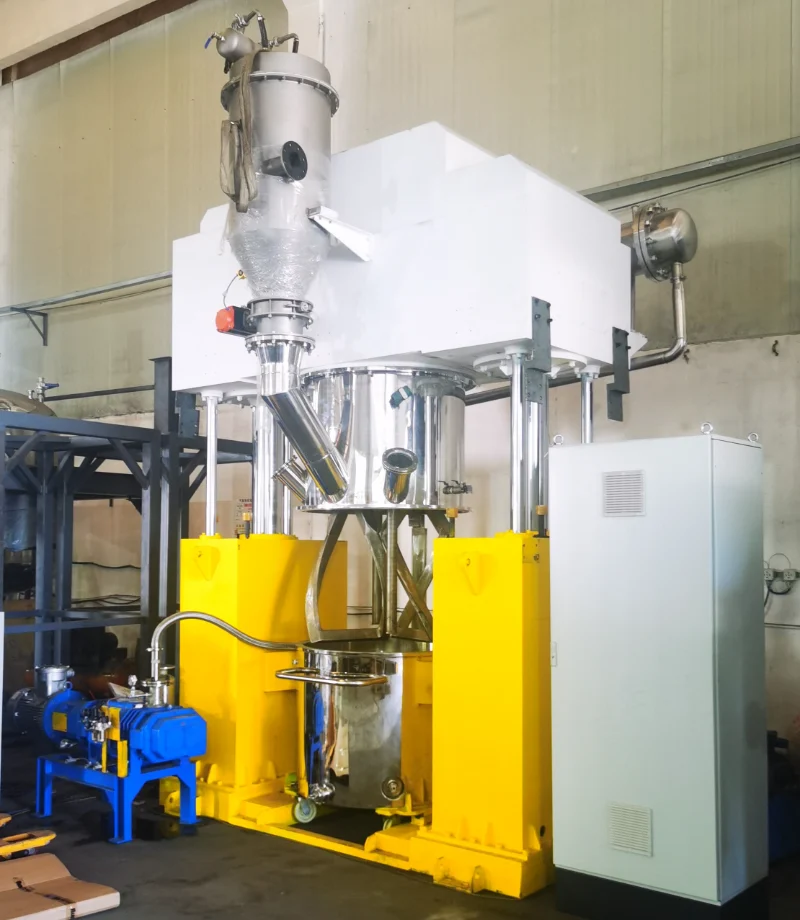
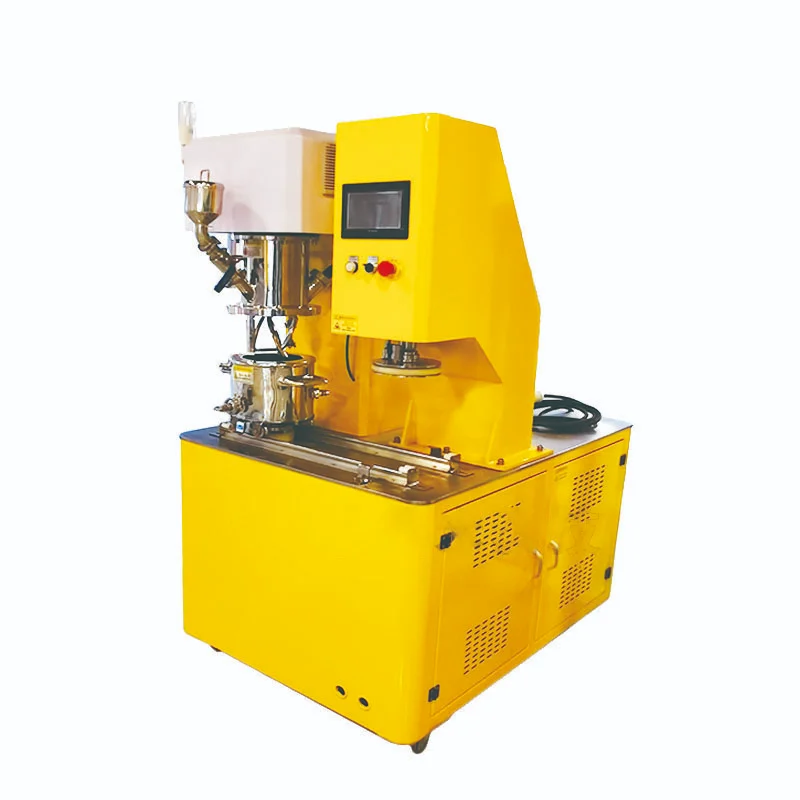
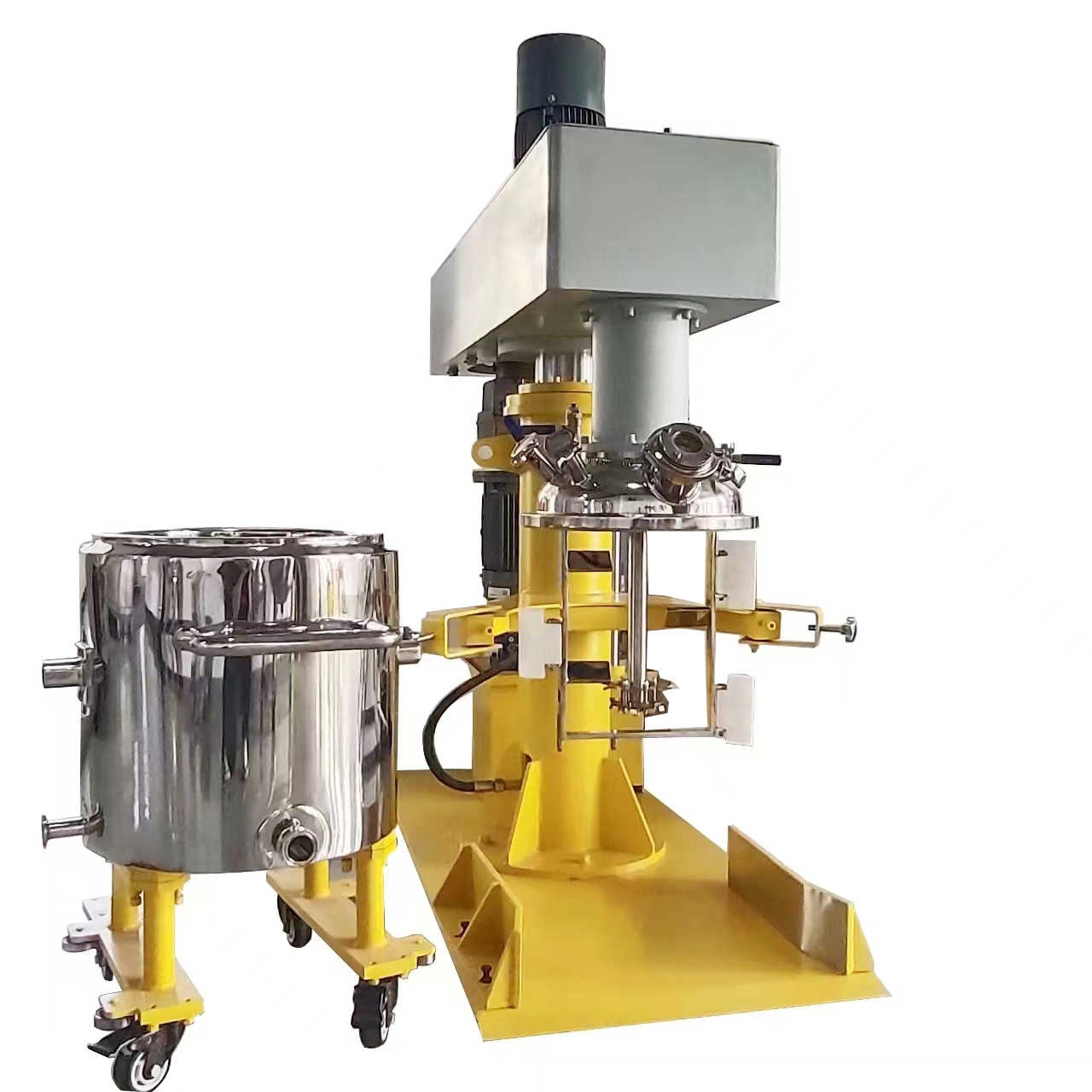
A typical high-speed disperser consists of several essential components:
Drive motor: Supplies the mechanical power required to operate the dispersion system.
Dispersion shaft: Transfers rotational energy from the motor to the working head.
Dispersion disc: Generates local shear forces and turbulent flow to promote particle separation and material circulation.
Mixing vessel: Contains the material during processing and influences circulation patterns.
Lifting and positioning system: Allows the dispersion head to enter and leave the vessel and supports equipment positioning during production.
In a conventional high-speed disperser, the rotating disc creates a high-velocity flow around its working area. Material is drawn toward the disc, accelerated outward, and circulated through the vessel.
This movement produces several important effects:
Powder wetting: Liquid circulation helps bring powders into contact with the liquid phase, reducing the formation of dry pockets and improving powder incorporation.
Particle deagglomeration: Local shear forces and turbulence help separate loosely bound particle clusters, improving the distribution of pigments and fillers.
Material circulation: The flow generated by the dispersion disc helps distribute solid particles throughout the batch, reducing localized concentration differences.
However, dispersion performance depends on the relationship between several operating parameters rather than rotational speed alone.
Dispersion disc diameter and design
Disc geometry influences how mechanical energy is transferred into the material. Disc diameter, blade configuration, and edge design affect flow patterns, local shear conditions, and material circulation.
An unsuitable disc configuration may result in insufficient circulation or excessive energy consumption. Manufacturers should therefore select the working head according to the formulation and processing objective.
Motor power and rotational speed
Motor power determines the available mechanical energy, while rotational speed influences the working head's operating conditions.
Linear tip speed is commonly used when evaluating high-speed dispersion systems:
Tip speed = π × Disc diameter × Rotational speed
This relationship helps engineers compare different disc configurations. Nevertheless, higher tip speed does not automatically guarantee better dispersion. Material viscosity, solids loading, vessel geometry, and heat generation must also be considered.
Material viscosity and vessel dimensions
Low-viscosity materials generally circulate more easily, whereas high-viscosity formulations can restrict material movement and increase the required drive torque.
Vessel diameter, liquid level, and dispersion disc positioning also influence circulation. Equipment selection should therefore consider the complete working system rather than treating the disperser as an independent component.
Different dispersion structures serve different processing requirements.
High-speed dispersers: Commonly used for pigment wetting, powder incorporation, and deagglomeration in coatings, inks, and chemical formulations.
Basket dispersers: Combine material dispersion with a basket-style working structure. Depending on configuration, they can support dispersion and fine particle processing in a compact system.
Inline dispersers: Process materials continuously as they pass through a defined working zone, making them suitable for selected continuous production processes.
Specialized dispersion systems: Customized configurations may be required for high-viscosity formulations, demanding material compatibility, or specific production workflows.
It is also important to distinguish dispersion from grinding. High-speed dispersion primarily promotes wetting, circulation, and the breakdown of particle agglomerates. It does not necessarily reduce the primary particle size. When finer particle-size reduction is required, additional equipment such as a bead mill may be necessary.
The appropriate industrial disperser depends on the physical properties of the material and the required production result.
Paint and ink production often involves incorporating pigments and fillers into liquid formulations. These materials may form agglomerates that are difficult to wet and distribute uniformly.
A suitable high-speed dispersion system helps improve pigment incorporation and break down agglomerates through controlled shear and circulation.
Buyers should evaluate disc configuration, motor capacity, speed adjustment, vessel dimensions, and the compatibility of wetted materials with the formulation.
For applications requiring strict particle-size control, dispersion may need to be followed by a dedicated grinding process.
Adhesives and resin-based materials can present different challenges because viscosity may increase significantly during processing.
In these applications, simply increasing rotational speed may not solve poor circulation. Drive torque, shaft strength, mechanical stability, and the suitability of the working head become particularly important.
Manufacturers should understand the formulation's viscosity profile and processing stages before recommending a machine configuration.
Chemical slurries and battery-related materials may contain fine powders, functional additives, and high concentrations of solids.
These formulations require careful control of powder incorporation, material distribution, and batch consistency. Equipment selection should consider solid loading, particle characteristics, material compatibility, temperature sensitivity, and the required production cycle.
A conventional high-speed disperser may be suitable for certain powder-wetting and premixing stages, but more demanding homogenization or particle-size reduction requirements may call for additional processing equipment.
Reliable industrial dispersion equipment manufacturers should demonstrate more than the ability to supply standard machines.
Buyers should evaluate the following factors:
Equipment engineering: Can the manufacturer configure the motor, shaft, dispersion disc, and vessel according to the actual formulation?
Drive system: Does the equipment provide appropriate power, speed adjustment, and mechanical stability?
Material compatibility: Are the shaft, disc, vessel, and seals suitable for the chemicals being processed?
Temperature management: Can the configuration accommodate cooling or other temperature-control requirements when necessary?
Cleaning and maintenance: Is the equipment designed for practical cleaning, component inspection, and routine maintenance?
Process testing: Can the manufacturer conduct trials using representative materials to evaluate dispersion performance?
Testing with actual production materials is particularly valuable. It allows buyers to assess powder wetting, agglomerate breakdown, circulation, temperature changes, and batch consistency before finalizing equipment specifications.
When comparing industrial dispersion equipment for sale, buyers should look beyond the initial purchase price. Equipment configuration, production capacity, material compatibility, and automation requirements all influence the total investment.
Motor power and dispersion disc specifications
Motor selection and working-head configuration influence equipment cost. Larger or more demanding processing systems may require different drive arrangements, shaft structures, and mechanical components.
Processing capacity
Laboratory, pilot-scale, and industrial production equipment serve different purposes.
Laboratory dispersers support formulation development and small-scale testing. Pilot equipment helps verify process parameters before production expansion. Industrial systems are designed around commercial batch sizes, operating schedules, and manufacturing workflows.
The required capacity should reflect actual batch volume and production demand, not simply the maximum vessel size.
Speed control and automation
Variable-frequency control allows operators to adjust rotational speed according to different processing stages.
Additional options may include automated lifting, temperature monitoring, programmable controls, and integrated production systems. These configurations can improve process management but should be selected according to actual operational needs.
Equipment materials and sealing systems
Wetted components must be compatible with the processed materials and cleaning procedures. Stainless steel specifications, surface requirements, sealing arrangements, and corrosion resistance may affect both manufacturing cost and equipment service life.
Batch or inline configuration
Batch dispersers are commonly selected for flexible production involving different formulations. Inline systems may be appropriate when continuous processing and integration with upstream or downstream equipment are required.
The choice depends on process design, production scheduling, and material characteristics.
To help manufacturers recommend suitable equipment, buyers should prepare the following information:
Material type and formulation characteristics
Operating viscosity and expected viscosity changes
Solid content and particle characteristics
Required batch volume or continuous processing capacity
Target dispersion quality and particle-size requirements
Operating temperature and cleaning requirements
Desired automation level and production workflow
These details allow equipment suppliers to assess the required drive system, working-head design, vessel configuration, and auxiliary components.
Comparing quotations based on equivalent technical requirements is also essential. Two machines with similar motor ratings may deliver different processing results because of differences in disc geometry, vessel design, and material circulation.
Equipment reliability depends on engineering, manufacturing quality, assembly standards, and testing procedures.
RUMI Technology is a professional supplier focused on chemical equipment and solutions, serving global customers with reliable products, strict quality control, and efficient service.
Since launching its first self-developed high-precision dosing system and high-efficiency mixing equipment in 2018, RUMI has focused on fine chemical equipment development. Through continued research and development iterations, the company has established technological capabilities supported by multiple invention patents.
Its customized solutions serve paint and ink manufacturers, resin and new materials companies, and businesses in the new energy and composites industries.
RUMI has also established a quality assurance system featuring 72-hour factory testing and a 24-hour after-sales response commitment. The company holds ISO 9001 and CE certifications, supporting its approach to quality management and equipment delivery.
For buyers evaluating industrial dispersion equipment manufacturers, these capabilities provide useful reference points when assessing supplier experience, customization support, quality control, and long-term service.
Choosing industrial dispersion equipment requires a clear understanding of material properties, processing objectives, and production requirements. Motor power, dispersion disc design, rotational speed, vessel configuration, and material compatibility all influence the final processing result.
For paint, ink, adhesive, pigment, chemical, and battery material manufacturers, the most suitable equipment is not necessarily the machine with the highest power or the lowest initial price. It is the configuration that delivers appropriate dispersion performance, consistent batch quality, operational stability, and manageable maintenance requirements.
When evaluating industrial dispersion equipment for sale, buyers should work with manufacturers capable of understanding their formulations and providing equipment configurations supported by practical process testing.
RUMI Technology provides customized chemical equipment solutions backed by engineering development, factory testing, and after-sales support. Companies planning to upgrade their dispersion processes can provide their material characteristics, batch capacity, and production requirements to obtain a more suitable equipment recommendation.