en
 vi
 it
 es
 tr
 ja
 pt
 nl
 ru
 fr
 de
 pl
 ar
News
Latest news and events.



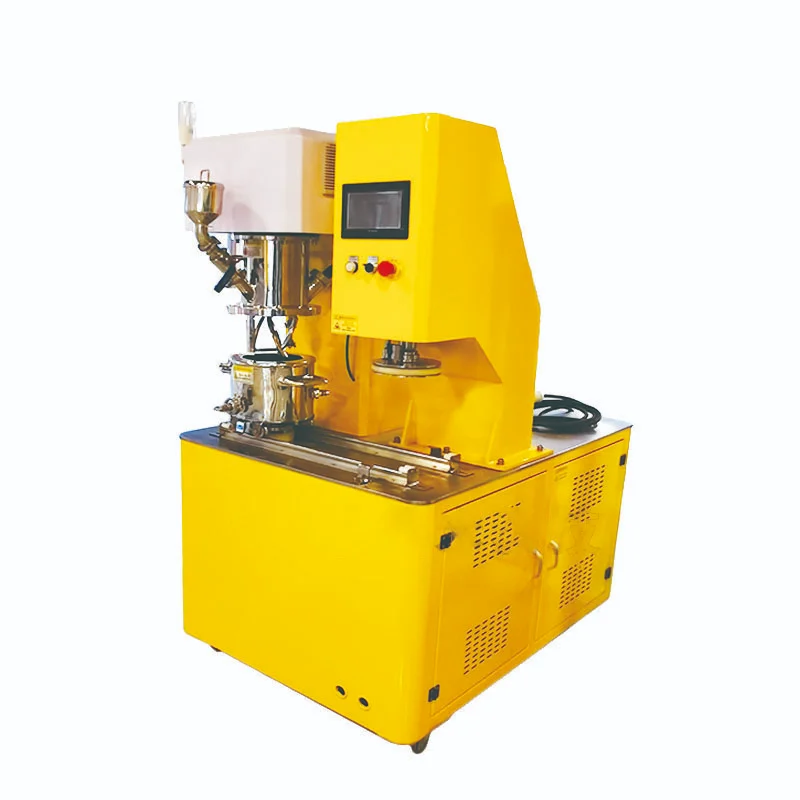
Mixing high-viscosity materials is not simply a matter of increasing agitator speed. In applications involving battery slurries, industrial adhesives, silicone compounds, electronic pastes, and resin formulations, conventional mixing equipment may struggle to achieve uniform material distribution. Localized powder accumulation, incomplete wetting, trapped air, and inconsistent batch quality can all affect the final product. Additional vacuum treatment may also increase processing time and operating costs.
A Vacuum Planetary Blending Machine addresses these challenges by combining planetary mixing motion with a controlled vacuum environment. Its mixing mechanism promotes material circulation throughout the vessel, while vacuum treatment helps remove entrained air and reduce internal bubbles. For manufacturers handling viscous, high-solids, or multi-component formulations, understanding the equipment's operating principles, operating procedures, and purchase cost is essential before selecting a suitable configuration.
A vacuum planetary blending machine is designed to process materials that require intensive mixing, dispersion, and deaeration. Its performance depends on the interaction between the mixing mechanism, vessel geometry, drive system, and vacuum configuration.
In a conventional industrial planetary mixer, the mixing blades rotate around their own axes while revolving around the central axis of the mixing vessel. These two movements create a planetary motion that helps move material through different regions of the container.
Unlike a simple single-shaft mixer, this arrangement can improve material turnover and reduce poorly mixed areas, particularly when processing viscous compounds that do not flow easily.
The agitator configuration is equally important. Blade geometry, clearance from the vessel wall and bottom, and the relationship between the agitator and material viscosity all influence mixing performance. Some formulations require strong bulk circulation, while others need additional shear or dispersion to break down agglomerates and distribute solid particles.
Buyers should also distinguish an industrial planetary mixer with mechanical agitators from a planetary centrifugal mixer. The latter typically mixes through the simultaneous rotation and revolution of its material container rather than conventional agitator blades. Their operating principles, loading arrangements, and application suitability are different.
Air can enter a formulation during powder addition, liquid feeding, and mechanical mixing. In adhesives, silicone compounds, battery materials, and electronic pastes, trapped bubbles may cause surface defects, inconsistent density, weak bonding, or problems in subsequent processing.
The vacuum system reduces pressure inside the sealed mixing chamber, encouraging entrained gas to expand and escape from the material. As mixing continues, material movement helps expose internal portions of the batch to the reduced-pressure environment.
However, effective deaeration depends on more than the vacuum pump. Material viscosity, temperature, filling level, bubble size, formulation behavior, vessel geometry, and mixing intensity all affect the result.
Excessively rapid pressure reduction may also cause foaming or material expansion in certain formulations. Therefore, vacuum levels and operating sequences should be established through material-specific trials rather than applying one setting to every product.
The drive system determines the torque available for processing demanding formulations. High-viscosity materials generally require sufficient torque to maintain stable mixing under load. Motor power alone does not fully describe mixing capability; transmission design, output torque, speed regulation, and mechanical loading must also be evaluated.
The mixing vessel influences material circulation, heat transfer, cleaning, and effective working capacity. Its material must be compatible with the formulation and required cleaning procedures. Heating or cooling jackets may also be necessary when processing materials sensitive to temperature changes.
A suitable control system allows operators to manage relevant process variables, such as mixing speed, operating time, vacuum conditions, and temperature where these functions are included in the equipment configuration.
For battery slurry, for example, uniform powder wetting and dispersion are important. For adhesives and silicone compounds, air removal and batch consistency may be critical. Electronic pastes and specialty resins may require closer control of temperature and material characteristics.
A Vacuum planetary blending machine manual should provide model-specific instructions covering installation, operation, process adjustment, maintenance, and safety. Although the general workflow is similar across many industrial mixing systems, the actual operating sequence depends on the machine's mechanical and electrical configuration.
Before starting a batch, operators should check the equipment condition and confirm that the mixing vessel, agitators, seals, drive components, and control system are ready for operation.
The following points deserve attention:
Confirm that the vessel and agitator components are clean and suitable for the material being processed.
Check that the installed mixing components match the intended formulation and operating requirements.
Inspect accessible sealing surfaces and vacuum connections for visible damage or contamination.
Confirm that the vessel, accessories, and discharge arrangement are correctly installed.
Verify that safety devices and control functions operate according to the manufacturer's instructions.
Material preparation is also important. Operators should understand the formulation, ingredient sequence, solid content, viscosity, and intended batch quantity before loading.
The amount of material loaded must remain within the equipment's specified working capacity. Maximum vessel volume and effective mixing capacity are not necessarily the same, particularly when processing materials that expand or behave differently under vacuum.
After loading and installing the vessel or mixing components, operators should follow the manufacturer's specified procedure for securing the chamber and checking the sealing system.
The main process variables include:
Mixing speed: Adjustments affect material circulation, shear conditions, and mechanical loading. Higher speed does not automatically produce better dispersion, especially when the formulation is sensitive to heat or air entrainment.
Mixing time: The required duration depends on material viscosity, ingredient characteristics, batch size, and the desired degree of uniformity. It should be established through process validation.
Vacuum level: The appropriate setting depends on the formulation's ability to release trapped air without excessive foaming, evaporation, or material expansion.
Material temperature: Viscous materials may generate heat during mixing. Temperature monitoring is particularly important for formulations with temperature-sensitive components.
Once the vessel is correctly installed and the equipment is prepared, operators should follow the model-specific startup sequence to initiate mixing and vacuum operation.
During processing, monitor the available readings and observe whether the machine operates smoothly. Changes in motor load, material temperature, vacuum stability, or mixing behavior may indicate that process adjustments or equipment inspection are necessary.
After the batch reaches its validated processing conditions, discharge should follow the manufacturer's specified procedure. Cleaning should be performed using methods compatible with the vessel, agitator materials, seals, and formulation.
| Problem | Possible inspection direction |
|---|---|
| Vacuum cannot reach the target | Inspect seals, connections, valves, and vacuum pump condition |
| Uneven mixing | Review loading quantity, ingredient sequence, agitator suitability, and mixing conditions |
| Abnormal vibration | Inspect installation, mechanical components, and load distribution |
| Excessive temperature rise | Review mixing intensity, processing duration, and cooling configuration |
| Vacuum leakage | Examine sealing surfaces, connections, and relevant components |
These are diagnostic starting points rather than universal repair instructions. Maintenance, opening conditions, safety interlocks, and troubleshooting procedures must follow the manual for the specific machine model. Operators should never bypass safety devices or open a vacuum chamber before the manufacturer's specified release and safety procedures have been completed.
The Vacuum planetary blending machine price depends on the complete equipment configuration rather than vessel capacity alone. Two machines with similar nominal volumes may have significantly different costs because of their drive systems, mixing structures, vacuum performance, automation, and material requirements.
Working capacity is one of the first factors affecting purchase cost. Laboratory equipment, pilot-scale systems, and industrial production machines have different structural and operational requirements.
Larger equipment generally requires more substantial mechanical structures, drive components, vessel fabrication, and supporting systems. However, buyers should compare effective working capacity rather than relying exclusively on total vessel volume.
The number and design of agitators, planetary movement arrangement, transmission structure, and required output torque influence equipment complexity.
Materials with high viscosity or high solid content may require a more demanding drive configuration than relatively easy-flowing formulations. Buyers should evaluate whether the proposed system can maintain stable operation under actual processing loads.
The vacuum pump, pipeline arrangement, valves, sealing components, and chamber design all contribute to the total equipment cost.
A vacuum system should be selected according to the required deaeration process, material behavior, chamber volume, and operating conditions. Comparing machines only by pump specifications may overlook differences in overall system performance and sealing reliability.
Vessel construction must meet material compatibility, corrosion resistance, cleaning, and production requirements. Additional heating or cooling systems may be necessary for temperature-sensitive formulations.
Automation also affects the quotation. Basic control systems and more advanced configurations with programmable recipes, process monitoring, data recording, and automated operating sequences involve different levels of hardware and engineering.
Custom agitator designs, special discharge arrangements, and integration with existing production lines may further increase the investment.
To obtain a meaningful quotation, procurement teams should provide:
Material type and formulation characteristics.
Approximate viscosity and solid content.
Required batch size and production frequency.
Mixing and dispersion objectives.
Vacuum deaeration requirements.
Temperature control requirements.
Cleaning and material compatibility requirements.
Desired automation and production line integration.
These details help manufacturers recommend a suitable configuration instead of quoting equipment based on capacity alone.
When comparing suppliers, evaluate mechanical design capability, drive performance, vacuum system configuration, control functions, equipment safety, factory testing, and after-sales technical support. A factory mixing trial using representative materials can provide more useful purchasing evidence than a specification sheet alone.
Selecting a vacuum planetary blending machine requires more than purchasing a collection of mechanical components. The equipment must match the formulation, production process, and quality requirements of the application.
RUMI Technology has focused on fine chemical equipment and solutions since launching its first self-developed high-precision dosing system and high-efficiency mixing equipment in 2018. Its development has involved extensive R&D iterations and the accumulation of invention patents, supporting customized equipment solutions for industries including paints, inks, resins, new materials, new energy, and composites.
RUMI emphasizes reliable products, strict quality control, and responsive service. Its quality assurance system includes 72-hour factory testing and a 24-hour after-sales response commitment, alongside ISO 9001 and CE certifications.
For buyers evaluating specialized mixing equipment, this combination of engineering experience, customized solution development, factory testing, and technical support is relevant when assessing long-term equipment suitability.
Choosing a vacuum planetary blending machine requires balancing mixing quality, deaeration performance, operating requirements, production capacity, and total investment. The most suitable configuration depends on the actual material properties, desired dispersion results, vacuum requirements, and production scale.
A well-matched machine should provide stable material circulation, effective air removal, repeatable processing conditions, and manageable maintenance requirements.
For an accurate equipment recommendation and quotation, buyers should provide their material characteristics, target batch capacity, mixing objectives, and production requirements. RUMI Technology can use this information to evaluate the application and discuss an appropriate fine chemical mixing solution.