en
 vi
 it
 es
 tr
 ja
 pt
 nl
 ru
 fr
 de
 pl
 ar
News
Latest news and events.




Mixing high-viscosity materials requires more than a powerful motor and a conventional agitator. In industries such as coatings, adhesives, sealants, printing inks and chemical processing, materials often have high internal resistance, low flowability and substantial solid content. These characteristics make it difficult to achieve consistent circulation, uniform dispersion and efficient material transfer throughout the mixing vessel.
When conventional mixers handle these materials, several problems can occur. Excessive mixing resistance increases motor loading, while insufficient agitator coverage allows material to accumulate near the vessel walls or bottom. Powders may remain poorly incorporated, and inadequate circulation can extend processing time. Starting and discharging thick materials can also place additional demands on the drive and mechanical structure.
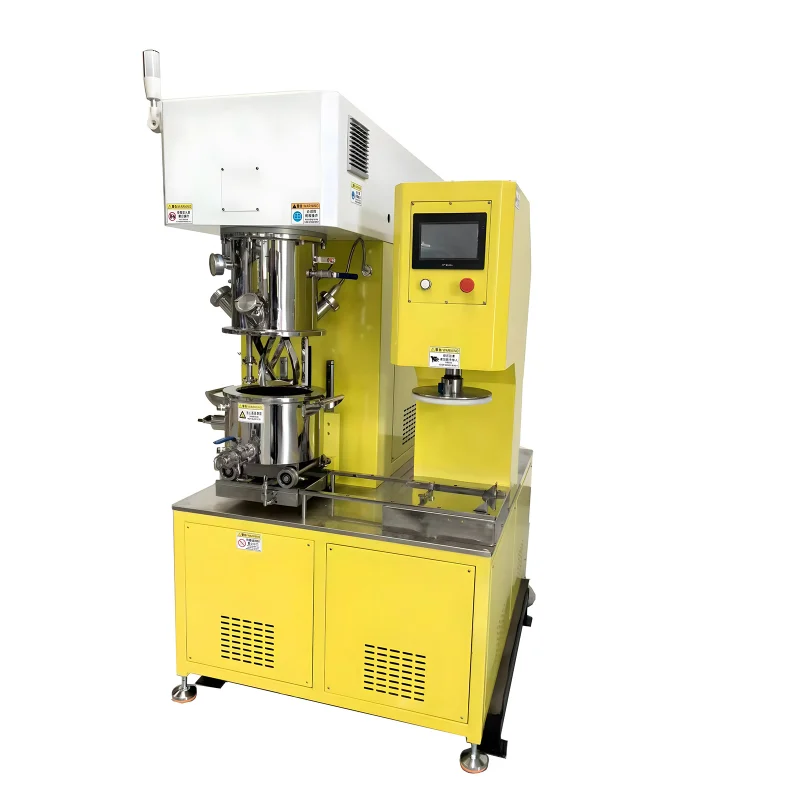
A Heavy Duty High Viscosity Mixer is designed to address these challenges through coordinated drive systems, agitator geometry and structural engineering. For manufacturers, choosing the right equipment means evaluating torque, rotational speed, mixing structure and actual material characteristics rather than relying on motor power alone.
The performance of a heavy-duty mixer depends on how effectively its mechanical components work together. The drive motor, gearbox, mixing shaft, agitator, vessel and optional wall-scraping system all influence material movement and operating stability.
High-viscosity materials create considerable resistance against agitator movement. A conventional high-speed drive may struggle to maintain stable operation when processing thick pastes or highly filled formulations.
A low-speed, high-torque drive configuration is often more suitable for these applications. The motor supplies mechanical power, while the gearbox reduces rotational speed and increases the available output torque. This allows the agitator to move resistant materials without depending entirely on high rotational speed.
When evaluating a Best Heavy Duty Viscosity Mixer, buyers should examine the motor rating, gearbox reduction ratio, output torque and expected operating load together. A motor with a higher power rating does not automatically guarantee better mixing performance if the gearbox, shaft and agitator are not designed for the required load.
The starting load also deserves attention. Some materials become particularly difficult to move after standing or cooling. The drive system must therefore be selected according to both starting conditions and normal operating requirements.
Agitator geometry determines how material moves through the vessel. Different structures generate different circulation patterns and shear conditions.
Anchor agitators are commonly considered for viscous materials requiring bulk movement. Their shape follows the vessel contour, and optional scraping elements can help reduce material accumulation along the walls.
Frame agitators provide broad coverage and can support overall material circulation. Their performance depends on blade positioning, vessel geometry and operating conditions.
Helical ribbon agitators are designed to promote axial material movement. They can be suitable for highly viscous formulations where circulation throughout the vessel is difficult to achieve.
Planetary mixing systems move mixing elements through different regions of the vessel. They are frequently considered for cohesive pastes and formulations requiring extensive material coverage.
Multi-shaft configurations combine different mixing functions. For example, a slow-speed anchor agitator can provide bulk circulation while a separate high-speed disperser generates localized shear for powder incorporation and particle dispersion.
These configurations serve different purposes. High-shear dispersion should not be confused with overall high-viscosity mixing. A high-speed disperser may break down agglomerates effectively but cannot necessarily replace the bulk circulation required to move an entire batch.
Mixing performance is influenced by the relationship between output torque, rotational speed, agitator diameter, material viscosity and vessel dimensions.
Increasing agitator diameter can improve the volume of material influenced by the blades, but it also increases mechanical resistance and drive requirements. Higher rotational speed may improve local dispersion or circulation in some formulations, but excessive speed can increase power consumption, temperature rise and mechanical loading.
Material viscosity also requires careful interpretation. Some industrial formulations are non-Newtonian, meaning their apparent viscosity changes with shear rate. Therefore, viscosity measurements should be evaluated alongside measurement temperature and test conditions.
A properly engineered mixer considers these variables together. Selecting equipment solely by motor power or nominal vessel capacity can result in insufficient circulation, excessive loading or an unsuitable mixing cycle.
The correct mixer configuration depends on the material being processed and the production objective. Coatings, adhesives, sealants and chemical pastes may all require heavy-duty mixing, but their flow behavior and dispersion requirements can differ considerably.
Coatings and paints often contain pigments, fillers, resins and liquid components. Production may involve powder wetting, pigment dispersion, viscosity adjustment and final homogenization.
A suitable mixing system needs sufficient torque to maintain bulk material circulation. Where pigment agglomerates must be broken down, a high-speed dispersing element may be required in addition to the main agitator.
Buyers should clearly define whether their primary requirement is bulk mixing, powder incorporation or intensive dispersion. These processes require different levels of shear and should be considered during equipment selection.
Adhesives and sealants can contain polymers, mineral fillers and other ingredients that create substantial resistance to movement.
For these materials, the mixer must maintain sufficient torque while providing effective circulation throughout the batch. Anchor, planetary and multi-shaft configurations may be suitable depending on formulation characteristics.
Temperature control is another consideration. Excessive mechanical energy can increase material temperature, potentially affecting viscosity, curing behavior or product stability. Vacuum deaeration may also be necessary when trapped air affects the finished product.
Printing inks require controlled pigment dispersion and consistent formulation properties. Chemical pastes may contain high concentrations of solids and exhibit limited flowability.
A heavy-duty mixer should provide sufficient material movement without introducing unnecessary air or excessive heat. The agitator structure, operating speed and dispersion system should be selected according to the formulation and required product quality.
Before requesting a quotation, manufacturers should evaluate the following factors:
Material viscosity and measurement conditions.
Material density and solid content.
Powder incorporation and dispersion requirements.
Shear sensitivity and allowable temperature rise.
Batch capacity and actual working volume.
Operating temperature and processing time.
Required mixing uniformity and discharge characteristics.
The best configuration is not necessarily the one with the most complicated agitator system. It is the configuration that provides the required material movement and mixing quality under actual production conditions.
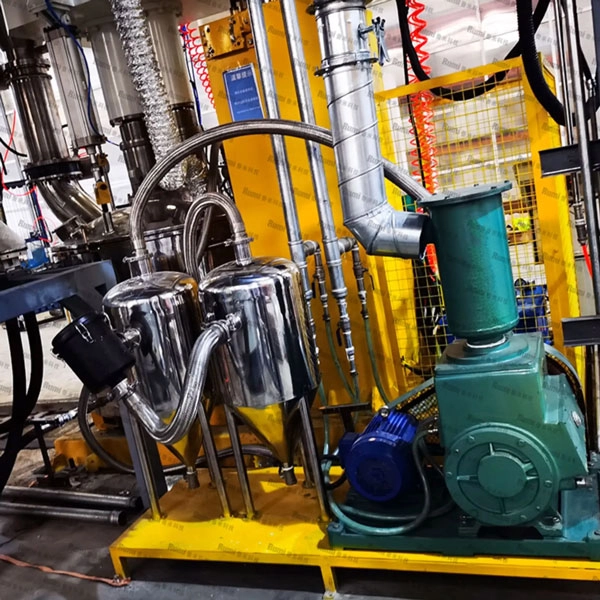
Other equipment features should also be considered. Vacuum systems are useful for processes requiring deaeration. Heating and cooling jackets support temperature-sensitive production. Hydraulic discharge systems can help handle cohesive materials that are difficult to remove through gravity discharge.
These options influence vessel construction, mechanical design and control requirements, so they should be considered during the initial engineering stage.
The price of a heavy-duty viscosity mixer depends on its mechanical configuration, processing capacity and degree of customization. Two machines with similar motor ratings may have different costs because their gearbox specifications, agitator structures and auxiliary systems are not the same.
Several factors influence the final equipment cost.
Motor and gearbox configuration: Motor capacity, output torque, reduction ratio and continuous-duty requirements determine the drive system specifications.
Agitator structure: Anchor, frame, ribbon, planetary and multi-shaft configurations have different manufacturing and engineering requirements.
Vessel capacity and construction: Working volume, vessel dimensions, material thickness and product-contact material specifications affect manufacturing costs.
Sealing and scraping systems: Mechanical seals, specialized sealing arrangements and wall-scraping components influence equipment complexity.
Additional process functions: Vacuum systems, heating and cooling jackets, hydraulic discharge and automated controls add to the overall configuration cost.
Customization requirements: Special material compatibility, production conditions and integration with existing equipment may require additional engineering.
To receive an accurate technical proposal, buyers should provide the manufacturer with sufficient process information.
Important details include the material name, viscosity range, measurement temperature, density, solid content, batch capacity, operating temperature and target mixing results. For non-Newtonian materials, the viscosity measurement method and relevant shear conditions should also be specified.
Manufacturers should also understand the expected production frequency, whether the mixer will operate continuously or in batches, and whether the process requires vacuum deaeration, temperature control or specialized discharge equipment.
This information makes it easier to evaluate motor power, gearbox capacity, agitator configuration and vessel dimensions.
Equipment buyers should look beyond motor specifications and external appearance when comparing manufacturers.
Mechanical engineering capabilities are particularly important. A qualified manufacturer should understand drive-load calculations, shaft strength, agitator geometry, gearbox selection and vessel structural requirements.
Manufacturing quality also affects long-term reliability. Welding quality, machining accuracy, assembly procedures, sealing installation and component selection all contribute to equipment performance.
Factory testing provides another important evaluation opportunity. Where possible, buyers should request testing with representative materials to assess starting behavior, operating load, circulation patterns, temperature changes and final mixing uniformity.
After-sales support, maintenance accessibility and replacement component availability should also be considered because they influence long-term operating costs.
RUMI Technology is a professional supplier focused on chemical equipment and solutions for global industrial customers. Since launching its first self-developed high-precision dosing system and high-efficiency mixing equipment in 2018, the company has remained committed to serving the fine chemical equipment industry.
Through hundreds of research and development iterations, the RUMI Technology team has developed proprietary technical capabilities supported by multiple invention patents. Its solutions serve paint and ink manufacturers, resin and new materials companies, as well as businesses in the new energy and composites industries.
RUMI focuses on customized equipment solutions that address different production requirements, including improving dosing accuracy and developing efficient mixing systems for demanding industrial applications.
For manufacturers evaluating a Heavy Duty High Viscosity Mixer, the relationship between material properties, drive configuration and agitator design is essential. RUMI's experience in mixing and dosing equipment provides an engineering foundation for evaluating application-specific requirements rather than relying on a single standard configuration.
The company has also established a quality assurance system featuring 72-hour factory testing and a 24-hour after-sales response commitment. Its ISO9001 and CE certifications further support its commitment to quality management and equipment compliance.
By combining equipment development, customized engineering and technical service, RUMI Technology aims to support manufacturers seeking reliable solutions for fine chemical production.
Choosing the Best Heavy Duty Viscosity Mixer requires a thorough understanding of material characteristics, production conditions and mechanical requirements. Output torque, gearbox configuration, agitator geometry, rotational speed and vessel dimensions must be evaluated together to achieve effective mixing.
For coatings, adhesives, sealants, printing inks and other high-viscosity formulations, the right equipment should provide sufficient bulk circulation, appropriate dispersion intensity and mechanical stability under demanding operating conditions.
Buyers should also consider temperature control, vacuum requirements, discharge methods and long-term maintenance when comparing equipment configurations and manufacturers. The most suitable mixer is not necessarily the machine with the highest motor power or lowest purchase price, but the one that consistently meets actual production requirements.
RUMI Technology welcomes inquiries from industrial manufacturers seeking customized mixing and dosing solutions. Providing material viscosity, batch capacity, solid content, operating temperature and mixing objectives will help establish a suitable equipment configuration for your production process.