 en
 vi
 it
 es
 tr
 ja
 pt
 nl
 ru
 fr
 de
 pl
 ar
News
Latest news and events.




In paint and coating manufacturing, achieving consistent pigment fineness is not simply a matter of mixing raw materials for a longer period. Pigment particles can form agglomerates, remain unevenly distributed, or produce inconsistent particle-size distributions when the processing equipment is not suitable for the formulation. These problems may affect color uniformity, surface appearance, storage stability, and the application performance of the finished coating.
For small and medium-sized paint manufacturers, investing in a large industrial grinding line may also be difficult to justify, particularly when production involves multiple formulations, limited batch quantities, or ongoing product development. Small paint grinding equipment provides an alternative for laboratory testing, pilot production, and selected small-batch manufacturing applications.
However, equipment size alone does not determine grinding quality. The grinding mechanism, chamber design, processing conditions, and material compatibility all influence the final result. Understanding these factors helps manufacturers identify suitable equipment and determine what makes the best paint grinding equipment for their production requirements.
Paint grinding equipment is designed to reduce particle size and break down pigment agglomerates through mechanical action. Depending on the equipment design, this action may involve shear, impact, compression, or friction.
It is important to distinguish grinding from mixing and dispersion. Mixing distributes ingredients throughout a formulation, while dispersion helps wet and separate pigment particles within the liquid medium. Grinding applies additional mechanical energy to reduce particle size or break down remaining agglomerates. These processes are related but are not interchangeable.
Different grinding mechanisms are suitable for different materials and production requirements.
Sand Mills and Bead Mills
Sand mills, commonly referred to as bead mills, use small grinding media inside a grinding chamber. A rotating shaft or rotor generates movement between the media, creating impact and shear forces that break down pigment agglomerates and reduce particle size.
Their enclosed processing systems make them suitable for many liquid coatings, pigment dispersions, and ink formulations. Grinding efficiency depends on factors such as media size and material, rotor configuration, chamber geometry, feed properties, and operating conditions.
For small paint manufacturers, laboratory and compact bead mills can support formulation development and controlled batch processing. However, the selected model must be matched to the formulation's viscosity and solid content.
Ball Mills
Ball mills use rotating chambers containing grinding balls. As the chamber rotates, the balls move and collide with the material, producing impact and friction that contribute to particle-size reduction.
They can be useful for certain pigment and coating preparation processes, particularly where longer processing cycles are acceptable. Compared with some high-energy bead milling systems, ball mills may require different processing times and operating conditions to achieve the desired result.
Three-Roll Mills
Three-roll mills process material between three rolls rotating at different speeds. The resulting shear forces help break down agglomerates and produce a more uniform dispersion.
They are commonly used for high-viscosity materials, concentrated pigment pastes, and certain printing ink formulations. Their working principle differs from bead mills, which rely on moving grinding media inside a chamber.
The appropriate choice depends on material rheology, formulation requirements, desired fineness, and production volume.
Several equipment and process parameters determine whether a grinding system can deliver consistent results.
Grinding media: Media material, size, density, and compatibility with the formulation influence grinding intensity, wear, and possible contamination.
Grinding chamber design: Chamber geometry and internal flow conditions affect material circulation, residence time, and the distribution of mechanical energy.
Rotational speed: Speed influences shear and impact intensity. Excessive mechanical energy may increase temperature and cause unnecessary wear.
Processing capacity: The working volume and feed or discharge arrangement determine whether the machine can accommodate the required batch size.
Cooling system: Effective heat removal helps control temperature-sensitive formulations during extended processing.
Grinding fineness and particle-size distribution also need to be evaluated together. A formulation may achieve a satisfactory fineness reading while still containing an undesirable coarse-particle fraction. An uneven distribution can contribute to poor surface appearance, inconsistent color development, or reduced coating performance.
Viscosity and solid content further complicate the process. High-viscosity materials may restrict circulation and heat transfer, while high solid content can increase processing resistance and change the energy required for grinding. The equipment and formulation therefore need to be evaluated as a complete processing system.
Small paint grinding equipment is particularly relevant to manufacturers that need processing flexibility rather than continuous high-volume output.
During product development, manufacturers frequently test different pigment combinations, dispersants, binders, and solid concentrations. Each formulation may respond differently to mechanical processing.
A laboratory grinding machine allows engineers to prepare controlled samples, compare processing conditions, and evaluate the relationship between grinding time, temperature, and final product quality.
This is particularly useful when developing new industrial coatings, automotive refinishing paints, water-based paints, and specialized pigment dispersions.
Rather than committing large quantities of raw materials to an unverified formulation, manufacturers can use smaller test batches to identify processing problems before moving to pilot production.
Small and medium-sized manufacturers often handle multiple product types with different colors, viscosities, and formulation requirements.
A compact grinding system can support selected production batches where the required capacity falls within the machine's verified operating range.
For water-based coatings, manufacturers should pay attention to pigment wetting, formulation stability, and temperature control. For industrial paints and automotive refinishing coatings, color consistency, particle distribution, and surface appearance may be particularly important.
Printing inks and concentrated pigment pastes may require different grinding structures because their viscosity and solid content can differ significantly from conventional liquid paints.
A bead mill may be suitable for certain liquid dispersions, while a three-roll mill may be more appropriate for some highly viscous pastes. Selecting equipment based only on the product category is insufficient; the actual formulation must be tested.
Grinding equipment does not operate independently of the rest of the production process.
A typical paint preparation workflow includes several stages:
Premixing: Pigments, binders, solvents or water, and appropriate additives are combined to achieve initial wetting and distribution.
Grinding: The prepared material enters the grinding system, where mechanical energy breaks down agglomerates and improves dispersion quality.
Temperature monitoring: Operators monitor material temperature and adjust processing conditions or cooling as necessary.
Quality inspection: Samples are evaluated for fineness, particle distribution, viscosity, and other formulation-specific properties.
Final adjustment and discharge: Additional ingredients may be incorporated after grinding, followed by cleaning and preparation for the next batch.
Some formulations require recirculation through the grinding chamber, while others may be processed in a different configuration. The appropriate method depends on the equipment design and material characteristics.
For manufacturers producing multiple colors, cleaning efficiency is also important. Residual pigment from a previous batch can contaminate subsequent products, particularly when processing light-colored or high-purity formulations.
Small equipment and large industrial machines serve different production objectives.
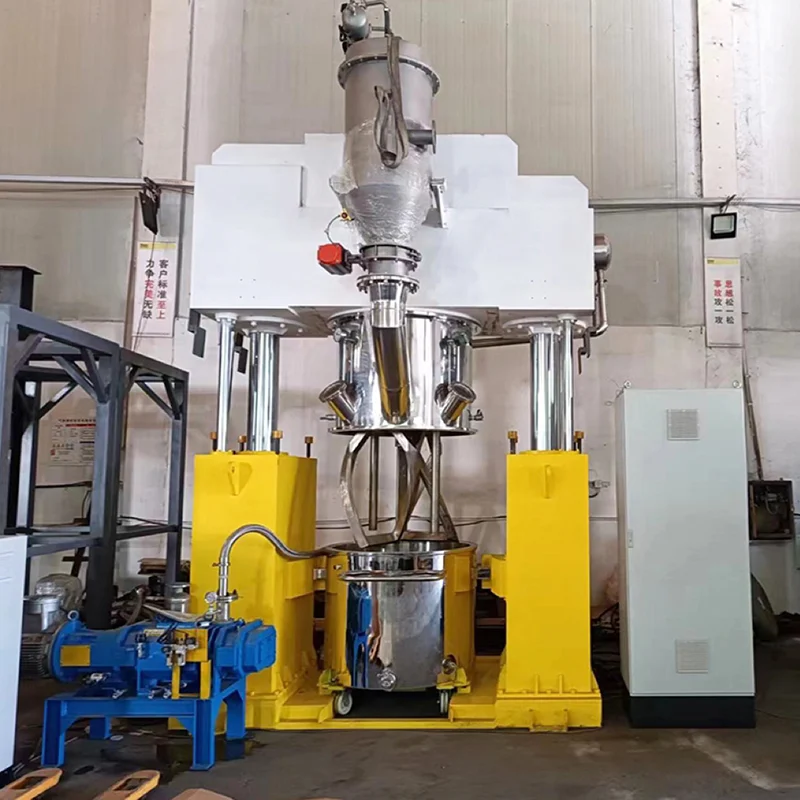
Small paint grinding equipment is generally more suitable for laboratory development, sample preparation, pilot testing, and production batches within its rated capacity. Its value lies in processing flexibility and the ability to evaluate formulations without immediately investing in a larger production line.
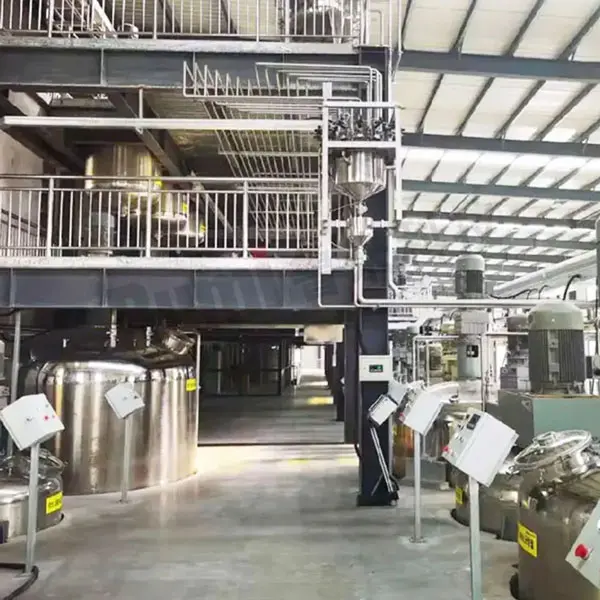
Industrial grinding systems are designed for higher throughput, longer operating cycles, and larger production requirements. They may incorporate larger chambers, more extensive cooling arrangements, automated feeding, and integrated production controls.
A small machine should not automatically be considered a substitute for an industrial system. Before commercializing a formulation, manufacturers should verify whether the grinding mechanism, processing conditions, and product quality can be maintained during scale-up.
Identifying the best paint grinding equipment requires more than comparing purchase prices, motor power, or maximum rotational speeds. The machine must match the formulation, production process, and expected operating conditions.
The first consideration is the required grinding result.
Different coatings have different particle-size requirements. Manufacturers should define their target fineness and determine how it will be measured. A grind gauge, such as a Hegman gauge, can help identify coarse particles and agglomerates, while particle-size analysis provides additional information about the distribution.
The selected equipment should be evaluated using representative production materials rather than relying exclusively on theoretical performance specifications.
Material viscosity and solid content are equally important. A machine suitable for low-viscosity liquid coatings may not provide adequate circulation or processing stability for a highly concentrated pigment paste.
Before purchasing equipment, buyers should examine the following components:
Grinding Chamber and Media: Check chamber construction, internal configuration, grinding media compatibility, and the potential for material contamination.
Motor Power and Speed Adjustment: Evaluate whether the drive system provides sufficient operating flexibility for the intended formulation. Higher rated power or maximum speed does not automatically guarantee better grinding results.
Cooling Configuration: Determine whether the cooling system can manage the heat generated under actual operating conditions, particularly for temperature-sensitive binders and additives.
Material Contact Surfaces: Stainless steel or other suitable materials may be selected depending on chemical compatibility, corrosion resistance, wear requirements, and contamination control.
Feeding and Discharge: Consider whether the machine supports the required batch workflow, material transfer method, and cleaning procedures.
Maintenance Access: Examine how easily operators can inspect the chamber, replace wear components, clean material-contact areas, and obtain replacement parts.
These details affect more than daily convenience. They influence process consistency, equipment availability, maintenance requirements, and long-term operating costs.
The price of paint grinding equipment depends on its grinding mechanism, processing capacity, motor configuration, chamber materials, cooling arrangement, automation level, and customization requirements.
A compact machine may still require specialized components or advanced process controls. Similarly, a less expensive machine may create additional costs if it cannot achieve the required fineness or requires frequent maintenance.
Buyers should consider the total cost of ownership, including electricity consumption, grinding media replacement, wear-part costs, cleaning time, labor, maintenance, and production downtime.
A more meaningful comparison is the cost of producing a qualified batch under actual operating conditions, rather than the initial equipment price alone.
Equipment selection should also involve an evaluation of the supplier.
A qualified manufacturer should be able to discuss material compatibility, recommend an appropriate grinding structure, explain relevant operating limitations, and support process testing where available.
Buyers should request information about equipment construction, inspection procedures, spare-part availability, and after-sales support. When possible, testing the customer's actual formulation is more valuable than relying solely on general product descriptions.
RUMI Technology is a professional supplier of chemical equipment and solutions. Since developing its first self-developed high-precision dosing system and high-efficiency mixing equipment in 2018, the company has focused on fine chemical equipment and customized processing solutions.
Its work covers applications in paint and ink manufacturing, resin and new materials processing, and the new energy and composites industries. Through continued research and development, RUMI has established its own technical capabilities and obtained multiple invention patents.
The company also operates a quality assurance system that includes 72-hour factory testing and a 24-hour after-sales response commitment, supported by ISO9001 and CE certifications. For manufacturers evaluating equipment investments, these capabilities provide useful points of reference when assessing supplier quality control, technical experience, and ongoing service support.
What is the difference between paint grinding equipment and paint mixing equipment?
Mixing equipment combines ingredients and distributes them throughout a formulation. Grinding equipment applies mechanical energy to break down pigment agglomerates and, depending on the mechanism, reduce particle size. A complete paint production process may require both operations.
Can a high-speed disperser completely replace a paint grinding machine?
Not in every application. High-speed dispersers are useful for premixing, wetting, and initial dispersion. However, formulations requiring finer particle control may need additional grinding. The decision should be based on measured product quality.
How can manufacturers determine whether grinding has reached the target fineness?
They can use an appropriate grind gauge, particle-size analysis, and formulation-specific quality tests. A single measurement should not replace evaluation of the complete particle-size distribution and final coating performance.
How can temperature be controlled during grinding?
Manufacturers can use suitable cooling systems, monitor material temperature, and optimize processing speed and circulation conditions. The acceptable temperature range must be established according to the formulation's thermal sensitivity.
Can small paint grinding equipment support commercial production?
Yes, when batch requirements fall within the machine's verified processing capacity and the required product quality can be maintained. However, larger production volumes may require industrial equipment or a validated scale-up process.
Which maintenance factors influence long-term operating costs?
Grinding media wear, seals, mechanical components, cleaning requirements, and maintenance access all affect operating expenses. Buyers should understand replacement intervals and spare-part availability before purchasing.
Small paint grinding equipment provides practical support for pigment processing, formulation development, pilot production, and selected small-batch manufacturing applications. Its effectiveness depends on matching the grinding mechanism and operating configuration to the material's viscosity, solid content, target fineness, and processing requirements.
For buyers seeking the best paint grinding equipment, the most reliable approach is to evaluate actual grinding results, batch consistency, temperature control, material compatibility, maintenance requirements, and manufacturer support together.
Before making an investment, define the required particle characteristics, test representative formulations, and confirm the equipment's operating capabilities. This approach helps paint and coating manufacturers select a grinding solution that supports both current production needs and future process development.