 en
en  vi
vi  it
it  es
es  tr
tr  ja
ja  pt
pt  nl
nl  ru
ru  fr
fr  de
de  pl
pl  ar
ar News
Latest news and events.




Manual powder batching becomes difficult to control as the number of ingredients, batch sizes, and production cycles increase. Operators may weigh each material correctly on paper, yet small deviations can accumulate through repeated batches. Powder dust, inconsistent feeding, weighing errors, and differences between operators can also affect batch-to-batch consistency. For chemical, food, building-material, plastic, rubber, and pharmaceutical production, an automatic powder batching system provides a controlled way to store, feed, weigh, transfer, and manage multiple powder ingredients according to defined recipes.
However, choosing a suitable system requires more than comparing a stated weighing accuracy. The powder's bulk density, particle size, moisture content, flowability, and tendency to bridge can directly affect actual dosing performance. The weighing method, feeder design, control architecture, and integration with the production line all need to be considered together.
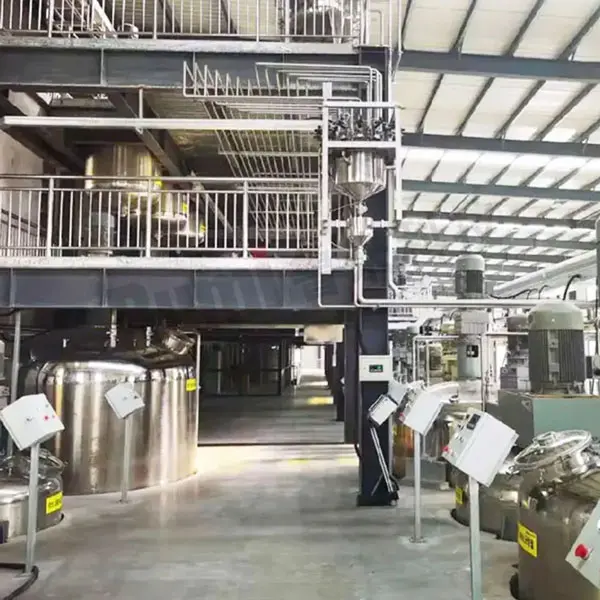
An automatic powder batching system normally connects several functional stages: material storage, feeding, weighing, conveying, mixing, and batch control. Powder is stored in individual hoppers or silos and released through a suitable feeding mechanism. Depending on the material and required dosing range, this may involve screw feeders, vibratory feeders, rotary valves, or other controlled discharge devices.
The material then enters a weighing hopper equipped with load cells. The control system continuously monitors the measured weight and adjusts the feeder according to the target value. A coarse-feeding stage can move most of the required material quickly, followed by a fine-feeding stage to approach the recipe setpoint without excessive overshoot.
The actual performance therefore depends on several parameters:
Weighing range: The hopper and load-cell capacity should match the largest batch component without sacrificing resolution for smaller ingredients.
Feeding rate: Excessively high feeding rates can cause overshoot, while very low rates may reduce production throughput.
Feeder resolution: Screw pitch, motor control, vibration amplitude, and feeder geometry influence how finely material flow can be adjusted.
Material characteristics: A powder that flows freely behaves differently from a lightweight or cohesive powder.
Conveying distance: Long or complicated transfer routes can introduce residual material and affect batch control.
After weighing, individual ingredients can be discharged into a mixer or intermediate transfer system. The PLC coordinates the sequence so that each component is processed according to the programmed recipe and production cycle.
One of the key decisions when configuring a powder batching system is the weighing principle.
Gain-in-weight (GIW) measures the increase in weight of a receiving hopper. Material is fed into the hopper until the target quantity is reached. This approach is commonly used for batch applications where several ingredients are successively weighed into a central hopper.
Loss-in-weight (LIW) measures the decrease in weight of the source hopper or feeder as material is discharged. The controller calculates the mass flow from the change in hopper weight and regulates the feeder accordingly. LIW is particularly useful where continuous or highly controlled feeding is required.
Neither method is universally better. GIW is often practical for batch-oriented systems with sequential ingredient addition, while LIW can be advantageous for continuous processes or applications requiring direct control of mass flow.
The powder itself can determine whether either method performs effectively. Bulk density changes alter the relationship between hopper volume and material mass. Particle size affects flow behavior, while moisture can increase cohesion and cause irregular discharge. Fine powders may also form a bridge above the outlet, preventing consistent feeding even when the feeder motor is operating normally.
For this reason, a system should be designed around actual material tests rather than relying only on a standard feeder specification.
The control layer determines how the mechanical equipment operates as a complete batching system. A PLC can coordinate feeder activation, weighing feedback, discharge sequences, mixer operation, material-transfer equipment, and communication with upstream or downstream machinery.
An HMI allows operators to select recipes, modify authorized parameters, monitor current weights, and review alarms. Recipe management becomes particularly important when a plant produces multiple formulations. Instead of manually calculating ingredient quantities for every batch, the system can store defined target weights and execute the sequence automatically.
Useful control functions include:
Recipe storage and controlled parameter access
Real-time load-cell feedback
Automatic or assisted scale calibration
Batch completion confirmation
Overweight and underweight alarms
Feeder fault detection
Material shortage warnings
Batch and production data records
Communication with MES, SCADA, or other plant-control systems
Data recording also provides a practical method for investigating batch deviations. If a production issue occurs, operators can review the recorded weighing values and sequence information instead of relying entirely on manual records.
The Best automatic powder batching system should be defined by the production requirement rather than by a single advertised specification.
Start with the recipe. How many powder ingredients are required? What is the smallest and largest ingredient quantity? What is the total batch weight? How many batches are required per hour? These figures determine the number of weighing points, hopper capacities, feeder sizes, and overall system throughput.
Material properties are equally important.
Free-flowing granular powders may work well with conventional screw or vibratory feeding. Fine powders with poor flowability may require agitation, hopper geometry designed to prevent stagnant zones, or specialized feeding arrangements. Lightweight powders can be affected by air movement and dust extraction, making enclosure and dust-control design important. Hygroscopic powders may require controlled storage and moisture management. Cohesive powders may need mechanical agitation or other anti-bridging measures.
The target accuracy should also be evaluated in relation to the actual dosing quantity. A stated percentage accuracy means little if it is not considered against the minimum ingredient weight. For a formulation containing both major and minor ingredients, separate weighing ranges or different feeder sizes may be more appropriate than using one feeder design for every component.
Multi-component systems can also use parallel weighing and feeding arrangements when the production cycle requires several materials to be prepared simultaneously. The correct architecture depends on the recipe structure, batch cycle, available space, and required production rate.
Choosing among automatic powder batching system manufacturers requires evaluating engineering capability rather than comparing machine appearance or one accuracy figure.
A capable manufacturer should be able to examine the powder characteristics, recipe structure, required batch size, production capacity, plant layout, and automation requirements before recommending the equipment configuration. The manufacturer should also understand the relationship between load cells, feeder mechanics, hopper geometry, PLC logic, dust collection, conveying, and downstream processing.
For industrial projects, customization can involve much more than changing hopper dimensions. It may include feeder selection, weighing ranges, anti-bridging measures, dust-control arrangements, recipe software, PLC/HMI programming, communication interfaces, and synchronization with mixers, packaging equipment, or other production machinery.
This engineering approach is central to RUMI Technology. RUMI is a professional supplier focused on chemical equipment and solutions, serving global customers with product quality control and technical service. Since developing its first self-developed high-precision dosing system and high-efficiency mixing equipment in 2018, RUMI Technology has focused on fine chemical equipment solutions.
Its experience includes customized dosing solutions for paint and ink companies, mixing equipment for resin and new-material manufacturers, and system solutions for new energy and composite-material applications. After hundreds of R&D iterations, RUMI Technology has developed proprietary technologies and obtained invention patents. Its quality system includes 72-hour factory testing and a 24-hour after-sales response, with ISO9001 and CE certifications.
For a buyer, these capabilities matter because an automatic batching system is rarely an isolated machine. Installation, commissioning, PLC development, recipe configuration, equipment communication, dust management, and long-term maintenance can all affect whether the system performs as expected after entering production.
The price of an automatic powder batching system is normally determined by the complete configuration rather than simply the hopper size. Important cost factors include the number of powder ingredients, weighing points, hopper capacity, load-cell specifications, feeder type, conveying distance, PLC/HMI configuration, recipe software, dust-collection requirements, weighing automation, structural materials, safety requirements, and integration with existing production equipment.
A system designed for several high-volume powders is fundamentally different from one handling dozens of minor ingredients with narrow dosing ranges. Likewise, food, pharmaceutical, chemical, and building-material applications may require different material-contact surfaces, dust-control arrangements, cleaning provisions, or compliance considerations.
For this reason, purchasing decisions should begin with the formulation, powder characteristics, batch requirements, and production-line interface. The right manufacturer should then translate those requirements into a weighing and feeding architecture that can be tested, commissioned, and maintained over its operating life.
The most useful comparison is therefore not simply which automatic powder batching system has the highest stated accuracy, but which system provides the appropriate weighing method, feeder design, control strategy, material handling, and engineering integration for the specific production process.